
Thinking Beyond the Dog: Guard Llamas
By Anna O'Brien, DVM
July 26/ 2013
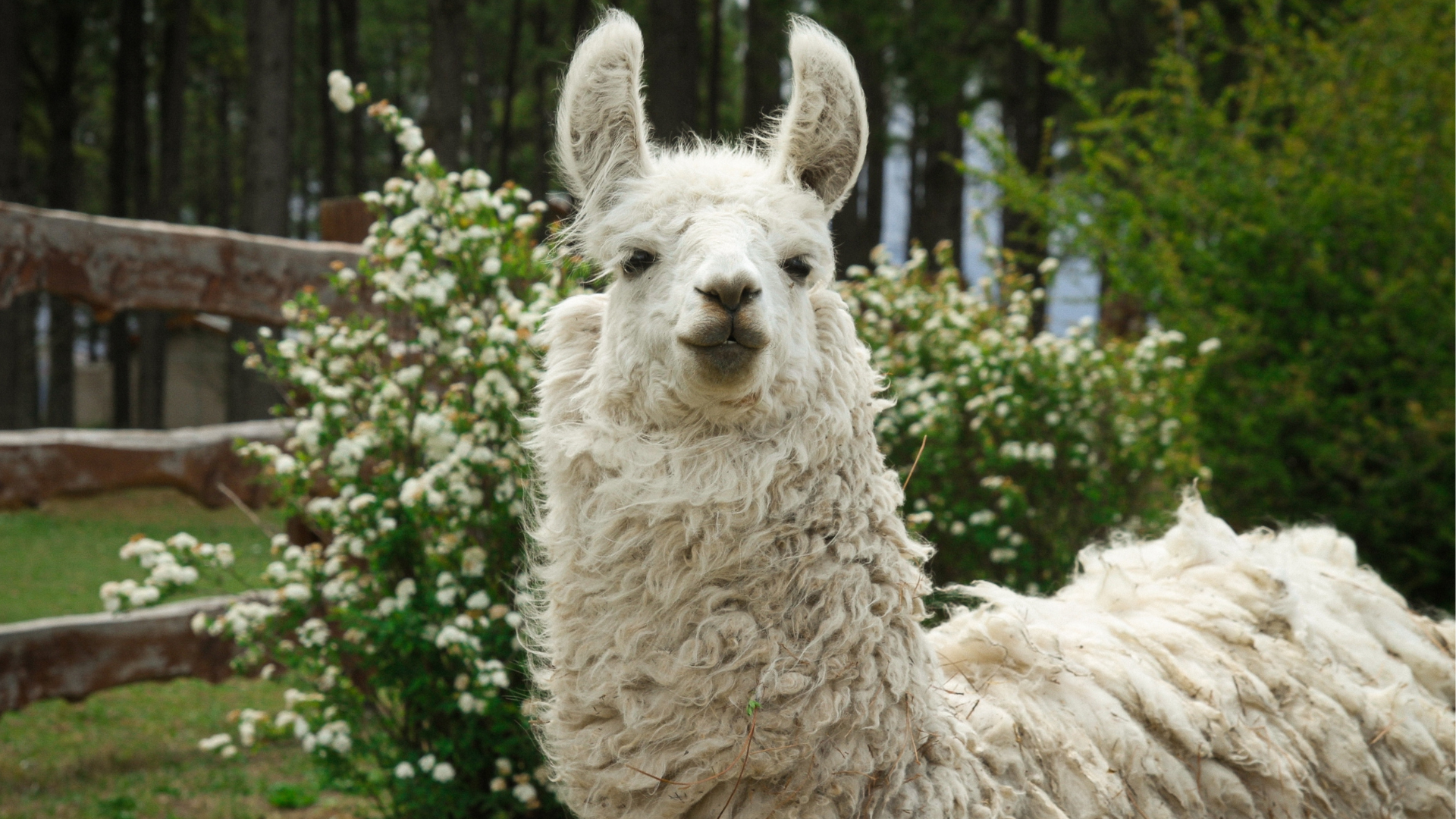
Today I’d like to tell you folks about a neat niche industry that I wasn’t aware of until I started practicing: guard llamas. I first came across a guard llama at a client’s alpaca farm. Amongst the alpacas, I spied a much taller, & much more serious, llama. Thinking he was just a fellow camelid, I was quickly corrected by his owner. “That’s our guard llama.”
Guard llama? Who ever heard of such a thing?
As it turns out, guard llamas are commonly employed out west on sheep & goat farms where predation, especially from coyotes & feral dogs, is a major problem. Alpaca farms, although much smaller venues than sheep farms on the range out west, also have problems with canids, usually in the form of neighbors’ unleashed dogs.
So why pick a llama over a guard dog, with breeds tailored specifically for guarding livestock, such as the Great Pyrenees, Komondors, Akbash, & Anatolian Shepherds? As it turns out, there are many great reasons. Llamas are naturally aggressive toward coyotes & dogs. If they see a predator, they will make a distinctive alarm call & will either run after the predator or gather the flock & stand between the flock & the predator. Although llamas may lack the snarling, growling appearance of an aggressive guard dog, the image of a 600-pound llama running in your direction with ears back should be enough to discourage intrusion!
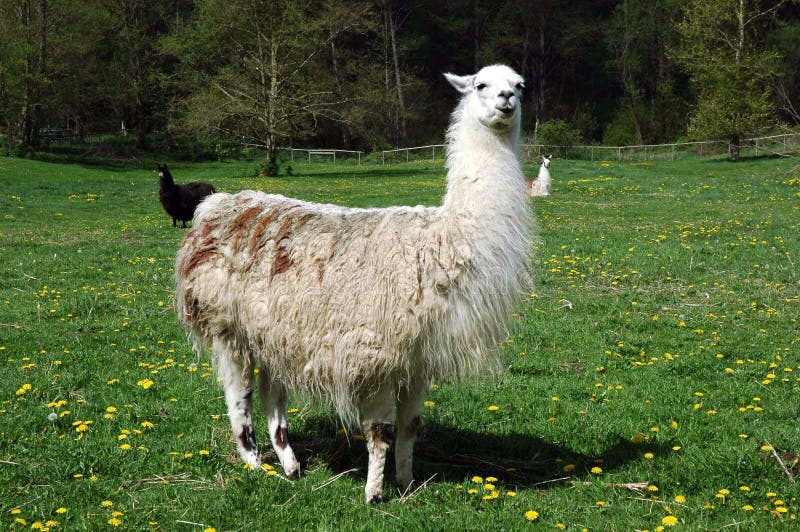
In 1990, researchers from Iowa State University surveyed sheep farmers in Montana, Wyoming, Colorado, California, & Oregon regarding their experiences with guard llamas. Respondents reported an average loss of 21% in sheep annually before getting a llama, & 7% loss afterwards. 80% of the respondents considered their guard llamas as “effective” or “very effective.”
Other than being good at their job, guard llamas have other perks. Firstly, they don’t need to be specifically trained as a guard animal nor do they need to be raised with sheep, as guard dogs require. Llamas aren’t as susceptible to traps & poisons as guard dogs are given their size & generally less inquisitive nature, & “accidents,” meaning a guard animal going after the animals he is supposed to be protecting, are virtually non-existent. Additionally, llamas can eat the same feed as the sheep, be treated with the same medications, vaccinated & dewormed the same way, & can live out on pasture with the sheep. Llamas also have longer life spans than dogs of any breed, frequently living over 20 years.


.jfif)


