
Aquatic Turtle Care Sheet
By Melissa Witherell, DVM
9/27/2024
Species Overview
Aquatic turtles live in or near water. This care sheet outlines basic care needs for a variety of aquatic turtle species, including:
Map turtles
Red-eared sliders
Painted turtles
Depending on their species, most aquatic turtles reach their adult size within 5 to 8 years.
Types of Pet Turtles
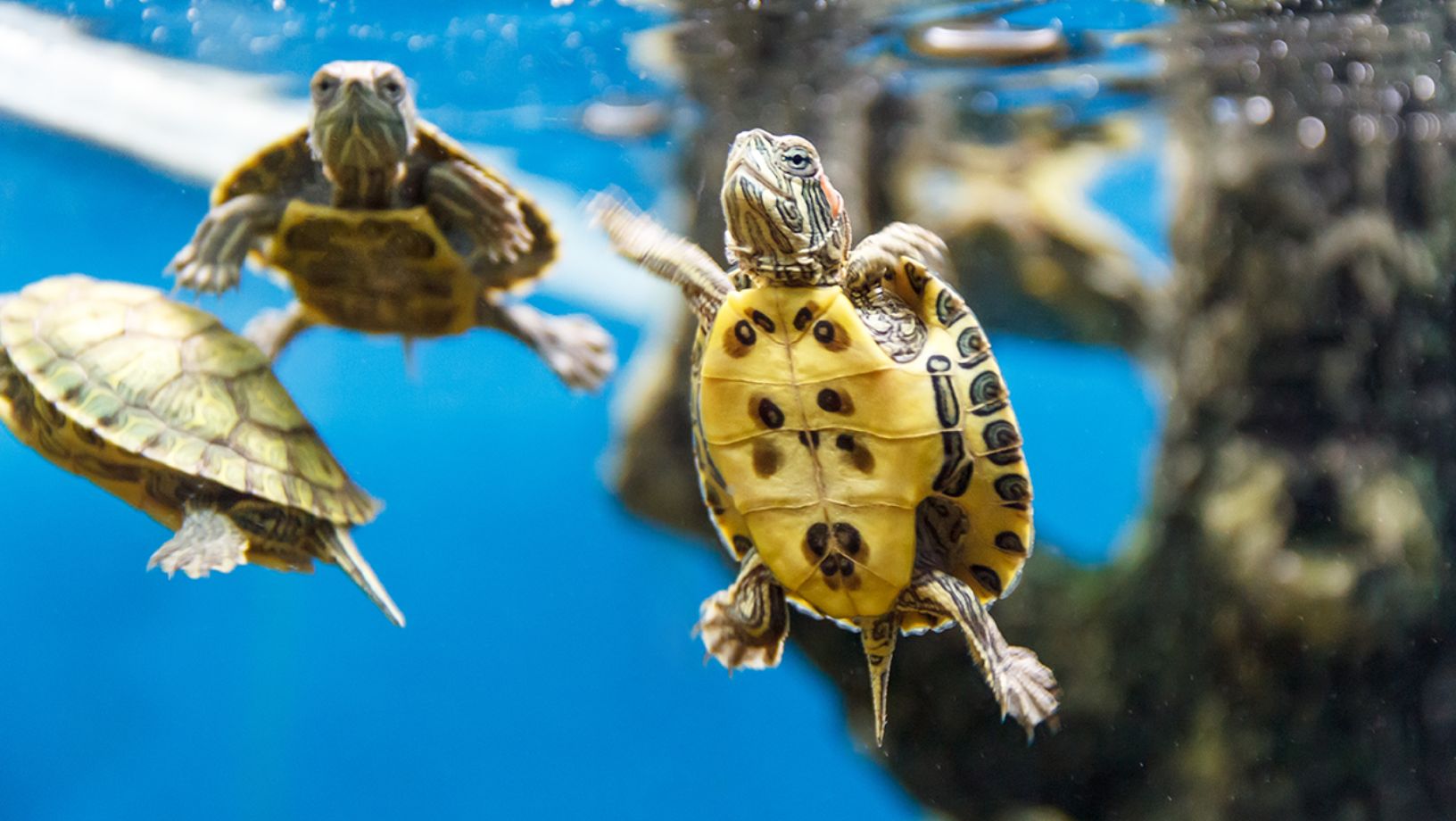
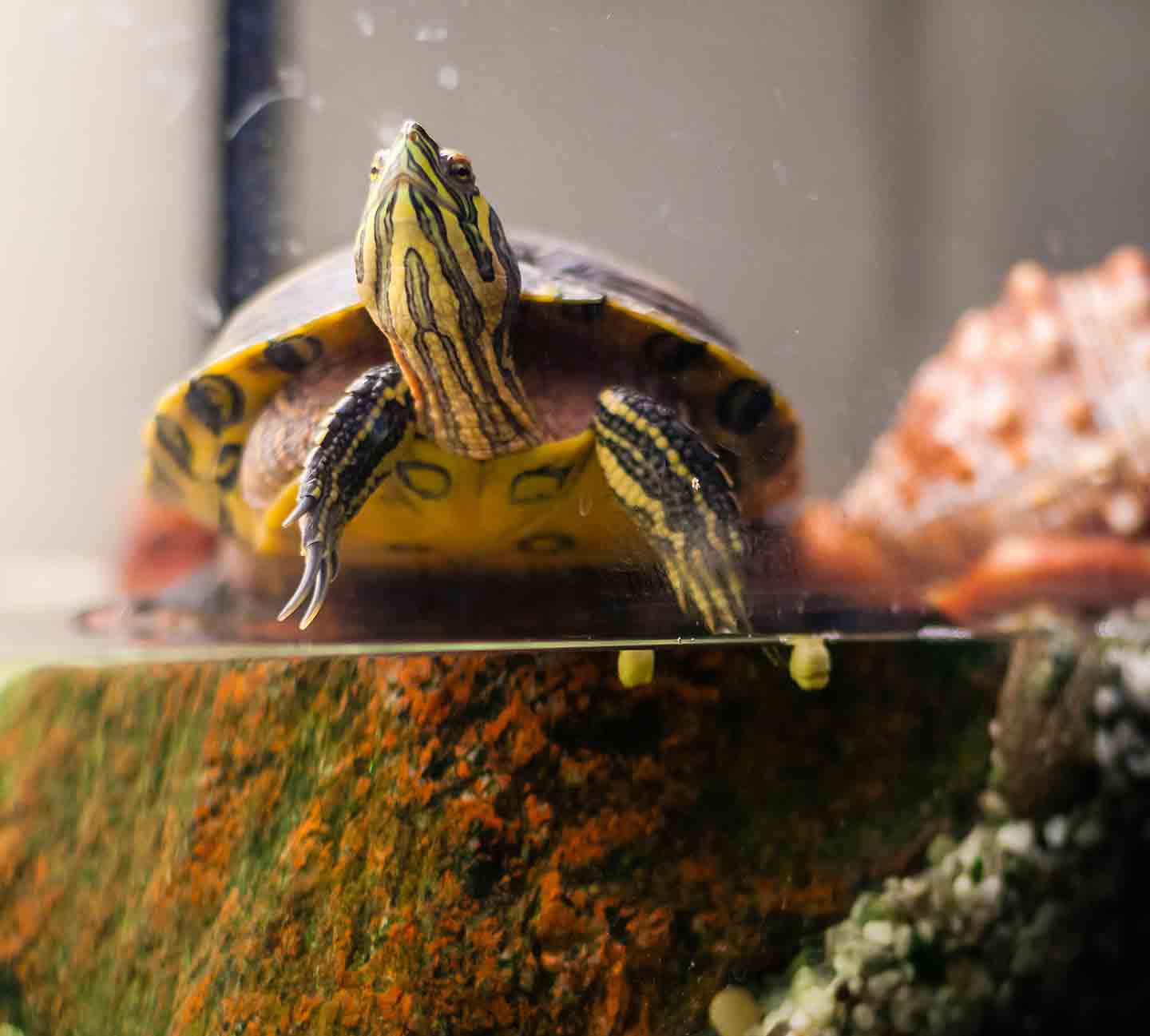
The red-eared slider is the most popular pet turtle in the United States. These turtles are named for the small red stripe on each side of their face, as well as for their ability to quickly “slide” from their basking spots into the water.
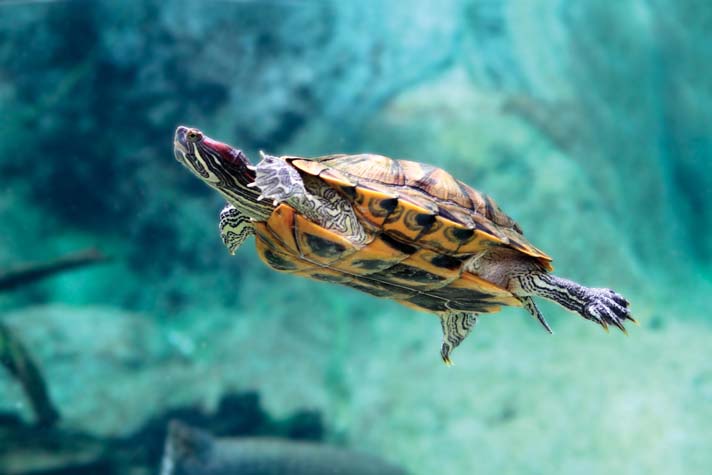
Map turtles are small- to medium-sized turtles that have green or brown skin with yellow stripes. They’re named for the intricate pattern on their upper shell, which resembles a topographic map.
Painted turtles have a similar appearance to red-eared sliders, but without the characteristic red stripe. Painted turtles have a reddish-orange shell.
The top part of a turtle’s shell is called the carapace & the bottom part is the plastron. The entire shell is covered with shield-like keratin plates known as scutes.
In general, aquatic turtles do not enjoy being handled frequently. Pet parents should allow newly homed turtles at least a few days to adjust to their surroundings before handling them.
All reptiles are potential carriers of infectious diseases, including Salmonella bacteria, which is zoonotic (transmittable to people). Because of this, always wash your hands before & after handling your turtle or the habitat’s contents.
Aquatic Turtle Characteristics
Difficulty of Care-----Intermediate
Average Lifespan-----20–40+ years with proper care, depending on species
Average Adult Size-----5–12 inches long, depending on species
Diet-----Juveniles are carnivorous; adults are omnivorous
Minimum Habitat Size-----Varies depending on the turtle’s body length; provide at least 10 gallons of tank space for every inch of body length; 40-gallon minimum recommended
pH-----6.0–8.0
Supply Checklist
To keep an aquatic turtle happy & healthy, have these basic supplies on hand:
Appropriately sized habitat (at least 40 gallons)
Commercial aquatic turtle food
Treats
Light fixtures
Basking bulb
Basking area
Thermometers (submersible & air)
Thermostat for light fixtures
UV light emitter
Submersible water heater
Water filter
Live or artificial plants
Habitat
Turtle Tank Setup
Pet aquatic turtles should be housed in a watertight, well-ventilated glass or plastic enclosure. Since some turtles are proficient climbers, the enclosure must be secured with a screened lid to prevent escape.
As a rule of thumb, an aquatic turtle needs about 10 gallons of tank space for every inch of their body length. The enclosure should be at least 4 to 5 times longer & 3 to 4 times wider than the turtle. The depth of the water inside the aquarium should be roughly one & a half to 2 times the turtle’s length. For example, a 4-inch-long turtle needs a 40-gallon aquarium that measures at least 20–24 inches in length by 16–20 inches in width. The water inside the aquarium should be 6–8 inches deep.
Because it’s illegal to sell turtles under 4 inches long as pets in the United States, an aquarium with a 40-gallon capacity or larger is recommended as a good starting point for most turtles. Make sure the habitat is wide enough for the turtle to swim & turn around comfortably.
Increase the size of your turtle’s enclosure as they grow. If more than one turtle is to be housed in the same habitat, the recommended habitat dimensions should be increased by 25%.
Aquatic Turtle Habitat Mates
Male aquatic turtles tend to fight with each other, so they should not be housed together. For some aquatic turtle species, females of the same size can share the same enclosure, though they may also fight. When introducing turtles, monitor them closely to make sure the animals are compatible. If they fight, separate them into different enclosures.
If more than one turtle is kept in an enclosure, the habitat’s size must increase accordingly. Remember: Each turtle needs at least 10 gallons of tank space per inch of body length.
Never house different species of turtles in the same enclosure.
Substrate & Basking Area
Using a substrate (material placed at the bottom of the tank) in an aquatic turtle’s tank is optional. Slate, rock, or gravel that is too big for the turtle to fit in their mouth are all suitable choices.
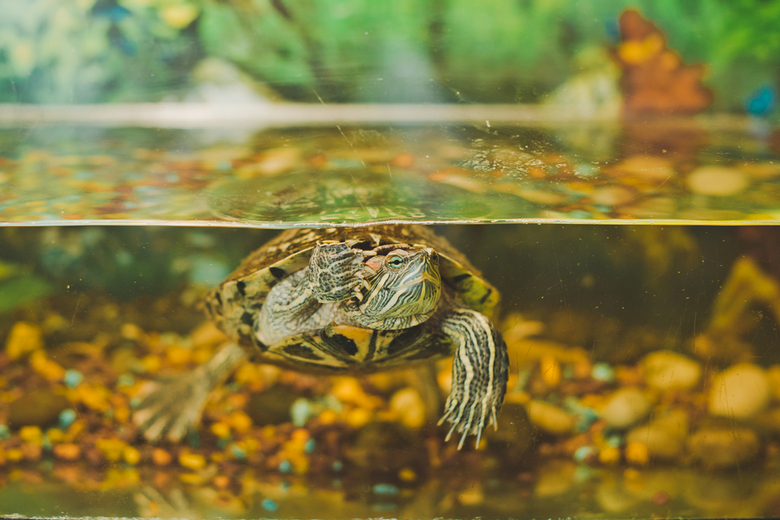
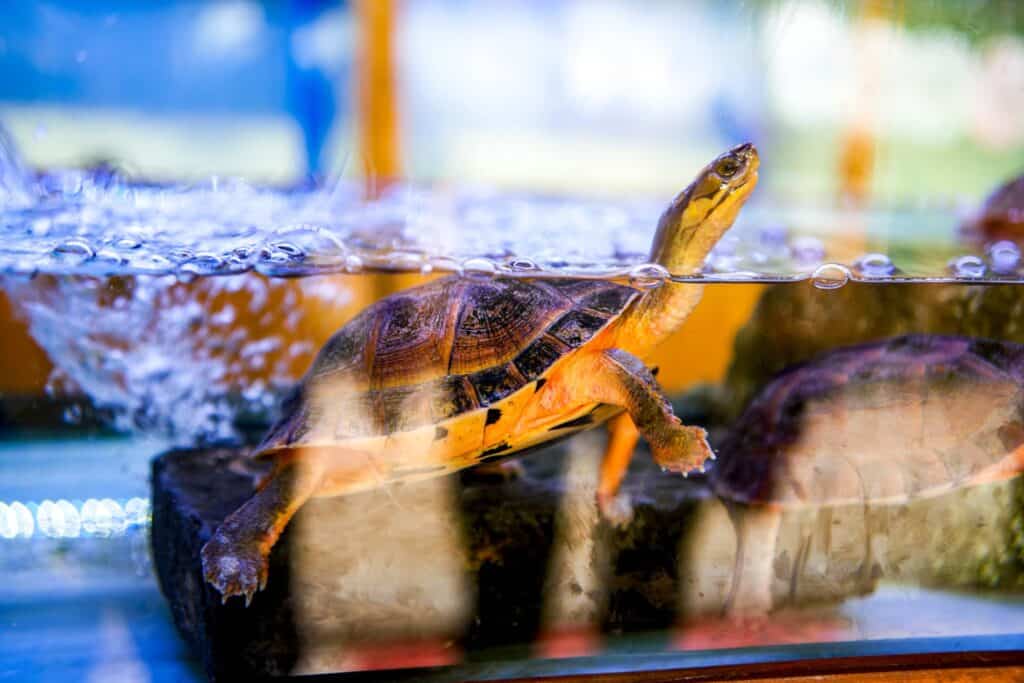
Aquatic turtles enjoy having access to a shallow area where they can submerge their body in water while keeping their head above the surface. Their tank should also have a dry, elevated spot that they can climb onto and bask. Basking spots must be easily accessible from the water.
Commercially available basking spots are available, but a sturdy pile of rocks, floating wood, or cork bark can also be used if they can support the turtle’s weight.
Lighting & Heat Support
Basking Temperature
A basking bulb or ceramic heater should be placed on one end of an aquatic turtle’s tank to create a basking area for the turtle to use during the day. The recommended temperature for the basking area is 85–95 F, while the cooler end of the habitat should be around 75 F.
The wattage needed for the heat bulb depends on the size of the enclosure, the distance of the bulb from the turtle, & the ambient temperature of the room. Adjust the wattage of the bulb to maintain the recommended temperature gradient within the tank.
Note: Some light bulbs provide not only light but also heat &/or ultraviolet (UV) light. Check the specifications of the light sources you are considering to make sure they meet your tank’s needs.
Check the temperatures of your turtle’s habitat daily. 2 thermometers should be placed in the enclosure—one in the warm area & one in the cool area—suspended above the water so you can check both zones simultaneously. Alternatively, a digital point-&-shoot thermometer can be used for instant temperature readings.
Water Temperature
The water in an aquatic turtle’s enclosure should be maintained at 75 F with an aquatic heater. In general, aquarium heaters should have between 2.5–5 watts of power for every gallon of water in a tank; for instance, a 40-gallon tank would require a heater with a wattage between 100 & 200 watts.
You’ll need to use a submersible thermometer to ensure the tank’s water stays within the ideal temperature range. Heaters should also be paired with a thermostat to regulate the aquarium’s temperature & prevent the water from getting too hot. Many modern heaters have built-in thermostats.
UV Light
Aquatic turtles require exposure to ultraviolet (UV) light to produce vitamin D in their skin, which is essential for absorbing dietary calcium & maintaining healthy bones & shells. It’s important to provide your aquatic turtle with 10–12 hours of UV light daily to imitate natural sunlight.
Since UV lights vary in intensity, follow the manufacturer’s recommendations on bulb placement in relation to the turtle.
Lights should be replaced every 6 months, even if the bulb still emits light, as their potency decreases over time.
Turtle Tank Filters
A high-quality filtration system is essential for any aquatic turtle’s habitat. In addition to keeping the tank clean, filters remove harmful toxins, such as ammonia, from the water.
An aquarium’s filter should be powerful enough to process all of the tank’s water at least 4 times per hour. For example, a tank that has 40 gallons of water needs an aquarium filter with a flow rate of at least 160 gallons per hour (GPH). If only 50 or 200 GPH filters are available, purchase the 200 GPH option.
While several types of filtration systems are available, canister filters are recommended for turtle tanks because they provide effective mechanical, biological, & chemical filtration without taking up space inside the habitat.
Water Depth & Quality
The water depth in an aquatic turtle’s tank should be approximately one & a half to 2 times the length of the turtle. This provides enough space for the turtle to swim comfortably & to easily turn upright if they happen to flip over in the water.
Before being added to a turtle’s tank, water must be treated with a turtle-safe water conditioner to remove chlorine & pollutants.
Water Testing
Regularly test the water in your turtle’s aquarium to ensure that pH, ammonia, nitrate, & nitrite levels are stable & within a safe range. A freshwater aquarium test kit can be used to quickly & accurately measure these key water parameters.
Ideal Water Chemistry for Aquatic Turtles
pH-----6.0–8.0
Chlorine-----0
Ammonia-----0
Nitrite-----0.5 ppm (parts per million) or less; this level should be as near zero as possible
Nitrate-----40 ppm or less
Pet Turtle Decorations
Basking Spot
An aquatic turtle’s enclosure must include a dry, elevated spot for basking that is easily accessible from the water. A DIY basking spot can be created using a pile of rocks or floating wood, as long as it’s sturdy enough to support the turtle’s weight.
Make sure that any rocks in the habitat are larger than the size of the turtle’s head. Otherwise, the turtle may try to eat the rocks, which could lead to a gastrointestinal obstruction.
Cuttlebone
Cuttlebones, the internal shells of cuttlefish, are an excellent way to supplement calcium & other trace minerals in an aquatic turtle’s diet. Calcium is a vital nutrient that helps keep a turtle’s bones & shell healthy.
Cuttlebones can either be affixed to the side of a turtle’s tank with a suction cup or left to float in the aquarium’s water.
Aquatic Plants
You can enrich your turtle’s environment by adding aquatic plants to the tank. Make sure any plants added to the habitat are safe for turtles to eat.
Some turtle-safe plants include:
- Anacharis
- Water lettuce
- Water lilies
- Water ferns
- Water hyacinths
Cleaning & Maintenance
You can maintain the condition of your turtle’s tank by performing routine water changes—25% of the aquarium’s total water volume every week or 50% every other week. New water should be dechlorinated before adding it to the turtle’s habitat, & it should match the temperature of the existing water in the tank.
In addition to water changes, leftover food should be removed from the tank daily to keep the habitat clean.
How To Clean a Turtle Tank
At a minimum, an aquatic turtle’s enclosure should be deep-cleaned once every 3 to 4 weeks. If more than one turtle is housed in the aquarium, cleaning should be done more often. To fully clean a turtle’s tank, follow these steps:
1. Wash your hands: Before cleaning or performing any maintenance on a turtle’s habitat, rinse & wash your hands thoroughly to ensure there are no traces of lotions, perfumes, or other toxic chemicals that could harm your turtle.
2. Move the turtle: Transfer the turtle to a temporary, secure enclosure. Remove all accessories & decor from the habitat that needs to be cleaned.
3. Scrub the tank: Scrub the empty tank & any furnishings with a reptile habitat cleaner or 3% bleach solution. Allow the bleach solution to sit for at least 10 minutes to properly disinfect the surfaces. If using a commercial habitat cleaner, follow the manufacturer’s instructions.
If needed, soak décor in dechlorinated water to remove stubborn debris.
To prevent unsightly scrapes & scratches, acrylic tanks should only be cleaned with specialized cleaning tools designed for acrylic aquariums, such as the API® Extra Long Algae Scraper for Acrylic Aquariums or API® Algae Pad for Acrylic Aquariums.
Rinse thoroughly: Rinse the habitat & accessories thoroughly with water, making sure that any trace amounts or residual smells from the cleaning agent or bleach solution are removed.
Refill the tank: Once the tank is dry, refill it with clean water that’s been treated with a water conditioner. Make sure that heaters, filters, & thermometers are reinstalled correctly.
Return the turtle: Finally, return the turtle & the clean decor to the habitat.
Diet & Nutrition
Aquatic turtles enjoy a variety of foods, including:
Commercially available turtle pellets
Vegetables
Fruit
Earthworms
Occasional treats (such as krill, insects, or small bits of cooked chicken)
Juvenile turtles require more protein in their diet for healthy growth, while adults should consume more plant matter to prevent unhealthy weight gain.
Turtles of all ages should be fed in warm water (in the upper 70s F) to stimulate their appetite & aid digestion. Leftover food should be removed from the habitat daily.
Feeding Guidelines for Aquatic Turtles Under 1 Year Old
Younger aquatic turtles are more carnivorous & require extra protein in their diet for healthy growth. Juvenile aquatic turtles under 1 year of age should be fed every day.
A nutritious & well-balanced diet for a juvenile aquatic turtle consists of:
Protein-rich foods: including mealworms, earthworms, freeze-dried krill, aquatic snails, silkworms, bloodworms, or bits of cooked chicken. Protein-rich foods should make up a major portion of a juvenile slider’s diet compared to other foods, & a higher percentage of the total diet compared to adult sliders.
Rosy reds & common goldfish should only be offered as an occasional treat, as they are high in fat & can lead to obesity.
Dark leafy greens & other vegetables: Plant matter should make up about 25–30% of a juvenile aquatic turtle’s diet.
Dark leafy greens should be the mainstay of their plant-based diet.
Bell peppers, carrots, squash, & green beans are all excellent sources of vitamin A, which supports a turtle’s overall health.
Nontoxic aquatic plants, such as anacharis & water lettuce, can also be included.
Vegetables can be shredded or chopped into bite-sized pieces before being added to a turtle’s tank, which is especially helpful for young & small turtles.
Commercially available pellets or sticks formulated for aquatic turtles: Pelleted food should make up no more than 25% of a juvenile turtle’s diet.
Follow the manufacturer’s instructions to determine the appropriate amount of food to feed your turtle daily. Any uneaten food should be discarded before each feeding & replaced with fresh food.
Feeding Guidelines for Aquatic Turtles Over 1 Year Old
An aquatic turtle is generally considered an adult when they reach around 1 year of age, although this can vary by species. Turtles over 1 year of age should be fed every 2 to 3 days (unless otherwise instructed by a veterinarian).
Leafy greens & other vegetables: These should make up about 50–60% of an adult turtle’s diet.
Commercially available sticks or pelleted food: This should constitute no more than 25% of an adult turtle’s diet.
Fruits: Small amounts of fruits such as apples, cantaloupes, & berries can be offered as an occasional treat. Fruit should be finely chopped into bite-sized pieces before being added to the turtle’s tank.
Treats: Including fruit, treats should not make up more than 10% of a turtle’s total diet.
Grooming & Care
Shedding
Aquatic turtles will naturally shed their scutes (the shield-like keratin plates on a turtle’s shell) throughout their lifetime. To encourage healthy shedding, be sure to maintain proper water conditions in the tank & provide adequate calcium in the turtle’s diet.
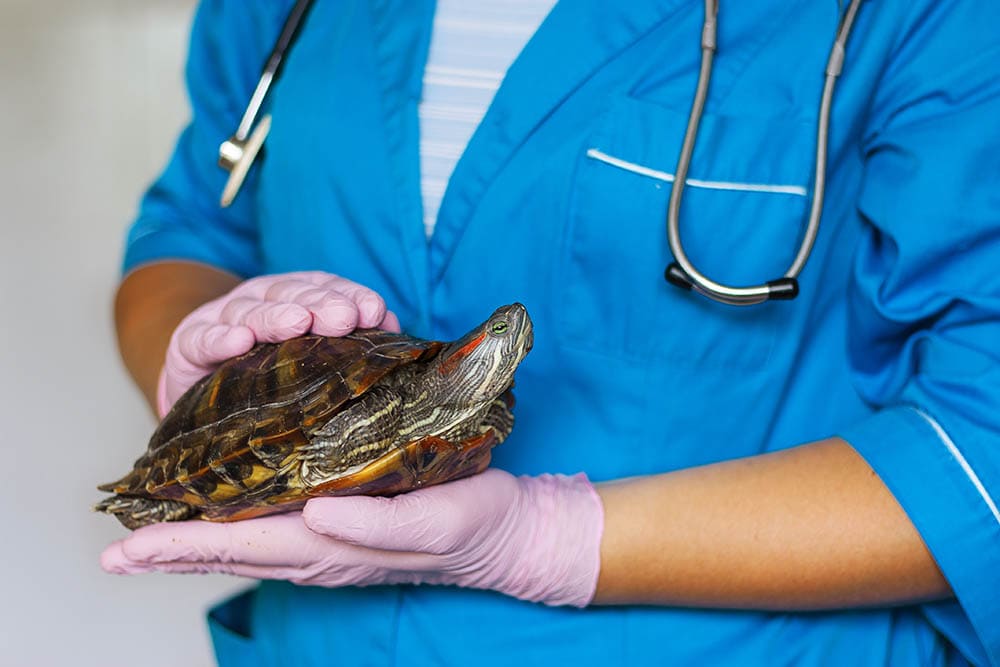
If you notice any deformities or signs of damage on a turtle’s shell, such as scrapes, scratches, dents, or soft spots, these should be addressed by a veterinarian.
Beak Care
Instead of teeth, turtles have a rigid “beak” at the front of their mouth, which they use to break down food. Most turtles do not require beak trimming, as it should wear down gradually with daily use.
Consult a veterinarian if your turtle’s beak looks overgrown (hanging past its jawline) or misshapen, if the turtle has difficulty opening & closing its mouth, or if it is dropping food. Never try to trim your turtle’s beak on your own.
Veterinary Care
Annual Care
Aquatic turtles should be seen by a veterinarian at least once a year for a physical exam, fecal testing, & blood work. They can be transported in a plastic container or critter keeper. You can line the container with paper towels for smaller turtles or towels for larger ones. Misting your turtle prior to transportation is recommended to provide moisture, but do not fill the container with water.
Signs of a Healthy Pet Turtle
Clear & clean eyes, ears, & nares (nostrils)
Clean, pink tongue & gums
Skin free of abrasions, ulcers, growths, or parasites
Clean vent (the opening through which waste is expelled)
Active
Healthy appetite
Smooth, firm shell without defects or discoloration
No swelling or bumps
Breathing easily without effort, no nasal discharge or bubbles
Species-appropriate beak length
When To Call a Vet
Swollen, sunken, closed eyes, or eyes with discharge
Ulcers, abrasions, swelling, bumps, or discoloration (e.g., redness) on the skin
Lethargy or hiding behavior
Loss of appetite (not eating)
Nasal discharge or bubbles, difficulty breathing
Difficulty moving, standing, or walking
Divots, defects, discoloration, or trauma to the shell
Diarrhea, constipation, straining, or difficulty urinating or defecating
Discharge or prolapse (protrusion of tissue) from the vent
Signs of trauma or injury
Common Illnesses
Bladder stones
Tissue prolapse from vent (such as bladder, uterus, penis, intestines, or cloaca [the common outlet for waste & reproductive fluids])
Metabolic bone disease
Shell fracture or trauma
Egg binding (being unable to pass eggs)
Loss of appetite (not eating)
Abscesses
Shell rot
Respiratory disease
Foreign body ingestion
Aquatic Pet Turtle FAQs
How long do pet turtles live?
On average, pet turtles can live 20–30 years in captivity, but some species can live much longer.
What do pet turtles eat?
Depending on the species, some turtles are omnivores, eating both plants & meat, while others are more carnivorous & primarily consume meat. As aquatic turtles mature, they generally increase their plant consumption. Commercial aquatic turtle pellets, chopped leafy greens, mixed vegetables, & fruit are excellent dietary options, complemented by a good vitamin supplement.
Are turtles good pets?
Turtles can make great pets with proper care and nutrition, & having a pet turtle can be very rewarding.
What turtles stay small?
Painted turtles are smaller compared to red-eared sliders or map turtles, ranging from 2.5 to 10 inches long, with females typically larger than males. Note that the sale of small turtles with a shell length under 4 inches is prohibited by law in the U.S.
Cute Critter Pics:


:strip_icc()/spruce-pets-german-dog-breeds-update-0c81efd9f89c4e41880e3113d55877c9.jpg)



:max_bytes(150000):strip_icc()/GettyImages-584515898-27542baf7843485dbc7f9589e465f669.jpg)





.jpeg)
.jpeg)

