Thursday, December 10, 2020

Dec. 9/2020

Feature:

10 COOL SIMILARITIES DOMESTIC CATS HAVE WITH BIG CATS

“…Scientists believe that all of today’s house cats evolved from a common ancestor. The most accepted theory is that millions of years ago, the feline lineage split, & we eventually ended up with the big cats in the wild & the small pets that prefer our living rooms over fending for themselves. And while a lot can happen in 10 million years, studies show house cats & tigers share 95.6% of their DNA. That number equates to a lot of similarities, & it’s fascinating to compare the cat napping in your sink to a leopard lounging in a tree.

Domestic cats & big cats have a lot in common. Here are some of the most interesting similarities.

1. They’re natural-born hunters.

All you have to do is look at a big cat & domestic cat to see their anatomical similarities. Their bodies are built generally the same, just different sizes. They have powerful legs, flexible backs, sharp claws, & teeth. All of those components work together to make all cats skilled hunters.

And their hunting abilities aren’t all physical. All types of cats possess a natural instinct that tells them the most successful ways to stalk & take down prey. Lions, tigers, cheetahs, leopards, & all the other big cats hunt to survive. Tabbies, tuxies, & calicos can hunt for food if they need to, but they mostly do it because it’s fun & instinctual.

2. They like to rub against things.

House cats rub against our legs, the furniture, trees, the walls—basically everything they can. We tend to consider this a cute attention-seeking behavior, but it has a more practical purpose. What they’re actually doing is rubbing their scent on things they consider part of their property or territory.

The rubbing allows your cat to leave behind scent markers that tell other cats to steer clear. Out in the wild, big cats do the same thing. They mark the boundaries of their territories by rubbing on trees, rocks, & each other.

3. They have the same (ideal) diets.

A tiger will probably turn their nose up to the hard kibble your cat regularly eats, but both big cats & house cats are carnivores. They survive on high protein diets & don’t need to eat things like fruits or vegetables. In fact, their bodies have trouble processing plants. 

It would be inhumane to subject a cat to a vegetarian diet as they’re obligate carnivores, & the most species-appropriate diet for house cats is actually raw meat. You won’t catch a lion grazing on grass, & while your house cat might nibble on some green stuff, it’s not a necessary part of their nutrition.

4. They like to scratch.

Those claw marks on the wooden table legs & the shredded fabric on the couch are consequences of your cat’s natural instinct to scratch. They do it to file their nails, & it’s also another way to mark their territory. The physical marks & the scents left behind from the glands in their paws act as effective ‘no trespassing’ signs.

In the wild, there is no spray bottle to stop wild cats from putting claw marks in anything they want. They do it for all the same reasons as your house cat. But for them, it’s more serious. Protecting their territory is a matter of life or death.

5. They follow the same sleep cycle.

You aren’t a cat person until you’ve been woken up at 4 AM by a crazy cat doing sprints down the hallway. It happens because cats are crepuscular creatures. This means they’re most active between dusk & dawn.

In the wild, the low light of dusk & the darkness of night is the ideal time to hunt. A big cat’s eyes allow them to see in the dark a lot better than most of their prey. They use the lighting to their advantage, & when the sun is high in the sky, you’ll likely find them napping. Just like house cats, big cats love their naps & can sleep an average of 15 hours a day.

6. Their claws are retractable.

In addition to being sharp & potentially deadly, almost all species of cat (big & small) have retractable claws. The cheetah is the only species with semi-retractable claws, & that’s because they use them to burst into high speeds at a moment’s notice.

…Claws come out when the cat is hunting or climbing. And when they’re resting or walking on solid ground, the claws retract to protect them from wear & tear.

7. They have saggy bellies.

A life of luxury puts a lot of house cats at risk of being overweight, but those saggy bellies aren’t always about too much food & not enough exercise. Cats have what’s called a primordial pouch that hangs down in front of their hind legs. This extra flap of skin & fat has nothing to do with a cat’s weight.

Both house cats & big cats have primordial pouches for practical purposes. The flap of skin act as padding to protect their vital organs during fights, & it also stretches to allow more flexible movements while running & jumping…

8. They like to play.

There are no catnip mice or feather wands in the wild, but that doesn’t stop big cats from playing like carefree house cats. Young cats usually like to play more than their adult relatives, but age isn’t as much a factor as you might think.

Big cat cubs play with each other to learn basic skills just like kittens wrestle with their litter mates. Big cats in sanctuaries & zoos have even proven their love of play by being curious about things like boxes & laser pointers. Big or small, it seems no feline can resist a good play session. 

9. They have rough tongues.

You either love or hate the sandpaper feeling of your cat’s tongue against your skin…a cat’s tongue is covered in little backward-facing barbs called papillae. Those little barbs help detangle knots & lift out debris from a cat’s fur. They also tickle your skin when your cat decides to turn their grooming attentions toward you.

Hopefully you never get close enough to feel the swipe of a big cat’s tongue. But if you do, you’d feel the similarities between that wild animal’s tongue & that of your friendly house cat’s. Lions, tigers, jaguars, & all the other big cats have the same barbs on their tongues as domestic cats. The rough texture helps with grooming & also pulls meat off the bones of their prey.

10. They knead.

…This adorable kneading behavior starts when cubs & kittens move their little paws while nursing to stimulate milk flow. And as they get bigger, the habit turns into a signal of relaxed contentment.

Whether that baby grows to be a 10-pound house cat or a 600-pound tiger, that kneading behavior sticks with them. No one knows for sure why this behavior follows cats into adulthood, but scientists have observed big cats kneading both in the wild & in captivity.

Big or small, domestic or wild, cats of all kinds are part of the same family. So the next time you look at your feline friend, it won’t be hard to imagine them living life in the wild.”

Amber King

Catitudedaily.com

Cute Critter Pics:


Weekly Chuckle:
#StaySafe


Wednesday, December 2, 2020

Dec. 2/2020

Feature:

Sea Otter

"Sea otters are a charismatic marine mammal found in the north east Pacific Ocean. As a keystone species, sea otters are a critical member of the kelp forest ecosystems they live in. They are foragers, mostly eating hard-shelled invertebrates such as sea urchins. By keeping the population of kelp-grazing sea urchins to a minimum, sea otters are vital to the health & stability of the kelp forest, & in turn, all the species that depend on kelp forests for survival. Sea otters are preyed upon by bald eagles, orcas, & sharks...

DISTRIBUTION- North east Pacific Ocean

ECOSYSTEM/HABITAT- Shallow, coastal waters; often found in kelp canopies

FEEDING HABITS- Carnivores & foragers

CONSERVATION STATUS- Endangered/Threatened/Special Concern...

TAXONOMY- Order Carnivora (carnivores); Family Mustelidae (weasels)

Lifecycle- Sea otters are mammals & reach sexual maturity around 3 years of age for females & around 5-6 years for males, living to 15-20 years of age. Sea otter pups are usually born from April to July, though it can occur any time of year, & they after often born in the water! Females typically only have a single pup at a time, nursing them while floating on their backs. With a light yellowish-brown fur, pups usually only weigh around 2kg at birth.

Fishing- Historically, sea otters ranged from Mexico, all the way through the north east Pacific to Japan, but they were driven to the brink of extinction by the fur trade that began in the 1700s. By 1929, they were locally extinct, or extirpated, from British Columbia. Recognized as an important species for the health of the ecosystem, 89 sea otters were successfully reintroduced to British Columbia’s Checleset Bay between 1969 & 1972. Since then, there have been ongoing protective measures, leading to a population of over 6500 – & still growing! Today, sea otters are protected by law & can be found all along the west coast of Vancouver Island & part of the central coast of British Columbia."

https://oceana.ca/

Cute Critter Pics:


Weekly Chuckle:


#StaySafe


Wednesday, November 25, 2020

Nov. 25/2020


Feature:

His Name Is Xiao Qi Ji

"The Smithsonian’s National Zoo & Conservation Biology Institute’s 3-month-old giant panda cub received his name today. After 5 days of voting & just under 135,000 votes, the winning name is Xiao Qi Ji (SHIAU-chi-ji), which translates as 'little miracle' in English. It was one of 4 Mandarin Chinese names that were offered for a public online vote from Nov. 16 to Nov. 20... Giant pandas are an international symbol of endangered wildlife & hope, & Xiao Qi Ji’s birth offered the world a much-needed moment of joy amidst the COVID-19 pandemic. His name reflects the extraordinary circumstances under which he was born & celebrates the collaboration between colleagues who strive to conserve this species.

'Connecting people around the world with nature, whether in person or in this virtual setting, is a cornerstone of our mission to conserve & protect giant pandas for future generations,' said Steve Monfort, John & Adrienne Mars Director of the Smithsonian’s National Zoo & Conservation Biology Institute. 'Like many who have followed our giant panda cub since his birth last summer...Watching Xiao Qi Ji always puts a smile on my face. We are grateful that those who share in our joy have helped us pick the perfect name for our panda cub.'

Xiao Qi Ji was born at the David M. Rubenstein Family Giant Panda Habitat Aug. 21, at 6:35 p.m. to mother Mei Xiang (may-SHONG) & father Tian Tian (tee-YEN tee-YEN). His birth was streamed live on the Zoo’s Giant Panda Cam, & since then more than 1.5 million virtual visitors have tuned in to watch him grow. Giant panda fans can see Xiao Qi Ji, Mei Xiang, & Tian Tian via the Giant Panda Cam...

As part of the Zoo’s cooperative breeding agreement with the China Wildlife Conservation Association, all cubs born at the Zoo move to China when they are 4 years old..."

Nov. 23/2020

https://nationalzoo.si.edu/

Cute Critter Pics:


Weekly Chuckle:


#StaySafe


Wednesday, November 18, 2020

Nov. 18/2020

Feature:

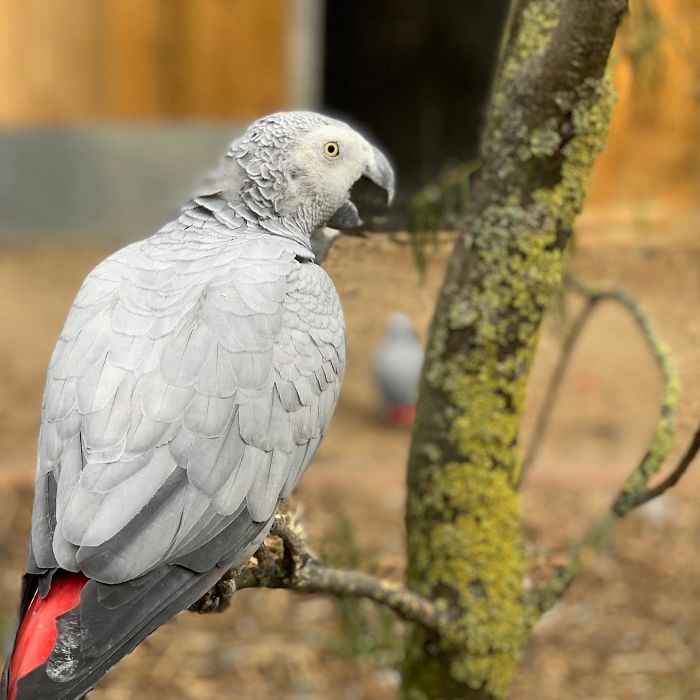
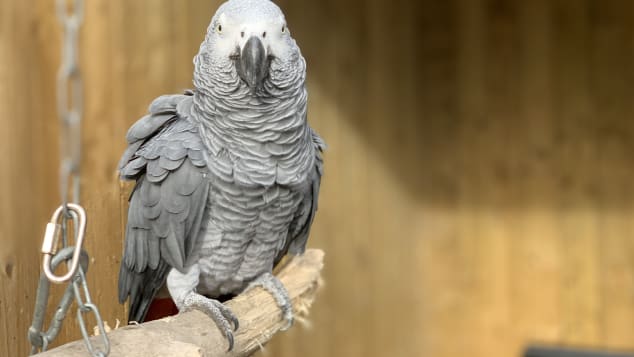
Parrots in wildlife park moved after swearing at visitors

"London (CNN) — 5 parrots have been removed from public view at a British wildlife park after they started swearing at customers.
The foul-mouthed birds were split up after they launched a number of different expletives at visitors & staff just days after being donated to Lincolnshire Wildlife Park in eastern England.
'It just went ballistic, they were all swearing,' the venue's chief executive Steve Nichols told CNN Travel... 

The African grey parrots -- named Eric, Jade, Elsie, Tyson, & Billy -- were given to the park from 5 different owners within the same week, & shared a quarantining facility together before being placed on display...
'They literally, within a very short period of time, starting swearing at each other,' Nichols said. 'F**k off' is the most common one,' he explained -- 'it's a very easy one for them to learn'...
Most customers enjoyed the talent once the parrots were displayed. 'The visitors were giving them as much back as what they were giving to them,' Nichols said.
But concern for younger customers forced staff to split up the birds & temporarily remove them from the park's public areas. Staff now hope the birds' language will become more family-friendly now that they have been separated.
'To take in a swearing parrot isn't an unusual thing, it's something that happens probably 3 or 4 times a year,' Nichols said.
But the pandemic has led to a surge in donations, as owners spend more time with their birds & decide to give them to parks that can provide them with a larger living space, he explained...
African greys are among the most popular species of parrot. Around 1.1 million indoor birds were kept as pets in the UK in 2019, according to the Pet Food Manufacturers' Association."
Rob Picheta
Sept. 29/2020
cnn.com
Cute Critter Pics:


Weekly Chuckle:

#StaySafe


Friday, November 13, 2020

Nov. 11/2020


Feature:

5 Weird Things Cats Love

“…Cats may be mysterious creatures, but there’s usually a reason behind their behaviors or an explanation for their interests. If you’re curious as to why your cat likes the weird things he does, then keep reading for insight on the motivation behind your cat’s fascination.

Drinking From Your Water Cup or the Faucet Instead of Their Fountain

So, you purchase an expensive cat water fountain & your cat likes to drink out of your glass or from the faucet…

Your cat may not realize that your glass of water is your glass of water. He just may find it convenient that there is a vessel that contains water when he is thirsty, so he drinks from it. Cats in the wild will drink whenever they are thirsty & find a water source; they do not specifically look around for bowls of water. 

Another perspective may be that your cat watches you drink, & she wants to drink what you are drinking. If it is good enough for you, it is good enough for her…

…your cat may just have a taste preference for running water compared to water that has been sitting in a cat bowl all day, which leads to bacteria formation. Plus, food particles may fall in & change the taste of the water.

This is the reason why your cat’s water bowl should be changed several times a day & washed with soap & water at least daily.

Pushing Things Off Tables & Watching Them Break

Do you have a cat that just lives to knock things off your shelf? It is so frustrating to provide your cat with plenty of toys, only to have her knocking items off of counters & breaking things on a daily basis…

… It may just be fun for him to watch the items bounce around in different directions each time they fall or watch them shatter to multiple pieces.

Getting Into Boxes & Jumping Out of Them

Why are some cats obsessed with boxes? They are creatures of comfort, & sometimes being in a box with side support is comfortable. Other times, being in a box makes some cats feel safe & secure, like they are protected from all sides.

Boxes are also fun to hide in, spring out & surprise people & other pets in the household…Just like some people like to pull pranks, this is their way of pranking us.

Stalking Inanimate Electrical Cords

My cat is fascinated by electrical cords. Every night as we sit & watch television, I see him make the rounds around the living room. He bats at the tags attached to the cords. Then he grabs the cords & tries to bite it…

…he might have learned that playing with the cord was a good way of getting my attention. Playing with the cord may also be fun because it moves in different & unexpected ways, which piques his interest…

Having Their Butt Scratched

Have you ever had a cat walk up to you, turn around, & present their tail end? The area just above the tail that we would call the ‘butt’ is an area that a cat cannot use its paws to scratch…

Some cats have learned to back up against a dangling hand if they want a good scratch. Cats might indicate their enjoyment by purring, twitching their tails, raising their butts & sometimes arching up against your hand or foot…”


Wailani Sung

Petmd.com

Jan. 14/2019    

Cute Critter Pics:


Weekly Chuckle:


#StaySafe


Friday, November 6, 2020

Nov. 5/2020


Feature:

Pets Clearly Rule The Roost

"What are your pet's peeves? Or, perhaps more consequently, who are your pet's peeves?

   A survey from furniture company suggests 63% of pet owners said they would break up with their significant other if their pet didn't like them...

   The survey, which focused on 1,000 Americans of varying demographics, also found that 83% of owners have thrown birthday parties for their pets, 62%  have social media accounts for them & 73% share their beds with them.

   And...a whopping 80% of owners said they share their food with their pets."


Melissa Hank

The Gazette, Montreal

Oct. 19/2020

Cute Critter Pics:


Weekly Chuckle:

#StaySafe