Showing posts with label snakes. Show all posts

Wednesday, March 26, 2025

March 26/2025

It’s Official: There’s Another ‘World’s Largest Snake’

by Olivia Young

atlasobscura.com

2/ 29/ 2024
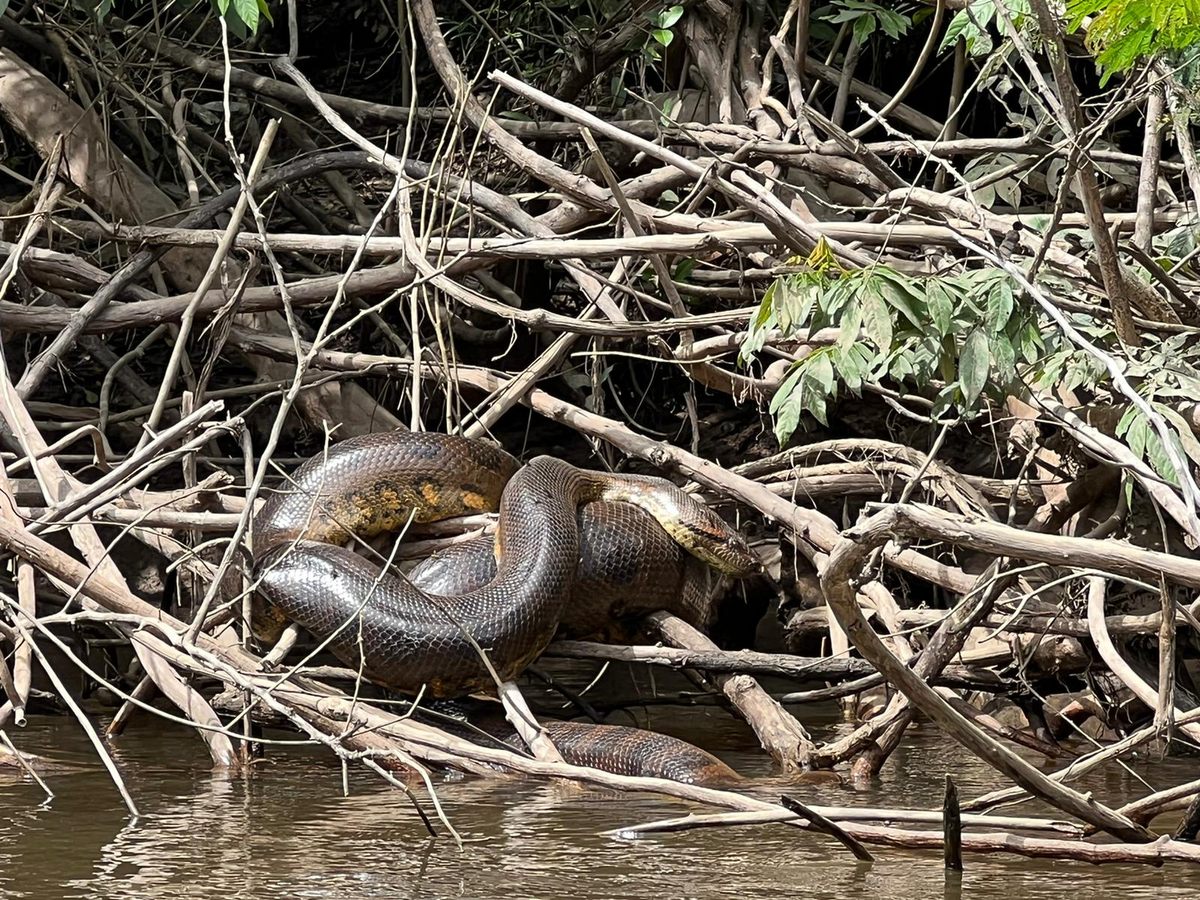
The cloudy swamps & creeping streams that cover vast expanses of South America harbor some of the most hair-raising wildlife on the planet: poisonous frogs, electric eels, deadly mosquitos, & grinning caymans are just some. The Amazon is no place for someone who is spooked by things slimy, scaly, or hidden under murky water with only menacing eyes & nostrils visible. And yet that’s exactly what Jesús Rivas has looked for when he’s waded through the wetlands of South America over the past 32 years.

Rivas, a biology professor at New Mexico Highlands University, is an anaconda expert. In his decades of research, he has collected hundreds of blood & tissue samples to expand our collective understanding of the world’s largest snake, ultimately to protect it against threats like human impact & climate change. With a team of fellow researchers composed of both academics & Amazonian Indigenous peoples, he has discovered a major divergence in the green anaconda, one of historically 4 anaconda species.
Green anacondas are the heaviest snakes on the planet & the second longest, after reticulated pythons. They occur in the wet tropics of South America, east of the Andes, from northern Venezuela to the south of Brazil. Until recently, the green anaconda was thought to be just one species, Eunectes murinus, but a newly released study headed by Rivas found out there are actually 2. The research describes major genetic differences between green anacondas in the northern half versus the southern half of their range.

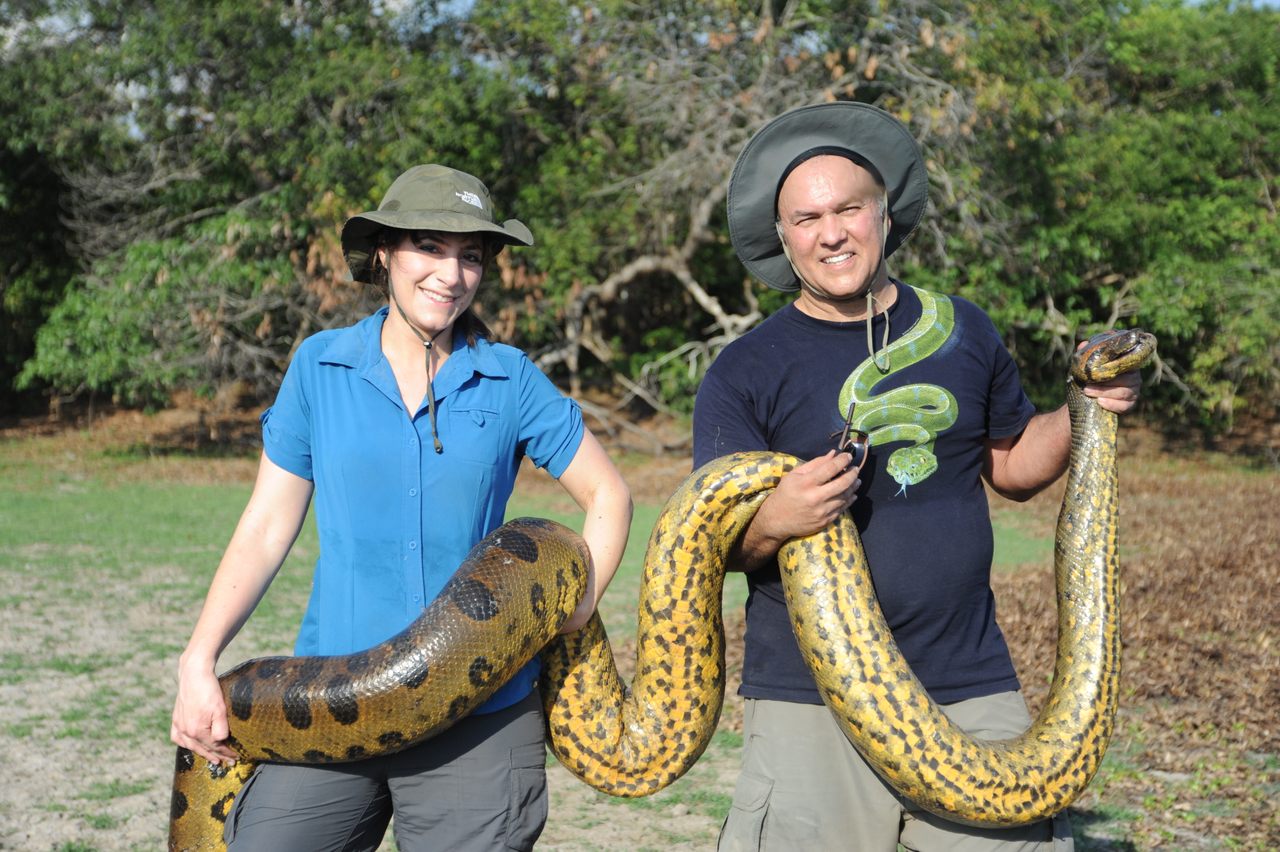
“We got the first hints that [the northern] species was different from the southern one in 2007,” Rivas says. “Then we started the hard process of gathering samples from all over South America.” Even though the 2 snakes appear identical, DNA sampling shows a drastic genetic difference of about 5.5%. That’s a bigger difference than the one between humans & chimpanzees. When 2 or more species are classified as one because they are morphologically indistinguishable, they’re called “cryptic species.” This is the case for the green anaconda, whose northern & southern populations are virtually identical in their massive size (reaching lengths of 30 feet & weighing up to 550 pounds) & coloring (olive green with dark splotches along their backs & sides).

Bryan Fry, co-author of the study & professor at the University of Queensland in Australia, says the key difference between the 2 populations is the geographic range. Years of field work & sampling revealed that specimens studied across the northern part of the green anaconda’s distribution were actually of a sister clade of E. murinus, which the researchers have named E. akayima. Whereas E. murinus (the southern green anaconda) can be found in Venezuela, Trinidad, Guyana, Suriname, & presumably Colombia, the second species E. akayima (the northern green anaconda) inhabits Peru, Bolivia, & Brazil. The species stick to their separate zones except for in French Guiana, & the study suggests that country “might be a contact zone for these 2 groups.”

In 2022, Rivas, Fry, a local Indigenous leader, actor Will Smith, & the crew of National Geographic’s “Pole to Pole” series embarked into the Waorani Territory of Ecuador & found evidence that the northern green anaconda is present there as well. That Indigenous leader, Penti Baihua, & his son, Marcelo Tepeña Baihua, are listed as co-authors on the study, & Will Smith is mentioned in the acknowledgements.

“One key factor that allowed us to make the publication now is new developments in our understanding of the history of South America,” Rivas says. He clarifies that the 2 species weren’t always so different. They likely diverged millions of years ago as a result of a ridge that rose & geographically separated the north & south. Now that there’s data to support that the green anaconda is made up of 2 claves, researchers can begin to work out the unique needs of each so these enormous snakes can continue slithering about & dominating the jungle.

“The discovery of a new species is always important,” Rivas says, “as it informs us better of the diversity we have—& may lose.”

* Article & photos from New Anaconda Species Has Been Officially Recognized - Atlas Obscura

Cute Critter Pics: 


Weekly Chuckle:

Slava Ukraine!!!


Wednesday, July 18, 2018

July 18/2018

Feature:

8 Cool Facts About Snakes

“…1. Snakes live on every continent except Antarctica.
Over 3,000 species of snakes live worldwide in nearly every environment possible, including deserts, swamps, forests, grasslands, & the ocean.

The largest variety of snakes is found in warmer climates because all snakes are cold blooded or ectothermic, which means they can’t regulate their own body temperature. They need an external source of heat to survive. In colder areas, many snakes will hibernate for winter or seek warm areas to hide in, such as inside a garage or barn.

The only places in the world that do not have snakes are Iceland, Ireland, Greenland, & New Zealand. Why snakes never made it to these island nations is unknown, but many of them now have laws against importing snakes because non-native snakes could cause extensive damage to the local ecosystems.

2. Snakes have been around for over 60 million years.
The largest snake fossil ever found was from what scientists have named the titanoboa. This creature lived over 60 million years ago & grew 50 feet… long & weighed up to 2,000 pounds ...

The largest snake in the world today is the reticulated python…

3. Snakes have no chin.
…Instead of one continuous jaw bone like humans, snakes have 2 bones that come down each side of their jaws. These bones are connected by very stretchy ligaments that allow them to easily spread apart & consume large prey…

4. Only 70% of snakes lay eggs.
The other 30% give birth to live young…

King cobras are the only snake known to build actual nests for their eggs, which the mothers guard viciously.

5. Some snakes can fly.
The thought of a flying snake may seem like something out of a nightmare, but a few snake species in the jungles of South & Southeast Asia are known to take flight…

6. The majority of snakes are not poisonous.
Of the approximately 3,000 species of snakes in the world, only 375 of these are venomous…

7. Snakes can hunt in groups.
Snakes have the reputation of being solitary hunters. But that’s not always true. A few species have actually been documented hunting in groups…

Cooperative hunting has also been observed in Cuban boas. These snakes are known to gather at the mouths of caves to hunt bats as they move in & out of the cave to roost each day. They do this by attaching their tails to small pits in the ceiling of the cave & hanging downwards to grab bats as they fly past…

8. Snakes symbolize good luck.
…many cultures traditionally believe that snakes bring good luck. In Japan, snakes symbolize wealth & money. It’s said you may lose all your money if you kill a snake. And finding a white snake can bring life-long luck.

In general, the more poisonous a snake is, the more good fortune it will bring. In India & Southeast Asia, meeting a king cobra can be considered a very lucky event. And in some parts of China, seeing a snake enter your home is a sign that you will have a long, peaceful life…”


Zoe Blarowski
Nov. 16/ 2017
Care2.com
Cute Critter Pic
Weekly Chuckle