Showing posts with label Vultures. Show all posts

Wednesday, December 10, 2025

Dec. 10/2025


100 Years After Vultures Disappeared from These Mts, Their Return Completes ‘Europe’s Yellowstone’

By Andy Corbley 

12/4/2025

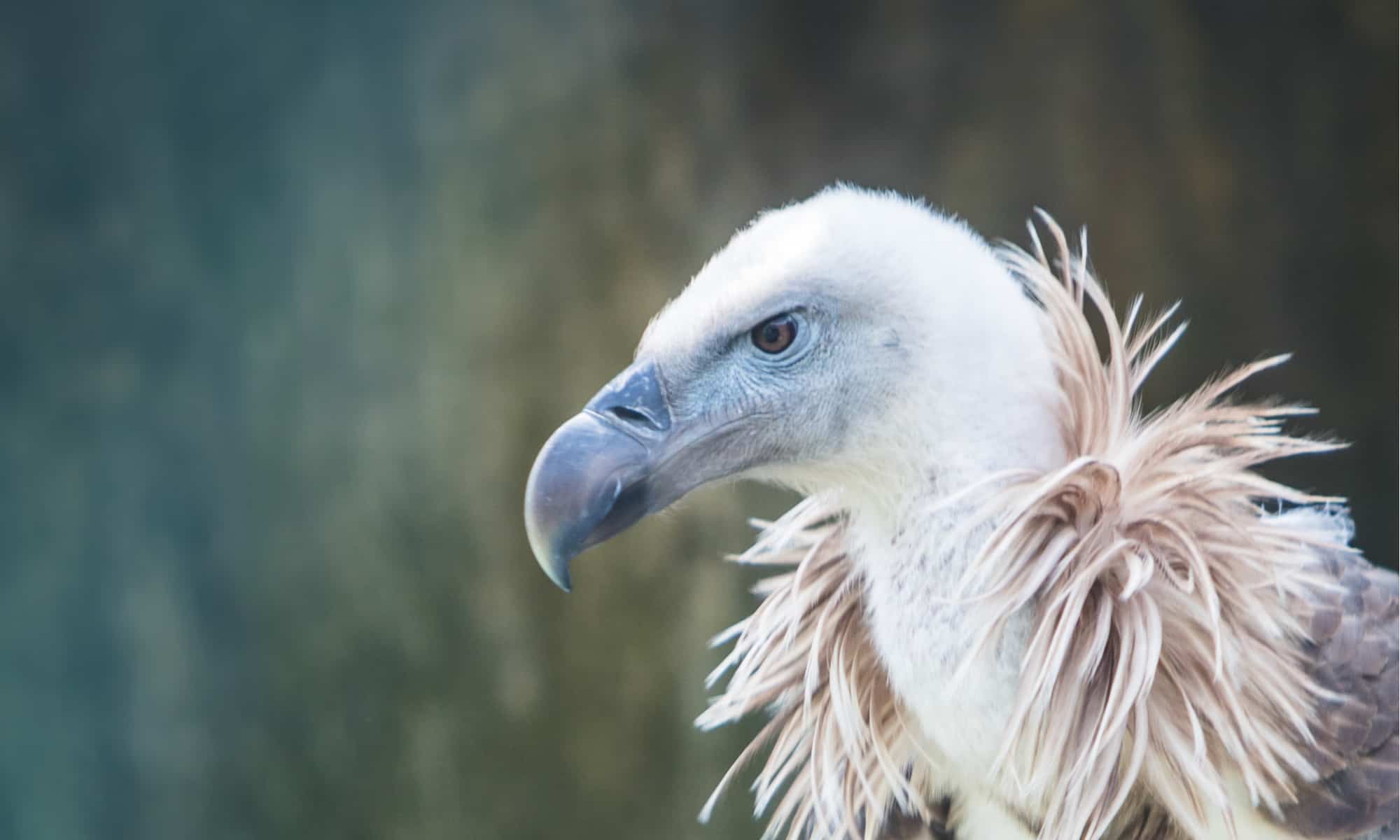
Young griffon vultures are set to be reintroduced to the Carpathian Mountains in Romania, around 100 years after they went extinct there.

The reintroduction is part of a grand vision for “Europe’s Yellowstone,” a national park based in the Carpathians that would boast robust populations of wildlife unrivalled by any ecosystem on the continent.

It began in 2009, when Foundation Conservation Carpathia (FCC), an organization that has been restoring landscapes in the southern Carpathians called the Făgăraș, targeted 3 major species reintroductions to restore the chains of food & function chains that still include Europe’s 3 largest predators: the Eurasian lynx, the wolf, & the brown bear.

With the bison, beaver, & vulture, the Făgăraș would then also have its 3 largest custodians, as the beaver’s effect on rivers, the bison’s effect on the underbrush, & the vulture’s effect on carcasses, are essential for a perfectly functioning ecosystem.

But all 4 native European vulture species have been extirpated in the Carpathians for a century; victims of persecution, habitat loss, & lead poisoning.

Together with the Vulture Conservation Foundation, the FCC aims to reintroduce griffon vultures to the mountains by releasing young birds into large aviaries in-situ to acclimatize to their new surroundings.

“If they are released immediately, they would just fly off & go somewhere else,” said Christoph Promberger, co-founder of FCC.

“The vultures are the last keystone species missing from the Romanian Carpathians. They’re nature’s sanitary police. They’ve been gone for 100 years, it’s time to bring them back.”

Vultures are wide-ranging scavengers, capable of traveling long distances while barely flapping their wings. In 1986, in neighboring Bulgaria to the southeast, there were only 3 pairs of griffon vultures remaining in the wild, but by 2016 they’d made a triumphant return.
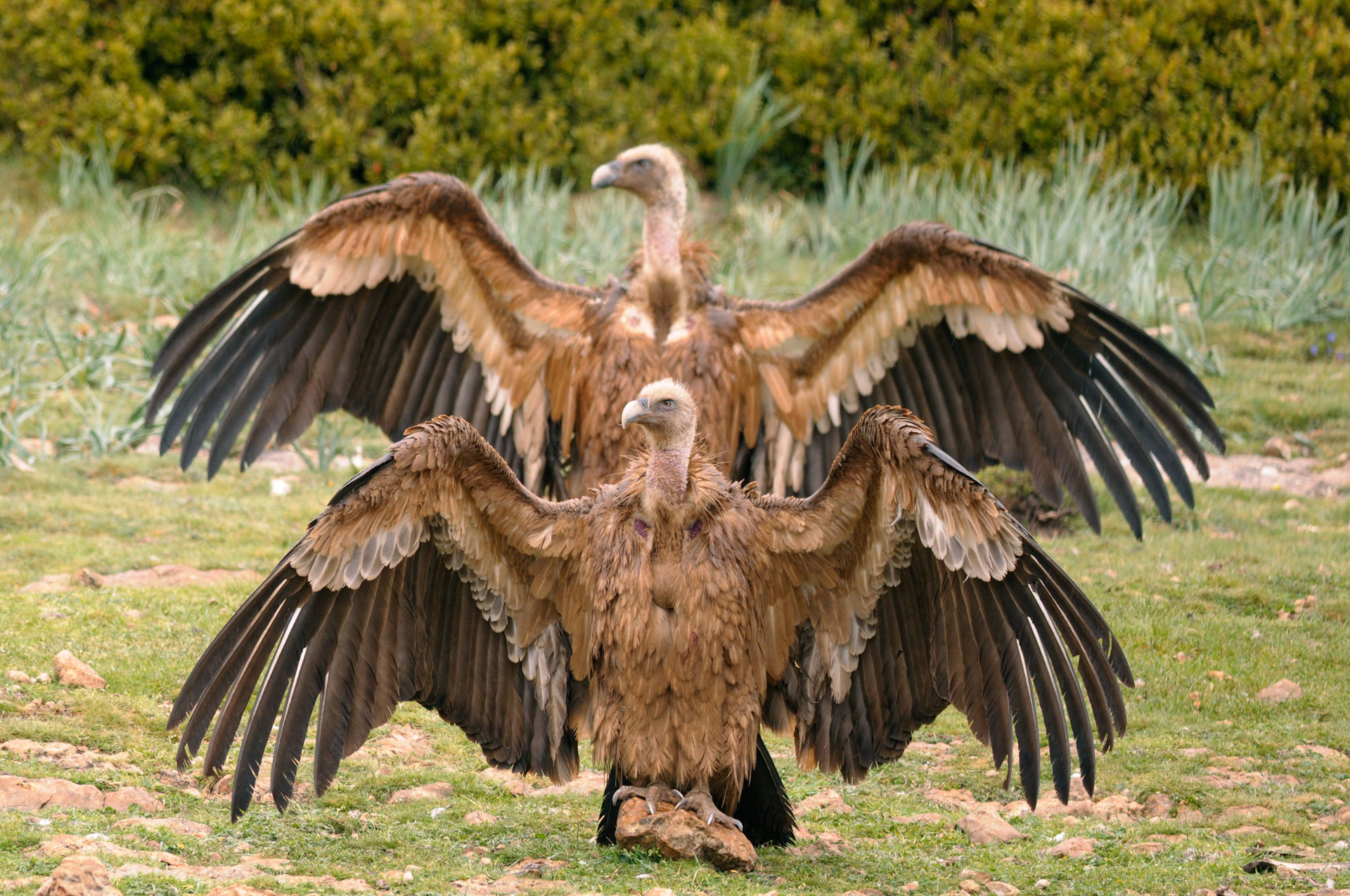
Cinereous vultures from Bulgaria have even been recorded flying into the Făgăraș Mountains, & it’s hoped those in Romania will travel just as freely. FCC plans to begin with griffon vultures, & follow-up with cinereous & bearded vultures.

While all 3 species are scavengers by trade, bearded vultures have some of the most acidic stomachs in the animal kingdom, & can swallow animal bones whole to support their diet of marrow. They & the other vultures play a crucial role by cleaning up dead animals & preventing the spread of diseases, while quickly recycling nutrients into the soil through a combination of their messy eating & nutrient rich droppings.

In 2016, the Romanian government adopted a non-binding memorandum for supporting the creation of a Făgăraș Mountains National Park, which they labeled a “European Yellowstone.” Stretching 2,000 square kilometers across the southern end of the Carpathian range, they include the highest mountain peak in Romania, Moldoveanu.

Only about 1.5% of Romania’s land area is protected within its system of 13 national parks. Support for the park is reportedly mixed between locals that are involved in ecotourism, skiing businesses, & logging interests. Bird Guides Europe reports that many now recognize the strong potential for tourism to improve rural livelihoods with small carve outs for sustainable rural economies.

“It’s the local communities who will decide whether they want the park, & many are now saying yes,” said Promberger.


Cute Critter Pics:


Weekly Chuckle:

Slava Ukraine!


Wednesday, November 14, 2018

Nov. 14/2018

Feature:
5 Facts That Will Make You Think Differently About Vultures

“…There are 23 species of vultures that can be split into 2 groups: the New World vultures & the Old World vultures…
1. Vultures have stomach acid from hell.
…vulture stomach acid is tough & really corrosive. It has to be — otherwise, these birds wouldn’t be able to eat those nasty, rotten carcasses that are infected with botulism, cholera, & anthrax.
2. Vultures live all over the world.
…vultures are actually found on every continent, except Australia & Antarctica. Species of vultures live in a variety of climates, including along the Himalayas, Sub-Saharan Africa & in the Amazon River Basin…
3. Vultures can use tools.
…the Egyptian vulture…drops rocks onto ostrich eggs in order to break them open. They’ve also been spotted using twigs as a tool to gather strands of wool, which the birds use to line their nests.
Other vultures use different methods of finding food. The bearded vulture, for instance, will drop tortoises to crack the shell open. The bird will also do this with bones to access the tasty marrow.
4. Vultures can be very social.
…vultures can be very social. Take the Ruppell’s Griffon vulture. These birds mate for life, which can be 40 to 50 years, & live in colonies of 1,000 mating pairs. The love birds only lay one egg per year, & both parents incubate & feed the resulting chick. They also tend to feed in large groups.
 
5. Vultures can smell.
Well, at least one species can: the turkey vulture. This is an ability that is rare in birds, but turkey vultures can sniff out a special sulfurous smell from more than a mile away.”


Mindy Townsend
April 7/2018
care2.com
Cute Critter Pic:
Weekly Chuckle:


 Memorial


Thursday, June 2, 2016

June 1/2016

(E.B.W.) Critter Corner
Feature: 
Team of Super Vultures Deployed in Peru to Battle Polluters

     “Outfitted with GoPros & solar-powered GPS trackers, the crew of carrion-loving vigilantes is sniffing out illegal dumps in Lima.

     They may be the unlikeliest heroes put to work in the name of the environment, but there they are. Captain Huggin, Captain Phoenix, Captain Aella & a crew of  7 more trained black vultures (Coragyps atratus) that have been tasked with doing what they do best: sniffing out rubbage.

     ... this high-tech team patrols the skies of Lima, Peru on the lookout for illegal trash disposal.

     ...Dan Collyns explains in The Guardian that the city of 10 million people has just 4 landfills…& countless illegal dumps... ‘Run-off from the waste contaminates Lima’s main water source, the Rimac river, as well as with the Chillon & Lurin rivers, which flow into the bay of Lima.’ With 8,000 tons of trash created a day, it’s really quite a mess.

     So what to do? Send in the vultures. The project is called “Gallinazo Avisa” (Vultures Warn) & is a joint collaboration between the U.S. Agency for International Development & Peru’s Ministry of Environment...While vultures may have a notoriously creepy reputation, they are nonetheless an important part of ecosystems across the planet – their ability to handle bacteria & their taste for decay makes them great comrades in helping get rid of waste & to help stop the spread of disease... 

     So armed with GoPros & solar-powered GPS trackers... the Peruvian kettle* of vultures soars above the city; the images they capture are streamed back to headquarters & any illegal dumps they discover are logged, explains Smithsonian Magazine...


     ...The whole project has a great PR component to it – people can even track the vultures’ flights with an online map... It brings great awareness to the problems of waste disposal, & ...helps advance the cause of an otherwise maligned bird that could really use some respect...


  *...The term kettle means a groups of vultures in flight. Committee, volt, or venue refer to vultures resting in trees. Wake is used for a group of vultures that are feeding.

Melissa Breyer
Feb.8/2016
care2.com


Cute Critter Pic

Weekly Chuckle