
By Lauren Jones, VMD
Published 5/20/2022
Guinea pigs are rodents originally from the Andes Mountains of South America, & variations still live in the wild across the continent today.
Guinea pigs live in a variety of habitats, ranging from moist savannas to forests & deserts. They can be found from Venezuela to Patagonia. However, they are not found in western Chile or the Amazon River basin.
While some members of the guinea pig family are still found in the wild, they were originally domesticated as house pets.
Wild guinea pigs were selectively bred by guinea pig breeders to produce the many breeds of domesticated guinea pigs we know today.
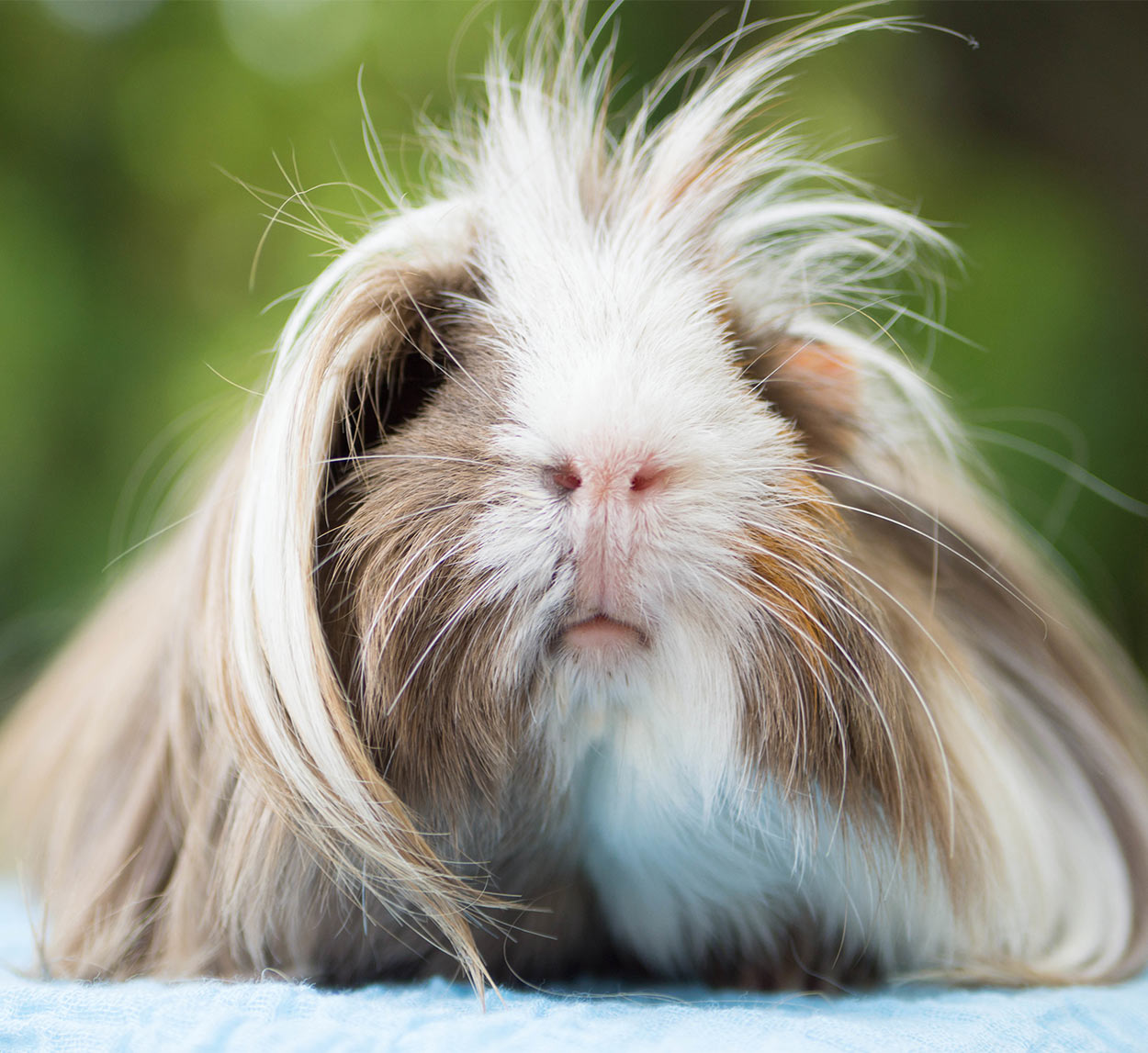
Guinea Pig Classification
Guinea pigs are actually rodents, not pigs.
They are small, stocky mammals with very short tails & are generally larger than other rodents. Guinea pigs are loving, social animals & typically display a group hierarchy, which is usually male-dominated.
They are members of the family Caviidae, which is most closely related to capybara & mara.
Guinea pigs are often referred to as “cavies,” which is a term from the South American vernacular. A cavy is any member of the Caviidae family, which includes 14 different species from South America:
- Guinea pigs
- Maras
- Yellow-toothed cavies
- Mountain cavies
- Rock cavies
Where Did Guinea Pigs Come From?
The first members of the Caviidae family likely evolved sometime between 26 & 7 million years ago. Their ancestors were also rodents, likely larger than a ferret.
These ancestors traveled to South America from North America, Europe, & Asia. The Caviidae family evolved into the guinea pigs we know today once they reached South America.
Wild Guinea Pigs
Domesticated guinea pigs are no longer found in the wild, but their relatives are still living in forests, savannas, deserts, & grasslands in South America.
The most common wild guinea pigs include:
Brazilian guinea pig—Found in Brazil, Venezuela, Colombia, Ecuador, Guyana, Bolivia, Argentina, Uruguay, & Paraguay
Moleques do Sul guinea pig—Found on a small island in Santa Catarina, Brazil
Shiny guinea pig—Found in coastal areas of southeastern Brazil
Greater guinea pig—Found in Southern Brazil & Uruguay
Montane guinea pig—found in Northwestern Argentina to Northern Chile & Peru

Domestication of Guinea Pigs
Guinea pigs were domesticated originally by the Incas as early as 5000 BC. In the 1600s, guinea pigs were brought to Europe by Spanish, English, & Dutch explorers.
Since then, breeders have bred certain traits, resulting in the 13 breeds of guinea pigs that the American Cavy Breeders Association recognizes today—& more are added all the time.
Based on selective breeding, guinea pigs now have a variety of coat colors, patterns, & textures. Queen Elizabeth I even kept a guinea pig as a pet, establishing their role in royal societies as pets & companions.
The name “guinea pig” is a misnomer, as they are not from Guinea & they are rodents, not pigs. It's generally accepted that guinea pigs got their name partially from the squealing & wheeking noises they make, similar to a pig.
They may have obtained the “guinea” part of their name from the original cost to obtain a guinea pig, such as 1 guinea. Alternate theories speculate that ships from Guinea may have carried some of the animals to Europe.
Guinea pigs—both wild & domesticated—are crepuscular, meaning they are most active at dawn & dusk. They don't dig their own dens or burrows; instead, they take over abandoned, established underground homes made by other animals.
This is how wild guinea pigs lived when the Incas domesticated them. Either a now-extinct species or the Montane guinea pig were most likely the original domestic guinea pigs, which are bred to be tame & gentle.
Some guinea pigs—especially those with black coats—were thought in the Andean culture to have special powers to diagnose medical conditions like arthritis.
Cute Critter Pics:





No comments:
Post a Comment