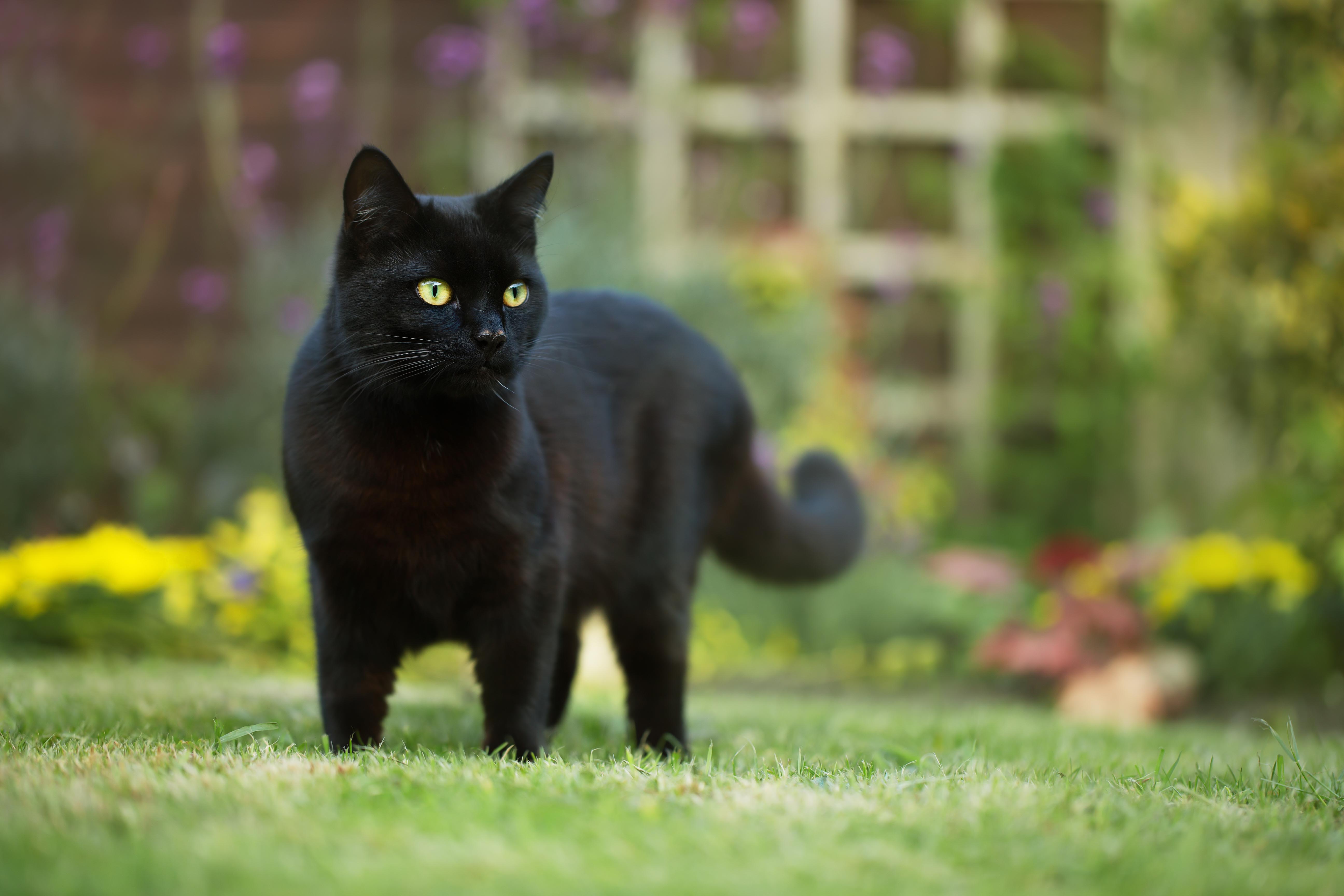
Showing posts with label Black Cats. Show all posts

Wednesday, October 22, 2025

Oct. 22/2025


10 Facts About Black Cats You Probably Didn't Know

By Sanaphay Rattanavong  

10/12/2024 

Many people think of black cats as unlucky or associate them with witches & Halloween — images less rooted in fact than superstition & cultural bias. Black cats, despite their association with bad luck in some cultures, are actually considered lucky in certain parts of the world. You may already be aware that the ancient Egyptians revered cats of all colors, including black ones, as sacred animals with mystical powers. Indeed, their status ascended to that of symbols of the divine, offering protection, & companionship even beyond this earthly existence & into the next life.

Black cats continue to fascinate & bedevil (in the best ways) us to this day. For example, did you know that their fur has a unique ability related to light absorption & reflection due to excess melanin? These felines have many fascinating characteristics, some of which go beyond fur-deep, that might surprise you. Curious to learn more? Here are some surprising facts about black cats you probably didn't know.

1. Only one cat breed is always black

While there are 22 recognized cat breeds that can have solid black coats, the Bombay stands out as the only breed that is always black. This unique characteristic sets the Bombay apart from other black-coated felines & makes it distinctive & beloved.

The origins of the Bombay can be traced back to the 1950s. It was created through a carefully planned breeding program by Nikki Horner, a Kentucky-based cat breeder. Horner aimed to combine the sleek, muscular body of the American shorthair with the striking black coat of the sable Burmese. The first successful crossbreed of the Bombay occurred in 1966, & the Cat Fanciers' Association officially recognized the breed in 1970.

The Bombay's appearance is reminiscent of a miniature black panther. It has a sleek, compact body with well-developed muscles & a rounded head. Its most distinctive feature is its glossy & dense jet-black coat. The breed's coat is so dark that it appears to absorb light, giving it an almost mystical aura. In addition to its striking appearance, the Bombay breed is known for its unique characteristics, including its affectionate & outgoing personality. These cats are incredibly social & crave human interaction. They are often described as "Velcro cats" due to their love of being held & cuddled. Bombays are also highly intelligent & curious, making them excellent companion animals for people of all ages.

2. Their coats can change color

It might come as a surprise, but a black cat's fur can change color from sitting in the sun. This happens because the sun's UV rays break down the pigment, eumelanin, which gives the fur its black color. As the eumelanin degrades, the fur loses its ability to absorb light efficiently, causing it to lighten into a reddish-brown hue. The extent of this rusting effect varies depending on the cat's genetics, health, & the duration of sun exposure. In some cases, the fading occurs gradually; in others, it can happen more quickly, especially if the cat spends long periods in direct sunlight.

Beyond sun exposure, another reason for a black cat's fur changing color is a deficiency in tyrosine, an amino acid needed to produce eumelanin. If a black cat's diet lacks enough tyrosine, its fur can fade. Adjusting the cat's diet or providing tyrosine supplements can help restore the dark color.

While these factors are the most common causes of fur fading, significant changes in coat color can sometimes signal underlying health problems, such as liver or thyroid issues. If your cat's fur changes dramatically, it's wise to consult a veterinarian. It's also important for cat owners to be mindful of sun exposure since overexposure to UV rays can pose health risks, including skin cancer. Providing shaded areas & limiting time in direct sunlight, especially during peak hours, is key to keeping cats safe & healthy.

3. Not all black cats have yellow eyes

There is a common misconception that all black cats sport yellow peepers. However, the same pigment responsible for their black fur, eumelanin, also influences their eye color. As such, black cats can have a range of eye colors, including yellow, gold, orange, copper, or green.

High levels of eumelanin in black cats typically result in both black fur & warm-toned eyes like yellow or orange. The gene responsible for black fur is dominant, so if a cat inherits it, the black coat is likely to be paired with these eye colors. While rare, some black cats can have blue eyes, a trait seen in the breed ojos azules (Spanish for "blue eyes").

4. Black cats are not evil or unlucky
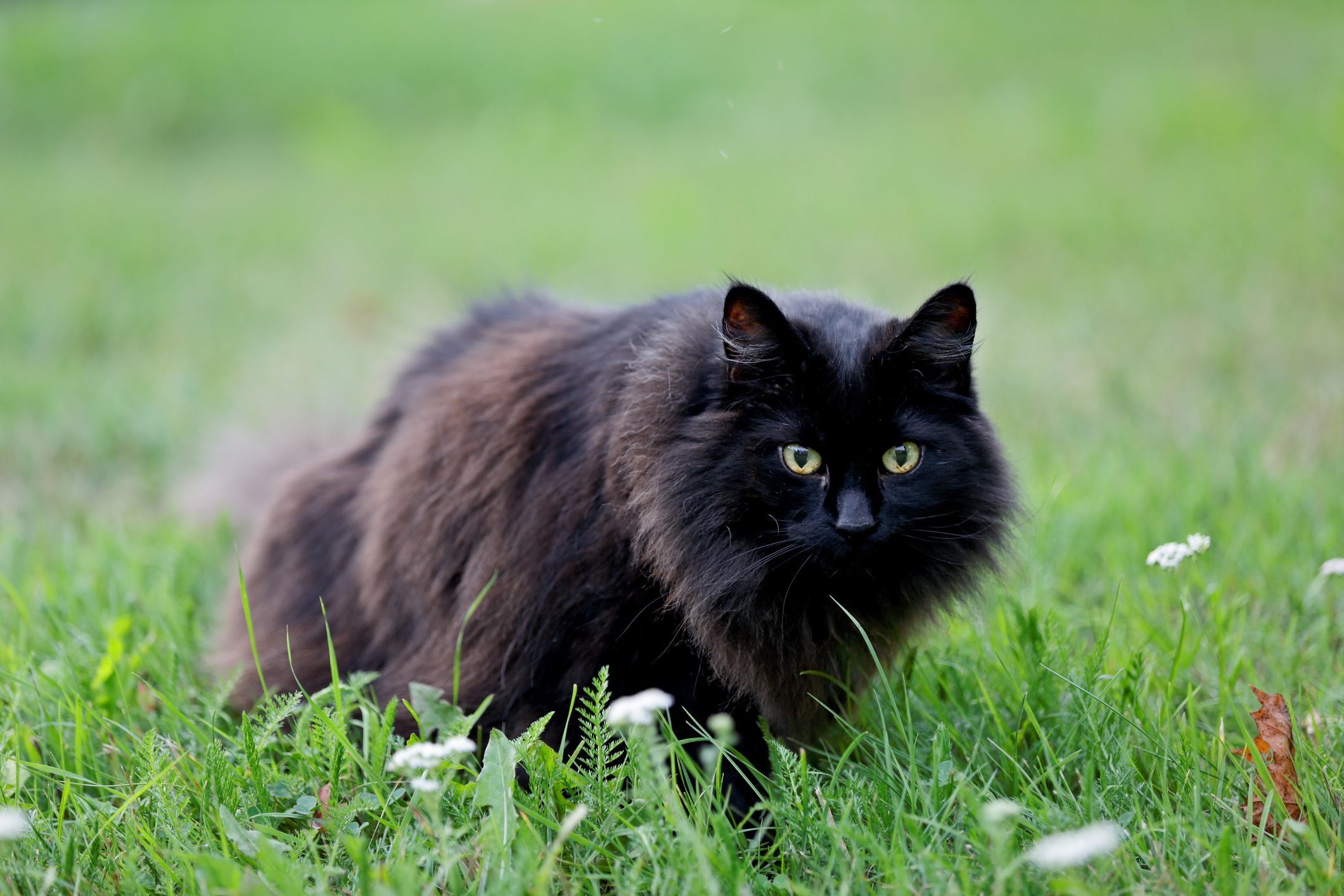
Throughout history & across cultures, black cats have been seen as both lucky & unlucky, with negative perceptions largely based on fear rather than fact. In medieval Europe, they became linked to witchcraft. Black cats were thought to be witches' familiars or even witches in disguise, leading to their persecution. Some theorize this contributed to the spread of the bubonic plague, as killing cats reduced rodent control.

In contrast, black cats were seen positively in other contexts. British sailors believed black cats brought good luck on ships, helping ensure safe voyages by keeping rodents in check. Fishermen's wives also kept black house cats, believing they would protect their husbands at sea. In Japan, black cats are considered lucky, especially in love, as they are thought to attract suitors to single women. Similarly, Scottish folklore views a black cat on the doorstep as a sign of prosperity, while in France, black cats are called "money cats" & are associated with financial fortune.

5. Black cats are less likely to be adopted

Black cats, long shrouded in superstition & myth, continue to be associated with bad luck, witchcraft, & misfortune. Sadly, spurious alignment has had a profound impact on their adoption rates in shelters, according to a 2020 study. Compared to cats of other colors, black cats tend to linger in shelters, waiting longer for their forever homes. Unfortunately, the stigma against black cats is real & persistent. This unfair bias makes it harder for black cats to find their human families, despite the fact that their fur color has no bearing on their personalities or behavior.

Animal welfare organizations, such as the American Society for the Prevention of Cruelty to Animals, are working to combat these negative stereotypes through education & awareness campaigns that promote the adoption of black cats. By challenging these myths, they aim to give black cats an equal chance at being adopted & loved. 

One place actively changing this perception is Nekobiyaka Cat Cafe in Himeji, Japan, the world's first & only cafe dedicated exclusively to black cats. Since opening in 2013, Nekobiyaka has helped black cats find forever homes, offering them a second chance & helping to break the stigma. Even during the struggles of the COVID-19 pandemic, the cafe continued its mission with the help of donations. Inside the cafe, each black cat wears a colorful bandana, allowing guests to tell them apart while watching them explore their thoughtfully designed environment.

6. Some black cats have hidden 'ghost markings' that come to light
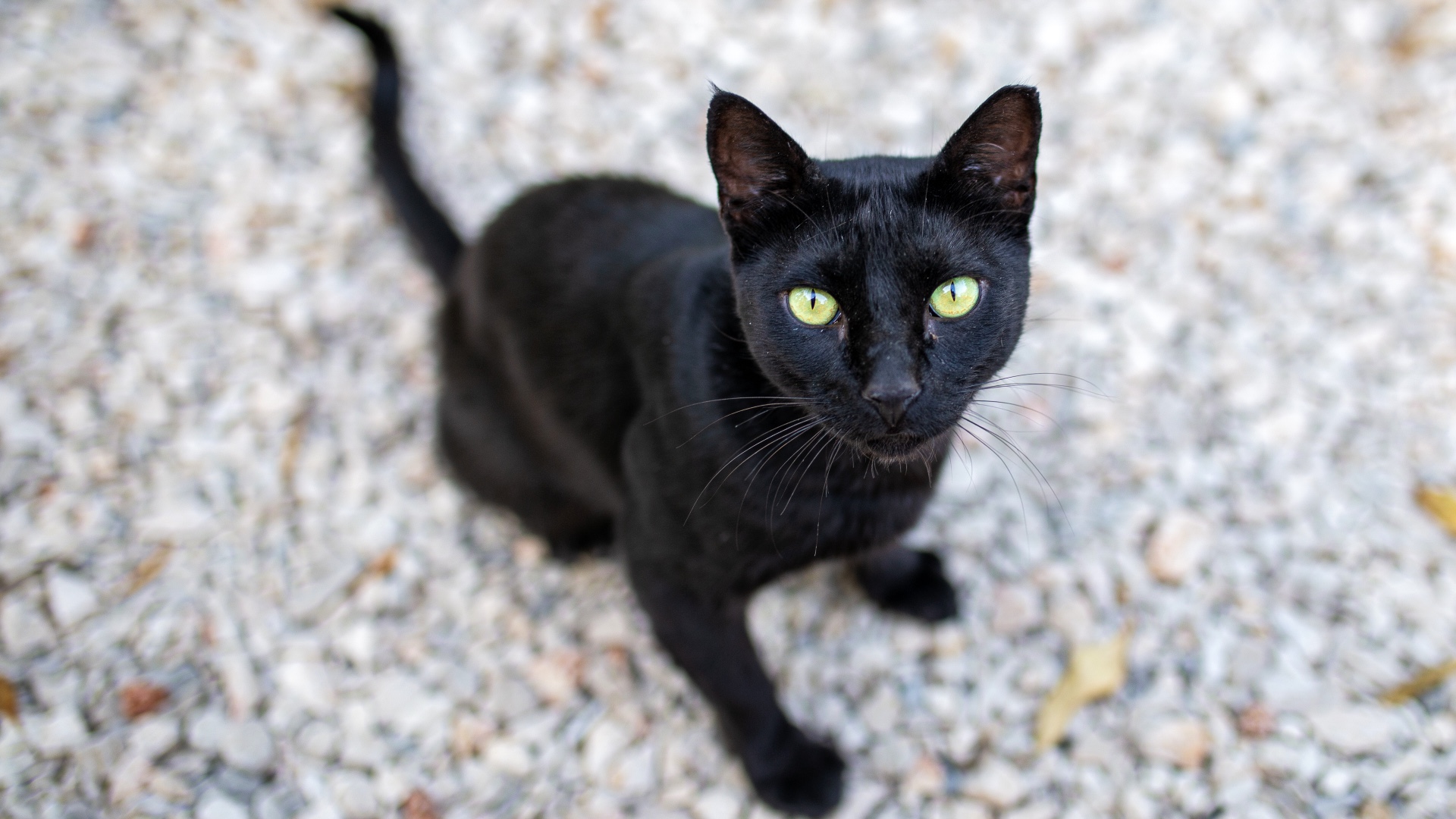
Many black cats conceal subtle tabby patterns beneath their dark coats, a phenomenon known as "ghost markings." These faint stripes or spots become visible under certain lighting conditions, such as bright sunlight. This occurs because the gene responsible for black fur doesn't always completely suppress the tabby pattern gene, allowing these hidden patterns to emerge.

Understanding these markings provides insight into feline genetics & the complex interplay between coat color & pattern expression. Genetically, all cats carry the tabby pattern, but in black cats, the expression of this pattern is often subdued or completely masked. These markings come in 4 main varieties: ticked, mackerel, blotched, & spotted. They are typically more noticeable in kittens & may fade as the cat matures, though some adult black cats retain them throughout their lives.

7. The gene that makes cats black may also make them more resistant to infections

Black cats possess genetic traits that could offer valuable insights into disease resistance, particularly through the lens of CCR5, a gene crucial to immune responses. The melanism gene, responsible for their striking black fur, has been linked to enhanced immunity. Studies suggest that this gene provides resistance to diseases, such as feline immunodeficiency virus (FIV), echoing evolutionary patterns of pathogen resistance observed in other species.

Further research underscores CCR5's pivotal role in regulating immune responses. This gene facilitates macrophage recruitment, a key process in fighting infections & maintaining immune balance. CCR5 also influences the migration of memory CD8+ T cells, which are essential for long-term immune defense. These functions illustrate CCR5's importance in protecting against diseases, not just in humans but potentially in other species, including black cats.

The therapeutic potential of CCR5 further enhances its possible scientific significance. Advances in gene editing, particularly CRISPR/Cas9 technologies, have demonstrated CCR5's value in treating diseases such as HIV. These developments pave the way for exploring how similar interventions could be applied to felines, further illuminating novel interventions in humans & offering possibilities for cross-species studies into immunity & disease resistance.

8. A fairy creature takes the form of a black cat in Celtic mythology
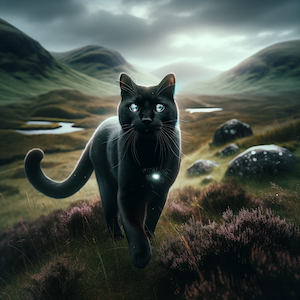
In Celtic mythology black cats are often linked to the enigmatic figure of the Cat Sìth (or Cait Sidhe in Irish). This supernatural creature is typically depicted as a large black feline with a white spot on its chest. Legends describe the Cat Sìth as a fairy or, in some versions, a witch who could transform into a cat 9 times — possibly giving rise to the popular belief that cats have 9 lives.

The Cat Sìth is central to many superstitions, blending protective & ominous qualities. In Scottish folklore, it was feared as a soul-stealer, capable of claiming a person's soul by passing over their corpse before burial. To guard against this, communities would hold the Fèill Fhadalach, or "late wake," a vigil kept around the clock to ensure the Cat Sìth would not approach the deceased.

On a more benevolent note, the Cat Sìth played a role in Samhain traditions, a Celtic festival marking the precursor to Halloween. It was believed that the Cat Sìth would bless households that left out a saucer of milk, which in turn ensured that the family's cows continued to produce. However, those who failed to offer this gesture risked being cursed, with their livestock's milk drying up.

9. Black cats have long served as literary & political symbols

Black cats are a source of fascination in literature, representing themes of mystery, magic, & rebellion. In Edgar Allan Poe's "The Black Cat," Pluto serves as both victim & avenger, embodying guilt & karmic justice in a tale of psychological unraveling. Eiko Kadono's "Kiki's Delivery Service" features Jiji, a witty, talking black cat whose role as Kiki's confidant highlights the balance between independence & companionship in a magical coming-of-age story. Similarly, T.S. Eliot's "Old Possum's Book of Practical Cats" introduces Demeter, an elegant & clever black-&-gold feline who unmasks the notorious Macavity, reflecting the charm & mischief often associated with black cats.

One of literature's most memorable black cats is Behemoth from Mikhail Bulgakov's "The Master & Margarita." A demonic feline with a taste for chaos & gatling guns, Behemoth walks on 2 legs, speaks, & transforms into a human. His love for mischief, vodka, & satire makes him both a humorous & fearsome figure, embodying unpredictability & mayhem. His layered identity, referencing both the Biblical monster Behemoth & the Russian word "begemot" (hippopotamus), underscores the complex cultural resonance of black cats in literature.

Beyond fiction, black cats carry political symbolism, particularly in anarcho-syndicalism, a branch of anarchism focused on labor organizing. In the early 20th century, the black cat became an emblem of rebellion & resilience, tying the feline's independence & resourcefulness to collective struggles for justice. This political association adds depth to the mystique of black cats, linking them to themes of defiance & solidarity.

10. Black cats are particularly hard to photograph
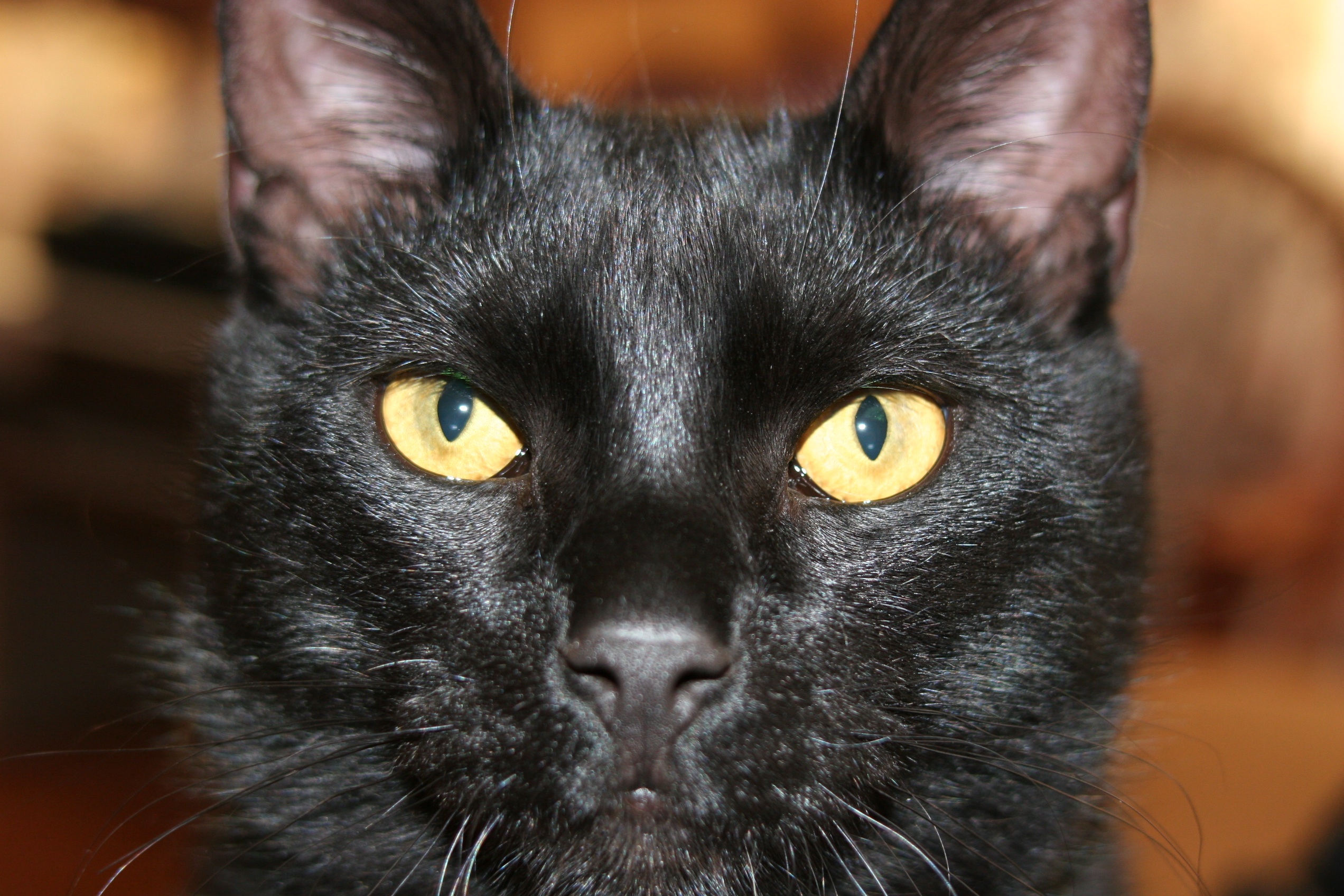
Photographing black cats can be challenging due to their dark fur, which absorbs light & obscures fine details. This often confuses a camera's auto-exposure settings, leading to underexposed or washed-out images. Despite these challenges, employing the right techniques can reveal the unique beauty & personality of black cats.

Lighting is a key factor in achieving compelling photographs. Soft, diffuse light, such as natural daylight or illumination from a lamp, minimizes harsh shadows & stark contrasts. Shooting during the golden hour, just before sunset, provides ideal lighting conditions for photographing black cats. Adjusting camera settings can also enhance your results; underexposing the shot slightly helps maintain the richness of black fur. Additionally, avoiding flash is important to prevent unnatural reflections or the dreaded "green eye" effect, which can detract from the natural appearance of your furry subject.

Careful attention to composition ups the quality of black cat photography. Clean, clutter-free backgrounds help the cat remain the focal point, while mid-toned settings, such as grass or curtains, provide effective contrast. Alternatively, black-on-black compositions can create striking artistic effects, emphasizing the fur's texture. To highlight the cat's facial features, especially the eyes, positioning them to face a natural light source is essential. Rim lighting, created by placing a light source behind & slightly to the side of the subject, can add depth by outlining the fur's edges. Finally, subtle photo editing adjustments to highlights, shadows, & contrast can enhance the overall image without overwriting that authentic, fur-some look.

Read More: https://www.cuteness.com/1683979/facts-black-cats-probably-didnt-know/

Scary Critter Pics:


Weekly Chuckle:

Slava Ukraine!!! 


Wednesday, September 18, 2024

Sept. 18/2024


10 Fun, Interesting, & Little-Known Facts About Black Cats

By Stephanie Howe, DVM. Reviewed by Veronica Higgs, DVM
10/ 4/ 2023

You might think of a black cat as a witch's familiar or as a bad omen when one crosses your path, but there is much more to the black cat than meets the eye.

1. Black Is the Most Common Feline Coat Color
Have you had more than one black cat cross your path? It’s not a glitch in the matrix; black is actually the most common coat color among felines.

The gene for expressing eumelanin—the pigment needed to make black fur—is dominant in black cats. A cat usually gets 2 copies of a gene, one from mom & one from dad. If one of these genes codes for black fur, then the kitten will be black.

Black coats allow cats to blend better into the night, which helps them hunt prey. This genetic advantage may have allowed black cats to be healthier & more likely to breed.

2. Black Cats Are Less Likely to Be Adopted
Though black is a common cat color, studies have found that black cats are less likely to be adopted than cats with other fur colors. This may be because black cats have long been tied to superstition as symbols of bad luck or witchcraft.

The next time you’re looking to add a feline to your family, bringing home a black cat could save a life.

3. Black Cats Can Rust in the Sun
If you spend your summer by the pool, your hair might get lighter. The same applies to the fur of black cats, which may have light red or orange highlights when they spend a lot of time in the sun.

When a cat lounges in a window perch or spends time in a catio, the sun bleaches the pigment from the fur, causing it to lighten. Because fur isn’t alive, it will stay bright until it’s shed.

4. It’s Rare To Find an All-Black Cat
While some cats are completely black from head to toe, this is actually rare. Most black cats have some other coloring in their whiskers, paw pads, or random patches of fur.

Whisker hairs are thick sensory hair follicles that originate deep in the skin. Cats are known to shed their whiskers, & often new ones will grow back in other colors.

Paw pad color is often the same as a cat’s fur color. Darker-furred cats tend to have black or gray toes, while lighter ones have pink toes. Black cats with some white fur markings are more likely to have patches of pink or white on their paws.

5. There Are Many Famous Black Cats
Animation has brought to the fore many famous felines from Bagheera, the black panther in The Jungle Book, to Luna, the black cat in Sailor Moon.

Live-action famous black cats include:

Salem in “Sabrina the Teenage Witch” (1996–2003)

Thackery Binx in “Hocus Pocus” (1993)

Isis in “Star Trek” (1966–1969)

In addition to silver screen characters, other black cats have gained celebrity status, including:

The official First Cat of the George W. Bush administration was named India. India was an all-black American Shorthair that lived to be 18 years old.

Blackie, the world's richest cat, was left a $12.5 million fortune when his pet parent, British antique dealer Ben Rea, died in 1988.

Oscar the Bionic Cat was the world's first cat to have double rear-leg prosthetics, in 2009.

6. Black Cats Almost Always Have Yellow Eyes
Just as genetics plays a role in the color of a cat’s fur, it’s also responsible for the color of their eyes. The same pigment (eumelanin) that affects a black cat’s fur also affects their irises. The majority of black cats have irises with yellow/gold, orange/copper, or green pigment.

The Bombay cat is a breed that typically has gold or copper eyes. Black cats in other breeds are more likely to have lighter eyes.

Kittens, like human babies, are typically born with blue eyes, but the color of their iris changes as they age. The change typically starts when kittens are between 4–8 weeks old, & their eyes will be their permanent color by the time they’re 3–4 months in age.

7. Many Cat Breeds Can Be Black, But Only One Is Always Black
While many cat breeds can have black coats, the Bombay is the only true black cat breed. The Bombay was created in the 1950s as a hybrid of the Burmese & American Shorthair. Bombay cats are nicknamed as “parlor panthers” due to their good looks, sleek black coats, & gorgeous copper-orange eyes.

Other pure black cat breeds include:

Sphinx

Persian

Ragamuffin

Scottish Fold

Selkirk Rex

American Curl

American Bobtail

&, of course, domestic short-, medium-, & long-haired cats can also be black. 
8. Black Cats Are Not Bad Luck
The superstition that black cats were associated with the occult started around the Middle Ages, & many black cats fell victim to this misconception. Many believe that this led to a decrease in the cat population & the eventual spread of the bubonic plague, or Black Death, in the early 14th century, which was a disease carried by mice.

The perceived connection between black cats & witches’ evil deeds continued to North America & came to a head with the Salem witch trials of the 1690s.

No one knows exactly when black cats got their bad rap, but a black cat crossing your path certainly won’t bring you bad luck. In fact, British & Irish sailors in the early 19th century believed that black cats were symbols of good luck & could protect ships from dangerous weather. They were also adept at killing rats on board.

9. Black Cats Have Their Own National Holidays
In the U.S., 2 days on the calendar are set aside for making the tiny panther in your life feel extra special:

October 27, 4 days before Halloween, is National Black Cat Day.

August 17 is National Black Cat Appreciation Day.
10. Black Cats Are Resistant to Disease
There’s evidence that black cats may have certain genetic mutations that make them less susceptible to some diseases. This finding may prove valuable when studying human medical advancements.

Cute Critters:


Weekly Chuckle:


Wednesday, November 9, 2022

Nov. 9/2022

10 Things to Know About Black Cats

petmd.com/cat/10-hair-raising-facts-about-black-cats

"You might think of a black cat as a witch's familiar or as a bad omen when one crosses your path, but there is much more to the black cat than meets the eye.

Black Is the Most Common Feline Coat Color
Have you had more than one black cat cross your path? It is not a glitch in the matrix; black is actually the most common coat color among felines.

The gene for expressing eumelanin—the pigment needed to make black fur—is dominant in black cats. A cat usually gets 2 copies of a gene, one from mom & one from dad. If one of these genes codes for black fur, then the kitten will be black.

Genetics for coat color in cats is a bit more complicated than that, which does give us different varieties of color.

Black coats allow cats to blend better into the night & hunt their prey more inconspicuously. This genetic advantage may have allowed black cats to be healthier & more likely to breed.

Black Cats Are More Likely to Be Adopted
You may have heard the misconception that black cats are less likely to be adopted than their fair-coated peers. This is not always the case, because in addition to cats being predominantly black, people’s old superstitions about black cats have faded over the years, leading to more adoptions.

Because black is a common coat color, more black cats enter the animal shelter system, resulting in disproportionately high numbers of adoptions.

Unfortunately, the high shelter intake of black cats means that they’re also euthanized more often than cats with any other fur color. The bottom line is that adopting black cats might save their lives, so it is always a good idea.
Black Cats Can Rust in the Sun
If you spend your summer by the pool, your hair might get lighter. The same lightening effect applies to the fur of black cats, which may have light red or orange highlights when they spend a lot of time in the sun. The sun bleaches the pigment from the fur, causing it to lighten. Since fur isn’t alive but is a structure of keratin, it will stay bright until it is shed.

It’s Rare To Find an All-Black Cat
While some cats are indeed black from head to toe, this is actually rare. Most black cats have some other coloring in their whiskers, paw pads, or random patches of fur.

Whisker hairs are thick sensory hair follicles that originate deep in the skin. Cats are known to shed their whiskers, & often new ones will grow back in other colors.

Paw pad color is often the same as a cat’s fur color. Darker-furred cats tend to have black or gray toes, while lighter ones have pink toes. Black cats with some white fur markings are more likely to have patches of pink or white on their paws.

Famous Black Cats
Animation has brought to the fore many famous felines from Bagheera, the black panther in The Jungle Book, to Luna, the black cat in Sailor Moon.

Live-action black cats that stole the show include:

Salem in Sabrina the Teenage Witch (1996-2003)

Thackery Binx in Hocus Pocus (1993)

Isis in Star Trek (1966-1969)

In addition to silver screen characters, other black cats have gained celebrity status, including:

The official first cat of the White House while George W. Bush was in office was named India. India was an all-black American Shorthair that lived to a great age of 18 years.

Blackie, the world's richest cat, was left a $12.5 million fortune when his owner, British antique dealer Ben Rea, died in 1988.

Oscar the Bionic Cat was the world's first cat to have double rear-leg prosthetics, in 2009.

Black Cats Almost Always Have Yellow Eyes
Just as genetics plays a role in the color of a cat’s fur, it is also responsible for the color of their eyes. The same pigment (eumelanin) that affects a black cat’s fur also affects their irises. The majority of black cats have irises with yellow/gold, orange/copper, or green pigment.

The Bombay Cat is a breed that typically has eyes in the gold or copper range. Black cats in other breeds are more likely to have lighter eyes.

Kittens, like human babies, are most commonly born with blue eyes, but the color of their iris changes as they age. The change typically starts between 4 to 8 weeks, & their eyes will be their permanent color by 3-4 months.

Types of Black Cat Breeds
While many cat breeds can have black coats, the Bombay Cat is the only breed whose standard includes a shiny black coat. This breed was created in the 1950s as a hybrid of the Burmese & American Shorthair. Bombay cats are nicknamed as 'parlor panthers' due to their exotic good looks, sleek black coats, & gorgeous copper-orange eyes.

Other black cat breeds include:

Sphinx

Persian

Ragamuffin

Scottish Fold

Selkirk Rex

American Curl

American Bobtail

Chantilly-Tiffany

Why Are Black Cats Considered Bad Luck?
The superstition that black cats were associated with the occult started around the Middle Ages, & many black cats fell victim to this misconception. Many believe that this led to a decrease in the cat population & the eventual spread of the bubonic plague, or Black Death, in the early 14th century, which was a disease carried by mice.

The perceived connection between black cats & witches’ evil deeds continued to North America & came to a head with the Salem witch trials of the 1690s.

No one knows exactly when black cats got their bad rap, but a black cat crossing your path certainly won’t bring you bad luck.
Black Cats in History
Black cats played an important role in history. In Ancient Egypt, they were used to protect food stores from mice. The goddess Bastet was thought to bring good fortune to those who housed cats. Bastet was part black cat, part woman warrior goddess, a deity who protected the pharaoh & was a goddess of fertility.

British & Irish sailors in the early 19th century believed that black cats were symbols of good luck & could protect ships from dangerous weather. They were also adept at killing rats on board.

Today, in many countries & cultures, cats are symbols of prosperity. In Scotland, England, & Ireland, it is actually considered good luck to have a black cat cross your path, & black cats are sometimes given as wedding gifts to bring happiness to the couple. In Japan, many believe that a black cat can increase your chances at romance.
Celebrate Black Cats Every Year
2 days on the calendar are set aside for making the tiny panther in your life feel extra special.

October 27, 4 days before Halloween, is National Black Cat Day, & August 17 is National Black Cat Appreciation Day around the world.

So whichever day you choose to celebrate, let’s give 3 cheers to the black cat!"
Cute Critter Pics:


Weekly Chuckle:


Thursday, November 1, 2018

Oct. 31/2018


Feature:
6 Hair-Raising Facts About Black Cats

“…Check out these hair-raising facts to see why black cats are such curious creatures.

They’re Actually More Likely to Be Adopted
You may have heard that black cats are less likely to be adopted than their fair-coated peers. However, as it turns out, this isn’t the case.

In fact, according to data compiled by the ASPCA, black cats are actually adopted more often from cat shelters than other cats. Because black is a common coat color, more black cats enter the animal shelter system, resulting in disproportionately high numbers of adoptions from animal shelters…

Black Cats May Be More Resistant to Disease
…Cancer researchers have found that the genetic mutation that results in black fur is related to genes that cause resistance to diseases such as HIV in humans. Combined with top-notch nighttime camouflage, scientists speculate that this may give black cats a genetic upper hand, & it may explain why the coat color is so common.

They Patrol the High Seas
Since ancient times, cats have earned their keep (& fish) by patrolling ships for rats. Black cats, in particular, were considered not only practical mousers but also lucky talismans…

They Have Official Holidays 
…In the United States, August 17 is Black Cat Appreciation Day… England recognizes October 27 as National Black Cat Day… 

There’s a ‘Parlor Panther’ Black Cat
The Bombay might be the ultimate black cat. A hybrid of the Burmese & American Shorthair, this breed has been nicknamed the ‘parlor panther’ thanks to its exotic good looks. Although the Cat Fanciers' Association recognizes a number of breeds that can have black coats, Bombays are the only one that must be shown in solid black.
 
…According to Jeri Zottoli, the Cat Fancier’s Bombay breed secretary & judge, this petite panther is the perfect pet. ‘Like potato chips, you can't have just one,’ she says. ‘They love their humans—they’re very friendly, social cats who would go home with anyone. We always allow spectators to pet our cats so they can see their endearing personalities.’
 
…And a ‘Werewolf’ Black Cat 
…Sometimes called the ‘Werewolf Cat,’ the Lykoi is a newly recognized, semi-hairless breed that owes its distinctive black coat to a genetic mutation first discovered in feral colonies. The most common Lykoi coat is ‘black roan,’ a black base punctuated with white hairs that creates a wild, wolf-like look. 
 
…Desiree Bobby, the Cat Fanciers’ Association’s marketing & communications coordinator, is also a Sphinx breeder…’Sphynx owners tend to be a little bit wackier than most, so it makes sense we would be drawn to them,’ says Bobby. “It’s their genetic uniqueness that intrigues me—the fact that they are so rare & close relatives only to feral cats. I have more than a few that seem to have been born with canine instincts.’”

Monica Weymouth
Petmd.com
Oct. 30/2018
Scary Halloween Pics
Weekly Chuckle