Endangered Animals List With Pictures & Interesting Facts Part 3https://www.activewild.com/list-of-endangered-animals/?utm_source=brevo&utm_campaign=AW%20Newsletter%2028&utm_medium=email
Green Eyed Bushfrog
Scientific name: Raorchestes chlorosomma
Type of animal: Amphibian
Where found: Asia
The green-eyed bushfrog is a critically endangered amphibian found in evergreen forests on the slopes of the Western Ghats mountain range in India.
Unlike many frogs, the green-eyed bushfrog (& other frogs of genus Raorchestes) skips the tadpole stage of its development, hatching directly from its egg as a frog.
Why Are Green Eyed Bushfrogs Endangered?
The green-eyed bushfrog is endangered due to habitat loss caused by plantations of crops such as tea & eucalyptus.
Green Sea Turtle
Scientific name: Chelonia mydas
Type of animal: Reptile
Where found: Tropical & Subtropical Oceans Worldwide
The green sea turtle is one of 7 living species of sea turtle, & one of 6 in the family Cheloniidae (the “odd one out” is the leatherback sea turtle, which is in the family Dermochelyidae).
The green sea turtle is found in tropical & subtropical waters all around the world. It is a migratory species, swimming between its feeding & nesting sites. These journeys take some individuals over 1,600 mi / 2,600 km.
Why are green sea turtles endangered?
Threats to the green sea turtle include the harvesting of both eggs & turtles by humans from the turtle’s nesting grounds, & the accidental capture of turtles in nets & long lines meant for fish.
Human development of the turtle’s traditional nesting sites has also played a part in the green sea turtle’s endangered status.
Grey Parrot
Scientific name: Psittacus erithacus
Type of animal: Bird
Where found: Africa
The grey parrot, despite being a popular pet, is endangered in the wild. The species is found in tropical forests in Africa. It is primarily frugivorous (fruit-eating).
The grey parrot is one of the most intelligent birds, & is able to mimic the human voice & other environmental sounds.
Why are grey parrots endangered?
The primary threat to the grey parrot is the capture of wild birds for sale to the pet industry. Deforestation is also playing a part in the bird’s decline.
Humphead Wrasse
Scientific name: Cheilinus undulatus
Type of animal: Fish
Where found: Indo-Pacific
The humphead wrasse, also known as the giant wrasse, is a coral reef fish that lives in the Indo-Pacific (an area that combines the Indian Ocean, & the western & central Pacific Ocean).
Male humphead wrasses grow to lengths of up to 6.56 ft / 2m; females are substantially smaller. Like all wrasses, some females – usually the largest – turn into males. This process is known as “protogynous hermaphroditism”.
The humphead wrasse’s “hump” – the bulge on its forehead – gets bigger as the fish gets older.
Why are humphead wrasses endangered?
The humphead wrasse is considered a delicacy in several Asian countries is heavily hunted as a result.
Iberian Lynx
Scientific name: Lynx pardinus
Type of animal: Mammal
Where found: Europe (Spain)
The Iberian Lynx is a member of the cat family Felidae native to the Iberian Peninsula. It is notably smaller than its cousin the Eurasian lynx, with a body length ranging from around 69 to 82 cm / 27 to 32 inches.
Like other lynxes (the group is also home to the Eurasian lynx, Canada lynx, & bobcat), the Iberian Lynx has a distinctive short tail, tufted ears, & beard-like facial ruff.
This elusive carnivore primarily preys on rabbits & inhabits Mediterranean forests & scrublands.
Sadly, the Iberian Lynx is one of the world's most endangered cat species, facing threats from habitat loss & a declining European rabbit population. Due to conservation projects, however, the population of this endangered cat is slowly increasing.
Why Is The Iberian Lynx Endangered?
The Iberian lynx is endangered due to scarcity of its main prey, the European rabbit (another endangered animal), & habitat loss.
Majorcan Midwife Toad
Scientific name: Alytes muletensis
Type of animal: Amphibian
Where found: Majorca
The Majorcan midwife toad is an endangered amphibian found only on the Spanish island of Majorca in the Mediterranean Sea.
After fertilizing strings of eggs produced by the female, the male Majorcan midwife toad carries them on his back for protection. When the eggs are ready to hatch, he deposits them in a suitable body of shallow water. The Majorcan midwife toad is one of several species of “midwife” toads in which this behavior is seen.
Why are Majorcan midwife toads endangered?
The main threat to the Majorcan midwife toad is competition from non-native species that have been introduced to the island. These include the Viperine Snake (Natrix maura) & Perez's Frog (Rana perezi).
Marine Otter
Scientific name: Lontra felina
Type of animal: Mammal
Where found: South America
The marine otter is one of 2 otters found in saltwater habitats, the other being the sea otter. Whereas the sea otter is almost fully aquatic, spending much of its life in the sea, the marine otter is semi-aquatic, dividing its time between the land & water.
One of the smallest otters, the marine otter reaches lengths of up to 115 cm / 43.3 in. It lives on the shore in areas with abundant seaweed, & prefers rocky areas with caves for shelter.
The main threat to the marine otter is habitat loss due to urban development of its habitat & competition with small-scale fisheries for food.
Okapi
Scientific name: Okapia johnstoni
Type of animal: Mammal
Where found: Africa
The okapi lives deep in the rainforests of Democratic Republic of the Congo, a country in central Africa.
Despite looking like a cross between a zebra & a deer, the okapi is actually one of 2 species in the family Giraffidae. The other species in the family, & the okapi’s closest relation in the animal kingdom, is the giraffe.
The stripes on an okapi’s legs & hind quarters act as camouflage, helping to break up the okapi’s outline as it moves through trees & foliage.
Why are okapis endangered?
The main threat to the okapi is deforestation. The species is also hunted for its meat & skin.
Puritan Tiger Beetle
Scientific name: Cicindela puritana
Type of animal: Insect
Where found: North America
The puritan tiger beetle is a species of tiger beetle found in a limited number of locations along the Chesapeake Bay & Connecticut River in the northwestern United States.
Tiger beetles are beetles in the subfamily Cicindelinae. They are known for their predatory habits & ability to run at high speeds.
Why are puritan tiger beetles endangered?
The puritan tiger beetle’s population is threatened by natural changes & human disturbance to its natural habitat.
Queen Alexandra's Birdwing
Scientific name: Ornithoptera alexandrae
Type of animal: Insect
Where found: Asia
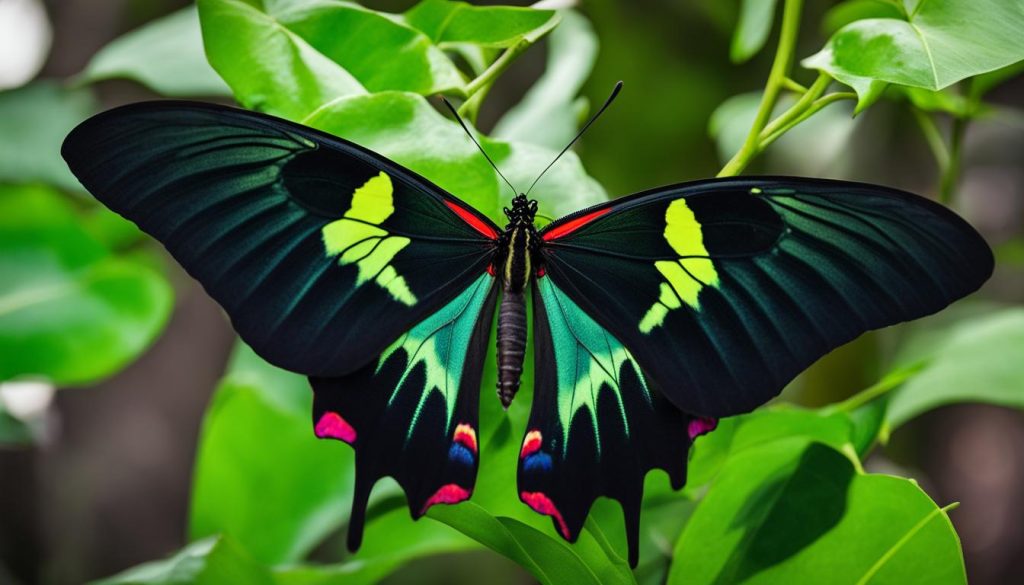
The Queen Alexandra's birdwing is the world’s largest butterfly species. The female, which is larger but less colorful than the male, has a maximum wingspan of around 11 in. / 28 cm.
This endangered butterfly is found only in the rainforest of the Oro Province in Papua New Guinea. It was discovered by English naturalist Albert Stewart Meek, & named after Alexandra of Denmark, wife of King-Emperor Edward VII of Britain.
Why is the Queen Alexandra's birdwing butterfly endangered?
The Queen Alexandra's birdwing has become endangered due to deforestation. The forests in which it is found are being destroyed to make way for plantations of crops such as oil palm.
Red Hills Salamander
Scientific name: Phaeognathus hubrichti
Type of animal: Amphibian
Where found: North America
Found in only 2 small regions of Alabama, United States, the Red Hills salamander is a mid to large gray/brown salamander that grows to lengths of around 10 in / 25.4 cm. The species is the state amphibian of Alabama.
Why are Red Hills salamanders endangered?
The Red Hills salamander is found mainly on land owned by private timber companies. Forestry techniques used by the companies are often detrimental to the species.
Projects aimed to reverse the amphibian’s decline include acquisition of land by The Nature Conservancy, an American non-profit organization.
Red Panda
Scientific name: Ailurus fulgens
Type of animal: Mammal
Where found: Asia
The red panda is found in temperate forests on the slopes of the Himalayas in Asia. Despite its name, the red panda is not a bear; its closest relatives in the animal kingdom are the mustelids (members of the weasel family).
The red panda mainly eats bamboo, supplementing its diet with other plant material & small animals & eggs. Due to its low-energy bamboo-based diet, the red panda spends most of its life either eating or sleeping.
Why are red pandas endangered?
The main threat to the red panda is habitat loss, due to a growing human population in its natural habitat, & deforestation.
Sea Otter
Scientific name: Enhydra lutris
Type of animal: Mammal
Where found: North Pacific Ocean
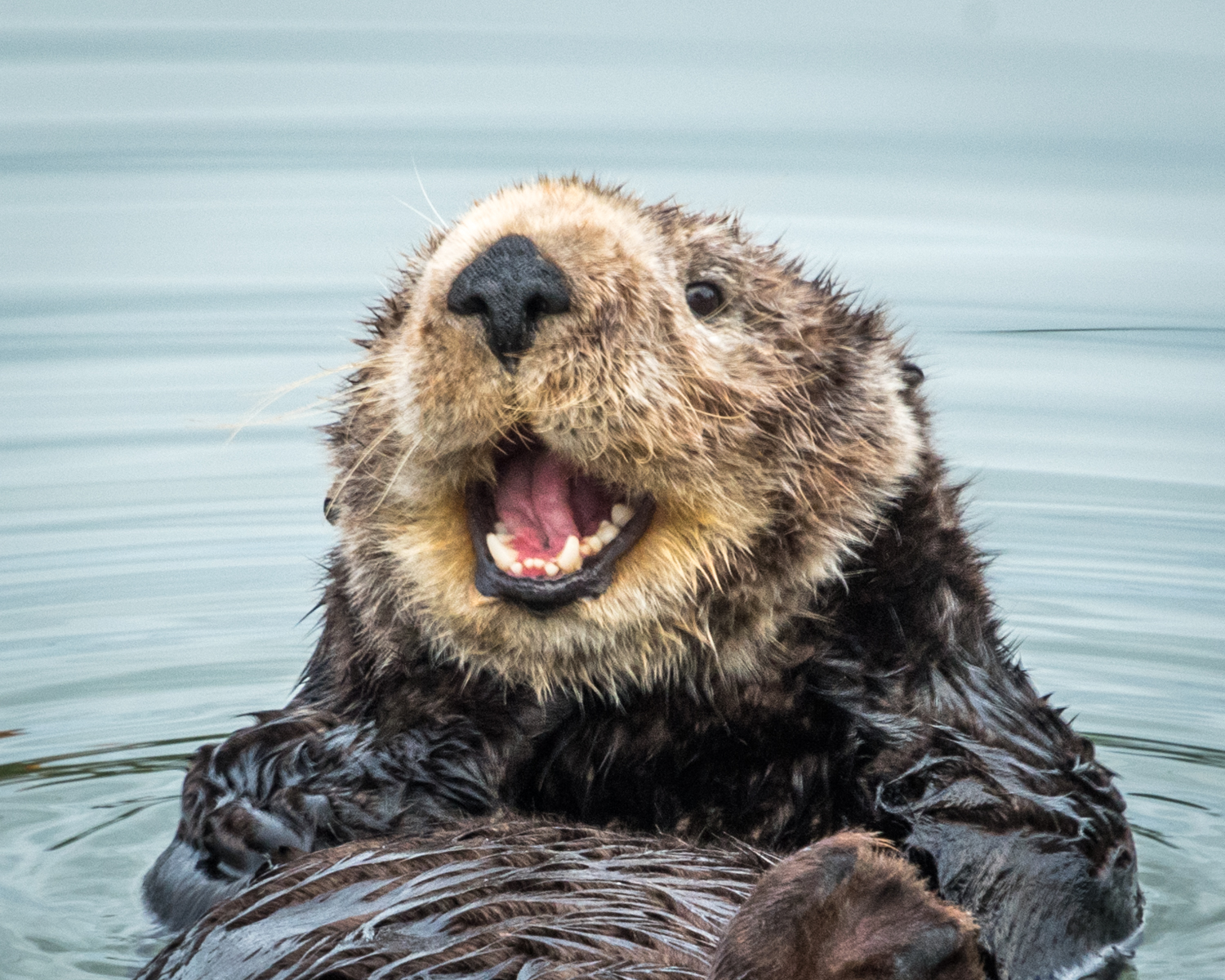
The sea otter is the heaviest mustelid (member of the weasel family Mustelidae) but one of the smallest marine mammals. It has the thickest fur of any animal. It relies on its fur for insulation, as, unlike most other marine mammals, it lacks a layer of blubber.
The sea otter is known for its rafting behavior, in which between 10 & 100 sea otters float on their backs on the surface of the ocean, often anchoring themselves to kelp to prevent themselves from drifting.
Why are sea otters endangered?
Threats to the sea otter include oil spills & accidental capture in fishing nets.
Secretarybird
Scientific name: Sagittarius serpentarius
Type of animal: Bird
Where found: Africa
The secretarybird (also known as the secretary bird) is a large, long-legged bird of prey found in grasslands & savannas in sub-Saharan Africa. Although it can fly, the species is mainly terrestrial (land-living). It spends most of the day on the ground & roosts in trees at night.
The secretarybird hunts on foot. Its prey includes insects & small vertebrates, including mice, mongooses, & lizards. The secretarybird is famous for its ability to prey on venomous snakes such as cobras & adders.
Why are secretarybirds endangered?
Like many endangered animals, the main threat to the secretarybird is habitat loss caused by farming & urbanization.
South Asian River Dolphins
Scientific name: Platanista gangetica (Ganges River dolphin); Platanista minor (Indus River dolphin)
Type of animal: Mammal
Where found: Asia
Previously considered to be subspecies of a single species, the Ganges River dolphin (Platanista gangetica) & Indus River dolphin (Platanista minor) are now considered to be separate species. Both species of South Asian river dolphins are endangered.
Like other cetaceans (the animal group that is home to all whales, dolphins, & porpoises) Asian river dolphins are aquatic mammals, although unlike most other members of this group, south Asian river dolphins live in freshwater, rather than marine, habitats.
The south Asian river dolphins are almost entirely blind (although their eyes may be able to detect changes in light) & hunt using echolocation. (The murky waters in which the dolphins live deem normal eyesight unnecessary.)
Why are south Asian river dolphins endangered?
Dams & other manmade obstructions in the rivers in which South Asian river dolphins live have caused the species’ populations to become fragmented. The structures have also had a negative effect on the dolphins' habitat & food supply. Pollution & gillnetting are additional factors in the species’ endangered status.
Southern Plains Bumblebee
Scientific name: Bombus fraternus
Type of animal: Insect
Where found: North America
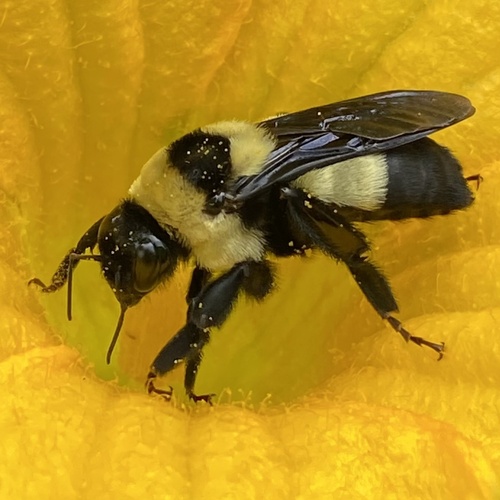
The southern plains bumblebee is an endangered bumblebee species found in the southeastern United States. It can be identified by the black band at the rear of its mainly pale yellow thorax, the pale yellow & black coloration of the front & rear of its abdomen respectively, & the “flat”, rather than “fluffy” appearance of its short hair.
Plants on which the southern plains bumblebee feeds on include milkweeds, prairie clovers, cassias, & blazing stars.
Why are southern plains bumblebees endangered?
The main threat to the southern plains bumblebee is the conversion of its native grassland habitat into fields for crops.
Steppe Eagle
Scientific name: Aquila nipalensis
Type of animal: Bird
Where found: Asia
The Steppe eagle is a large bird of prey native to the Eurasian steppes. It is one of 14 “true eagles” of genus Aquila.
The Steppe eagle is a large raptor, with a body length of 62 to 81 cm / 24.5 to 32 inches & a wingspan reaching up to 2.2 meters / 7.22 ft.
This endangered bird is distinguished by its brown plumage, darker on the wings & tail, & a lighter, often streaked, underbelly. Its powerful hooked beak & sharp talons are typical of eagles & other predatory birds.
The Steppe eagle's keen eyesight is adapted for spotting prey over vast open landscapes. It primarily feeds on small mammals & carrion. These migratory birds are notable for their long flights, traveling great distances between breeding & wintering grounds.
Why Is The Steppe Eagle Endangered?
The Steppe eagle is endangered due to habitat loss, electrocution from power lines, & poisoning from rodent-control poisons.
Tasmanian Devil
Scientific name: Sarcophilus harrisii
Type of animal: Mammal
Where found: Australia
The Tasmanian devil is the world’s largest carnivorous marsupial. It is a member of the family Dasyuridae, which also contains the quolls & other mainly carnivorous / insectivorous marsupials.
Most wild Tasmanian devils are found on the Australian island state of Tasmania. A small number have recently been reintroduced onto the Australian mainland.
The Tasmanian devil gets its name for its terrifying night-time screeches & aggressive feeding behavior.
Why are Tasmanian devils endangered?
The Tasmanian devil is endangered due to the spread of Devil Facial Tumor Disease (DFTD), which has caused a large decline in the species’ population.
Tiger
Scientific name: Panthera tigris
Type of animal: Mammal
Where found: Asia
The tiger is the largest member of the cat family Felidae. Despite being one of the world’s most recognizable animals, the tiger’s wild population consists of under 3,200 adult individuals. Most wild tigers are found in southern Asia, although a separate population exists in Siberia.
Tigers are able to live in a wide range of habitats, including both tropical & boreal forests.
Why are tigers endangered?
The tiger is endangered primarily due to poaching & deforestation. Despite its protected status, the tiger is still illegally hunted, both for its hide & for other body parts, which are used in traditional Asian medicine.
Tiger Chameleon
Scientific name: Archaius tigris
Type of animal: Reptile
Where found: The Seychelles
The tiger chameleon is an endangered reptile found only on the Seychelles, an African island country in the Indian Ocean. The species is around 6.3 in / 16 cm in length, & has a distinctive cluster of spiky growths on its chin. It hunts insects using its extendable sticky tongue.
Why are tiger chameleons endangered?
The main threat to the tiger chameleon is the introduction of the non-native tree, Cinnamomum verum, which is dominating native species.
Whale Shark
Scientific name: Rhincodon typus
Type of animal: Fish
Where found: Tropical oceans worldwide
The whale shark, which reaches lengths of up to 62 ft. / 18.8 m, is the world’s largest fish species.
Unlike all but 2 of the over 500 other species of sharks, the whale shark it is a filter feeder. (The other 2 filter-feeding sharks are the basking shark, which is also endangered, & the megamouth shark, which is not currently threatened.)
Despite its great size, the whale shark diet consists of plankton – small organisms that drift in the water.
The whale shark is usually found near the surface of the ocean, but is known to dive to depths of 1.2 miles / 1.928 km.
Why are whale sharks endangered?
The whale shark is endangered due to hunting (both targeted & accidental). It is also the victim of vessel strikes.
Whooping Crane
Scientific name: Grus americana
Type of animal: Bird
Where found: North America
The whooping crane is a long-necked, long-legged bird whose white plumage distinguishes it from the much more common sandhill crane (whose plumage is generally grey-brown). It is the tallest, & one of the heaviest, birds of North America.
The wild population of whooping cranes currently numbers around 250 adult individuals (due to recent breeding successes this number may actually be substantially larger). Most spend summers in Canada’s Wood Buffalo National Park, & overwinter in wetlands in Texas, USA.
The species is named for its extremely loud whooping call.
Why are whooping cranes endangered?
The whooping crane became an endangered species due to overhunting & habitat loss. Today its recovery is affected by collisions with powerlines, drought, & development of its natural habitat.
Endangered Animals List: Conclusion & Credits
Sources of information for this page include the International Union for Conservation of Nature & the IUCN RedList.
Cute Critter Pics:
Weekly Chuckle: