Wednesday, January 22, 2025

Jan. 22/2025


Endangered Animals List With Pictures & Interesting Facts Part 2

https://www.activewild.com/list-of-endangered-animals/?utm_source=brevo&utm_campaign=AW%20Newsletter%2028&utm_medium=email

Blue Speckled Tree Monitor

Scientific name: Varanus macraei

Type of animal: Reptile

Where found: Asia

The blue-speckled tree monitor is a monitor lizard found only on Batanta island, part of the island country of Indonesia. The species, which is also known as the blue-spotted tree monitor, grows to around 3.5 ft (1.1 m) in length, & it is black with blue scale patterns.

Equipped with a long, prehensile tail that helps it climb, the blue-speckled tree monitor is largely arboreal (tree-living). It is found in tropical forests.

Why are blue-speckled tree monitors endangered?

The blue-speckled tree monitor is targeted by hunters who collect live specimens for sale to the pet trade. Deforestation is another threat to the species.

Blue Whale

Scientific name: Balaenoptera musculus

Type of animal: Mammal

Where found: Oceans worldwide

Blue whales are the largest animals ever to have lived on the Earth; they’re bigger than the biggest dinosaurs. Blue whales can weigh up to 200 tons, yet their diet consists almost entirely of tiny crustaceans called krill.

Why are blue whales endangered?

Blue whales are endangered due to historic overhunting. The species was once hunted almost to extinction. Today, the blue whale is protected worldwide & is making a slow recovery. However, with a population that currently numbers between 5,000 & 15,000 adult individuals, the blue whale remains an endangered species.

Bonobo

Scientific name: Pan paniscus

Type of animal: Mammal

Where found: Africa

Bonobos are very similar to chimpanzees (both species belong to the genus Pan), but are usually slightly smaller, with longer legs & darker faces. Bonobos are found in the tropical forests of the Democratic Republic of Congo, Africa.

Why are bonobos endangered?

The bonobo is endangered due to poaching (hunting of the bonobo for bushmeat continues despite being banned) & habitat loss caused by logging & slash & burn agriculture.

Chimpanzee

Scientific name: Pan troglodytes

Type of animal: Mammal

Where found: Africa

Chimpanzees are primates that live in the forests of central Africa. They are our nearest living relatives, sharing around 98% of our genes. They belong to the great ape family Hominidae, along with humans, bonobos, gorillas, & orangutans.

These intelligent apes are among the very few animals known to use tools. Chimpanzees have been observed using sticks to extract insects such as termites & bees from their nests, & stones to crack open nuts.

Why are chimpanzees endangered?

The greatest threat to the chimpanzee is poaching; despite being protected, the species is targeted by hunters for its meat.

Dhole

Scientific name: Cuon alpinus

Type of animal: Mammal

Where found: Asia

Also known as the Asian wild dog, the dhole is a canid (member of the dog family, Canidae) found in several Asian countries, including India, Bangladesh, & China, & also the islands of Sumatra & Java.

Despite its large range, the dhole’s population is thin & fragmented. The entire adult wild population of dholes is thought to number a maximum of 2,215 individuals.

Why are dholes endangered?

One of the main reasons that the dhole is endangered is competition with human hunters. Overhunting of the dhole’s natural prey by humans creates a scarcity of food for the dogs. Habitat loss has also played a large part in the species’ endangered status.

Egyptian Vulture

Scientific name: Neophron percnopterus

Type of animal: Bird

Where found: Africa, Asia, Europe

The Egyptian vulture is found across a large part of southern Europe, northern Africa, & Asia. It is a striking bird with white plumage, a yellow face & a 5.58 ft. / 1.7 meter maximum wingspan.

Like most vultures, the Egyptian vulture is primarily a scavenger.

Why are Egyptian vultures endangered?

Today, much of the carrion eaten by the Egyptian vulture contains either poison or lead shot, which eventually proves fatal for the scavenger. In addition, drugs administered to livestock upon whose carcasses the vulture preys are harmful to the bird. Collisions with wind turbines & electrical cables also reduce the bird’s population.

European Rabbit

Scientific name: Oryctolagus cuniculus

Type of animal: Mammal

Where found: Native to Europe, introduced to the Americas, Africa & Australia

The European rabbit is a common sight in some parts of the world, but in its native Spain, Portugal, & southern France, the species' population has declined significantly in recent years, causing the species to become endangered.

The rabbit, one of 77 species of rabbits & hares, was introduced to regions as far afield as the Americas & Australia. Due to the damage the species can cause to crops, it came to be considered a pest in many areas in which it had been introduced.

One method of controlling introduced populations of European rabbits was the deliberate introduction of the disease Myxomatosis. This disease, together with another, Rabbit Haemorrhagic Disease, has been responsible for wiping out large numbers of European rabbits not only in regions to which the species was introduced, but also in its native range.

The decline of the European rabbit has led to the decline of one of its main predators: the Iberian lynx.

Why Is The European Rabbit Endangered?

The European rabbit is endangered primarily due to the introduction of the disease Myxomatosis.

Galápagos Penguin

Scientific name: Spheniscus mendiculus

Type of animal: Bird

Where found: Galápagos Islands

The Galápagos penguin is found on the Galápagos Islands, an island group in the Pacific Ocean 563 miles off the coast of Ecuador. The Galápagos penguin is the only penguin found north of the equator. It is the second-smallest penguin: only the little penguin is smaller.

Why are Galápagos penguins endangered?

The Galápagos penguin’s population is strongly affected by ENSO (the El Niño-Southern Oscillation), a cycle of warm & cold sea temperatures in the Eastern Pacific Ocean. In El Niño years, the water temperature rises, causing food to become scarce for the penguins.

Galápagos Sea Lion

Scientific name: Zalophus wollebaeki

Type of animal: Mammal

Where found: Galápagos Islands

The Galápagos sea lion lives on the coast of the Galápagos islands. It is the smallest sea lion species. There are only around 10,000 Galápagos sea lions left in the wild.

Why are Galápagos sea lions endangered?

Like the Galápagos penguin, the Galápagos sea lion is affected by El Niño events. These cause a reduction in the amount of available food & a resultant poor breeding season. Disease (possibly spread by dogs) also causes significant declines in the sea lion’s population.

Giant Abalone
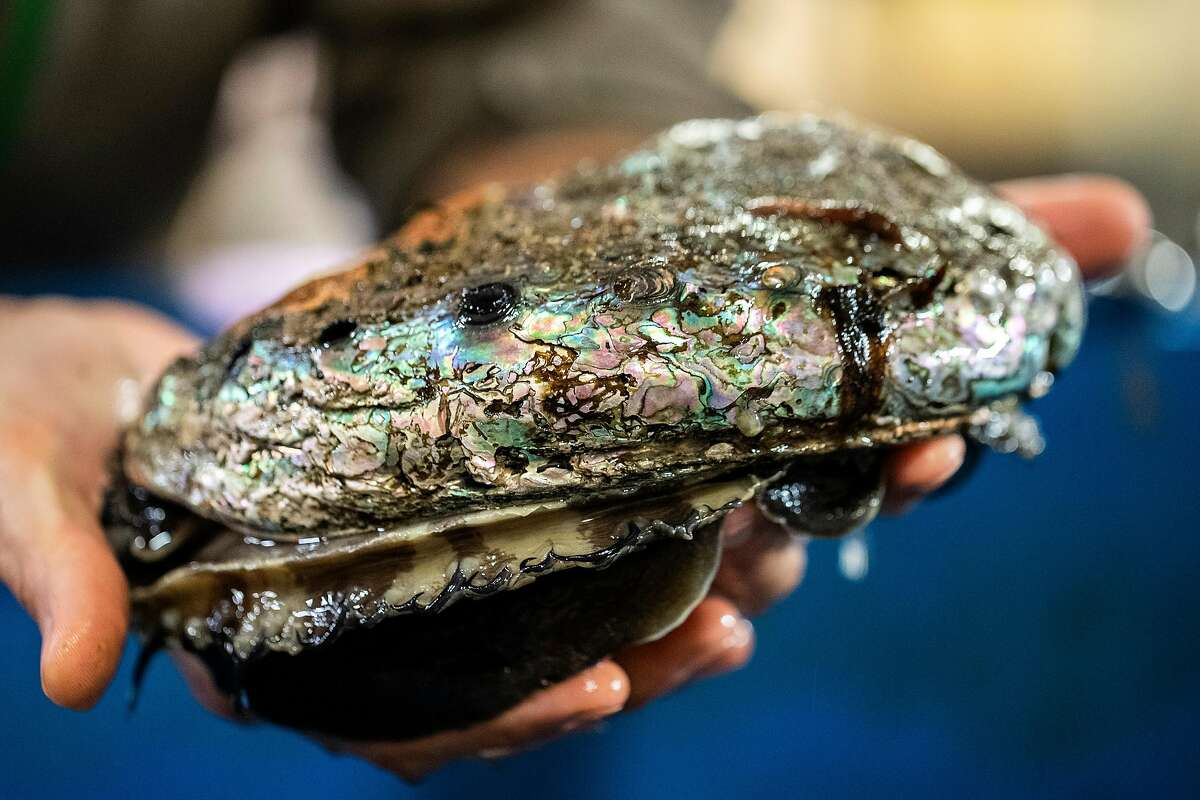
Scientific name: Haliotis gigantea

Type of animal: Mollusk

Where found: Oceans surrounding Japan

The giant abalone is a sea snail found in the seas off of Japan & South Korea. It grows to a diameter of around 23.3 cm / 9.17 in. &, like all abalones, has a row of respiratory holes on its shell.

Abalones, like all sea snails, are mollusks belonging to the class Gastropoda. This group is home to all snails (including land-living varieties) & slugs.

Many abalones, including the giant abalone, are harvested for food, & overfishing is a principal cause of the species’ endangered status. The loss of the seaweed beds upon which the giant abalone is found is another contributing factor.

Giant Otter
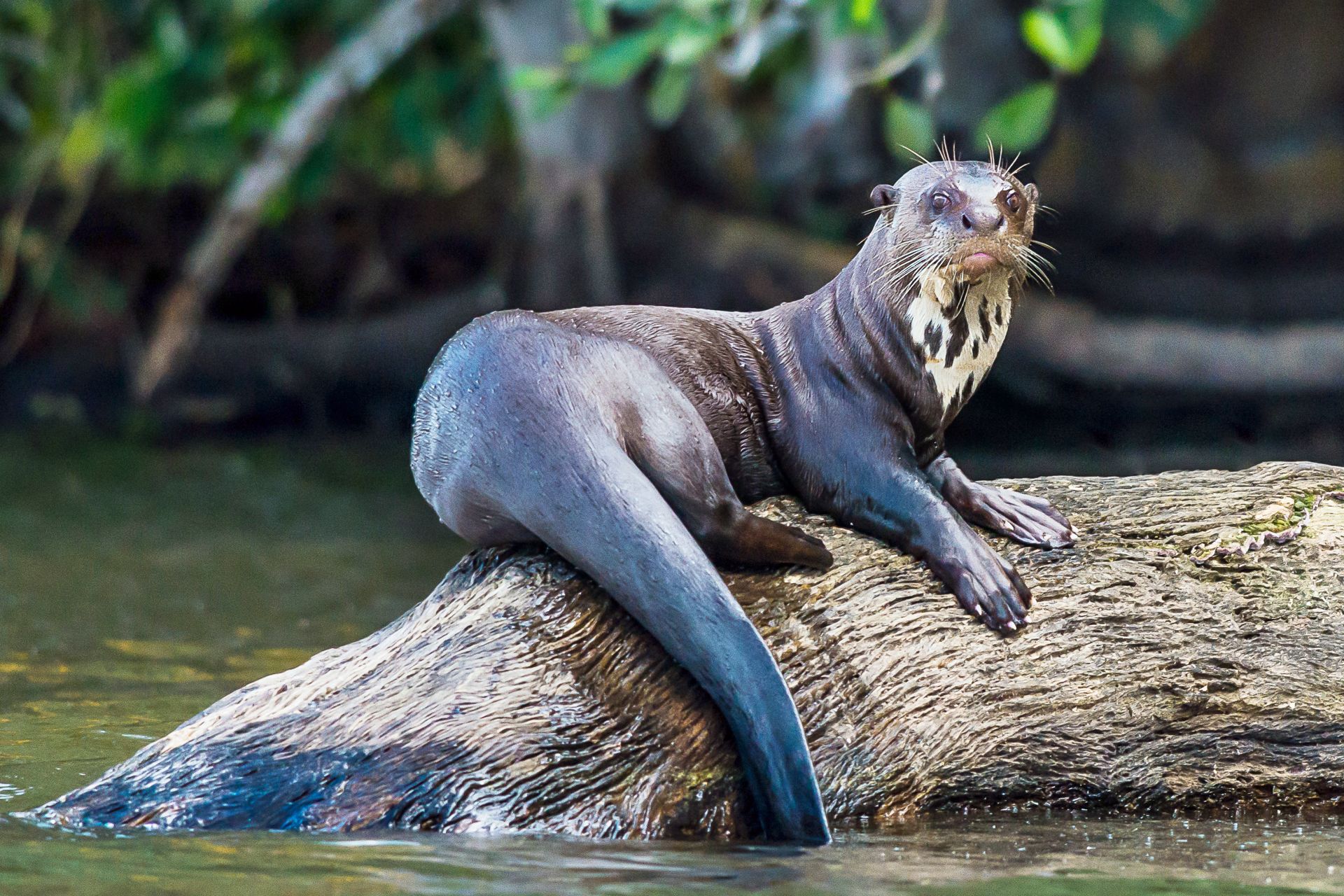
Scientific name: Pteronura brasiliensis

Type of animal: Mammal

Where found: South America

The giant otter is a species of otter found in South America. It is present in the Amazon River & the Pantanal (a vast tropical wetland). Like other otters, it is a semi-aquatic hunter. Its diet consists almost entirely of fish.

As its name suggests, the giant otter is one of the larger otter species, reaching 1.8 m / 5 ft 11 in. in length. Like other otters, it is a member of the weasel family, Mustelidae.

Previously the victim of overhunting for its pelt, the giant otter today is threatened by human encroachment into its habitat, as well as by pollution & disease.

Golden Lion Tamarin

Scientific name: Leontopithecus rosalia

Type of animal: Mammal

Where found: South America

The golden lion tamarin is a monkey that lives in Brazil’s Atlantic Coastal Forest.

The species belongs to a group of primates called the New World monkeys. This group split from the Old World monkeys around 40 million years ago. The nostrils of New World monkeys open to the sides, whereas those of Old World monkeys open downwards.

Why are golden lion tamarins endangered?

The primary cause of the golden lion tamarin’s endangered status is deforestation. Over 85% of the Atlantic Coastal Forest in which the monkey lives has been destroyed. In addition, the golden lion tamarin is hunted for sale to the pet trade.

Golden Poison Frog

Scientific name: Phyllobates terribilis

Type of animal: Amphibian

Where found: South America

The golden poison frog is a brightly-colored frog that lives in the rainforests of Colombia. It is the largest species of poison dart frog, reaching a length of 55 mm / 2.17 in. As well as its characteristic yellow, the species’ skin can also be green or orange in color.

The golden poison frog’s bright coloration warns potential predators that it is poisonous. The species is considered by many to be the world’s most poisonous vertebrate.

Why are golden poison frogs endangered?

Like many rainforest animals, the primary threat to the golden poison frog is deforestation.

Cute Critters:


Weekly Chuckle: 

Wednesday, January 15, 2025

Jan. 15/2025


Endangered Animals List With Pictures & Interesting Facts – Updated 2024 Part 1

1/11/2024 by Active Wild Admin

Endangered Animals List With Pictures & Interesting Facts – Updated 2024

Endangered Animals

Examples of endangered animals include mammals such as the tiger, chimpanzee, Asian elephant, &  sea otter; birds such as the Egyptian vulture & Galápagos penguin; reptiles such as the Alabama red-bellied cooter & green sea turtle; fish such as the humphead wrasse & whale shark; & amphibians such as the golden poison frog & Majorcan midwife toad.

All of the animals on the list below are currently (as of Jan 2024) listed as “Endangered” by the International Union for Conservation of Nature. 

African Bush Elephant

Scientific name: Loxodonta Africana

Type of animal: Mammal

Where found: Africa

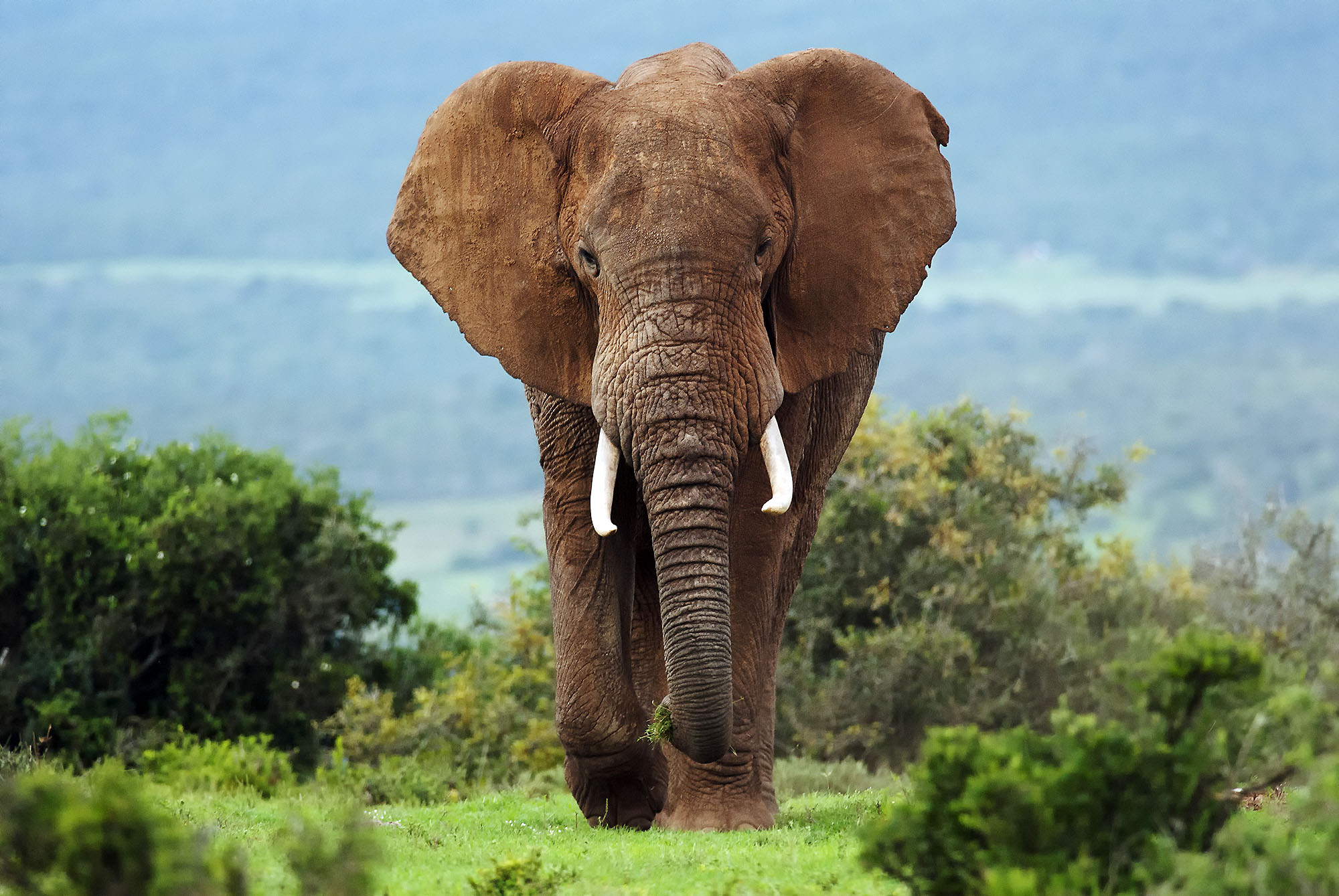
The African bush elephant (also known as the African savanna elephant) is the world’s largest living land animal. Large males can weigh up to 10.4 metric tonnes / 11.46 short tons (22,928.08 lb.).

Both male & female African bush elephants have tusks, which are teeth that project out of the mouth.

Why are African bush elephants endangered?

The African bush elephant’s endangered status is due mainly to illegal poaching for their valuable ivory tusks, together with loss of their natural habitat.

African Spurred Tortoise

Scientific name: Centrochelys sulcata

Type of animal: Reptile

Where found: Africa

The African spurred tortoise is the 3rd-largest type of tortoise in the world, & the largest found on the mainland; only the Galapagos tortoises & the Aldabran tortoise are larger (these tortoises are found on islands).

The African spurred tortoise can reach lengths of 83 cm (33 in) & weights of 105 kg (231 lb.). It is found in the Sahara Desert & the Sahel; a dry grassland / savanna region that stretches across Africa from Mauritania in the west to Ethiopia & Eritrea in the east.

Why are African spurred tortoises endangered?

Primary causes for the African spurred tortoise’s endangered status are habitat loss (due to farming & bush fires), capture for the pet trade, & being hunted for meat.

African Wild Dog

Scientific name: Lycaon pictus

Type of animal: Mammal

Where found: Africa

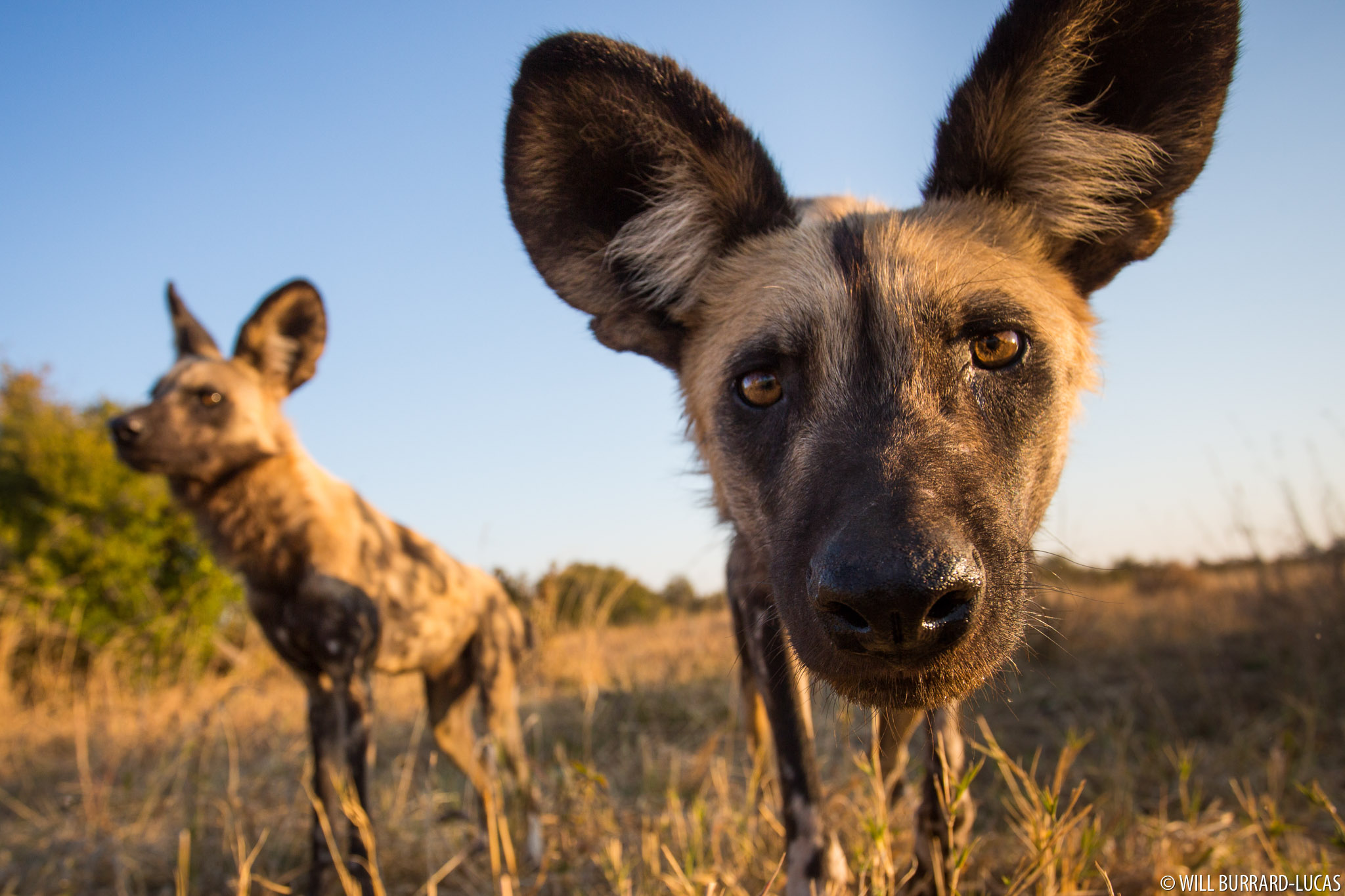
African wild dogs are found in Sub-Saharan Africa (the part of Africa south of the Sahara Desert). These endangered canids live in packs consisting of an alpha pair & their offspring. They hunt at dawn & dusk, pursuing prey such as Thomson’s gazelles & other mid-sized antelopes.

The African wild dog is easily identified due to its patterned coat, which gives the species its alternative name of African Painted Dog.

It is estimated that fewer than 1,500 adult individual African wild dogs are left in the wild. The species’ population is fragmented over a wide area.

Why are African wild dogs endangered?

The biggest threat to the African wild dog is habitat loss. This is a species that needs a lot of space; a growing human population in the dogs’ natural habitat restricts the area in which it can hunt.

Alabama Red-Bellied Cooter

Scientific name: Pseudemys alabamensis

Type of animal: Reptile

Where found: North America

The Alabama red-bellied cooter is a species of turtle found in Alabama’s Mobile–Tensaw River Delta, a 260,000 acre wetland region. The species is Alabama’s official state reptile.

The Alabama red-bellied cooter grows up to 1 ft. / 30 cm in length & its plastron (the shell covering the turtle’s undersides) is orange in color (hence the species’ name).

This endangered reptile belongs to the family Emydidae, whose members are also known as “pond turtles” or “terrapins”.

Why are Alabama red-bellied cooters endangered?

Alabama red-bellied cooters are endangered primarily due to habitat loss & illegal capture for sale to the pet trade. They can also become trapped & drown in fishing nets & crab pots.

Amazon River Dolphin / Boto

Scientific Name: Inia geoffrensis

Type of Animal: Mammal

Family: Iniidae

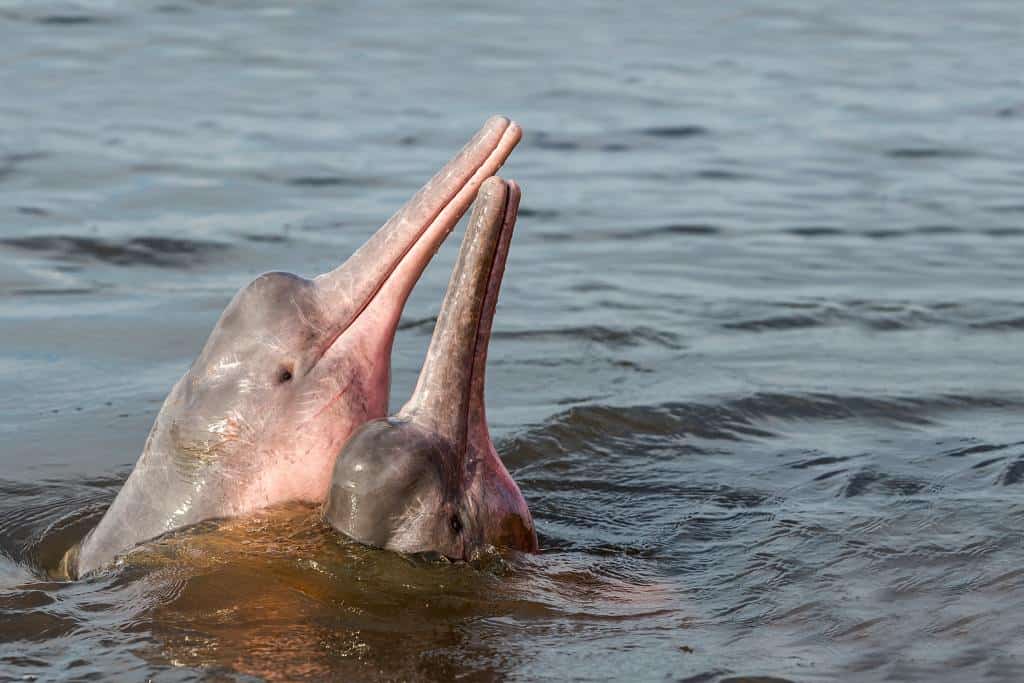
The Amazon river dolphin, also known as the boto or pink river dolphin, is the largest river dolphin species. It is found in the Amazon River & its tributaries.

As an Amazon river dolphin matures, its skin changes from gray to pink in color, resulting in the species’ alternative name of “pink river dolphin”.

The Amazon river dolphin is closely related to the Bolivian, Orinoco, & Araguaian river dolphins (all of which are found in South America); some scientists consider some or all of these dolphins to be subspecies of the Amazon river dolphin, rather than separate species.

Why Are Amazon River Dolphins Endangered?

The Amazon river dolphin is endangered for a number of reasons, including: lack of food due to the presence of commercial fisheries; being caught as bycatch by local fishermen; being deliberately caught & used as bait by local fishermen; & pollution of its habitat.

Arroyo Toad

Scientific name: Anaxyrus californicus

Type of animal: Amphibian

Where found: North America

The arroyo toad is found in California, U.S.A. & Baja California, Mexico, where it inhabits streams & washes (dry desert creeks that fill with water after rain). It is small (2-3 in. / 5-7.5 cm) & stockily-built, with pale, olive-green / grey skin.

Outside of the mating season, the arroyo toad spends much of the day buried in sand or mud, emerging at night to forage for ants & other small insects. During the dry season, it enters a state of dormancy known as aestivation.

Why are arroyo toads endangered?

The arroyo toad population currently consists of fewer than 3,000 individuals & continues to decrease. The species is endangered primarily due to habitat loss.

Asian Elephant

Scientific name: Elephas maximus

Type of animal: Mammal

Where found: Asia

Asian elephants are the largest land animals in Asia, & the second-largest in the world (after the African bush elephant, another endangered species). A large male has a shoulder height of around 9 ft / 2.74 m, & weighs around 4 metric tonnes / 4.4 short tons (8,818.49 lb.).

Asian elephants have smaller ears & smoother skin than their African cousins. Only the males have tusks.

Why are Asian elephants endangered?

Asian elephants are endangered due to poaching (male elephants are targeted for their valuable ivory tusks) & habitat loss.

Aye-Aye

Scientific name: Daubentonia madagascariensis

Type of animal: Mammal

Where found: Madagascar

The aye-aye is a species of lemur that lives in the rainforests of Madagascar, an island located in the Indian Ocean off the coast of East Africa.

The endangered mammal, which reaches a length of around 3 ft. (90 cm), including its long tail, is the world’s largest nocturnal primate.

The aye-aye finds food by tapping on trees with its fingers; it can tell by the sound if there’s an insect grub hidden beneath the bark.

Why are aye-ayes endangered?

Some local people believe that the aye-aye brings bad luck, & the species has faced persecution due to these beliefs. This, and habitat loss, are the main reasons that the aye-aye is endangered.

Barbary Macaque

Scientific name: Macaca sylvanus

Type of animal: Mammal

Where found: Africa, Gibraltar

A small colony of Barbary macaques lives in Gibraltar (a British territory on the southern coast of Spain), making the species the only monkey to be found in the wild in Europe. Barbary macaques are also found in northern Africa.

Unlike most other monkeys, the Barbary macaque lacks a tail. This has led to the species’ alternative name of “Barbary ape” (apes lack tails).

Why are Barbary macaques endangered?

In Africa, the Barbary macaque lives in high-altitude forests, & in Gibraltar, in rocky coastal areas. It is due to the loss of its African habitat that the monkey is endangered.

Basking Shark

Scientific name: Cetorhinus maximus

Type of animal: Fish

Where found: Oceans worldwide

The basking shark is the world’s second-largest fish. It grows to an average length of 26 ft / 7.9 m, but can reach lengths of up to 28 ft / 8.5 m; only the whale shark, another endangered species, is larger.

Unlike most sharks, the basking shark is a filter feeder rather than an active hunter. It swims through clouds of zooplankton (tiny ocean animals) with its large mouth held wide open, filtering the food from the seawater with comb-like projections from its gills known as “gill rakers”.

Why are basking sharks endangered?

The basking shark is endangered due to overfishing. Although the species is no longer targeted, it is still caught accidentally &, due to its surface-feeding habits, is occasionally struck by boats.

Black-Footed Ferret

Scientific name: Mustela nigripes

Type of animal: Mammal

Where found: North America

A list of endangered animals is not just about famous animals such as tigers & elephants; other, lesser-known species are also facing extinction.

The black-footed ferret is one such animal. Found in North America, it is a member of the family Mustelidae, which also includes weasels, badgers, the wolverine, & related animals.

In 1979 the black footed ferret was thought to be extinct in the wild, but in 1981 a small population was discovered in Wyoming.

A captive breeding program saw the species being reintroduced in several locations in North America.

Although several thousands of black footed ferrets have been reintroduced since the 1990’s, today’s wild population consists of just 206 adults.

Why are black-footed ferrets endangered?

Black-footed ferrets are endangered due to persecution of its main prey source, prairie dogs. The black-footed ferret’s fortunes are directly linked to the availability of these prey animals. Prairie dogs are capable of damaging crops, & were therefore persecuted by farmers. This, together with habitat loss, led to a fall in prairie dog populations, & a resultant decline in the black footed ferret population.

Black-Headed Spider Monkey

Scientific name: Ateles fusciceps

Type of animal: Mammal

Where found: Central & South America

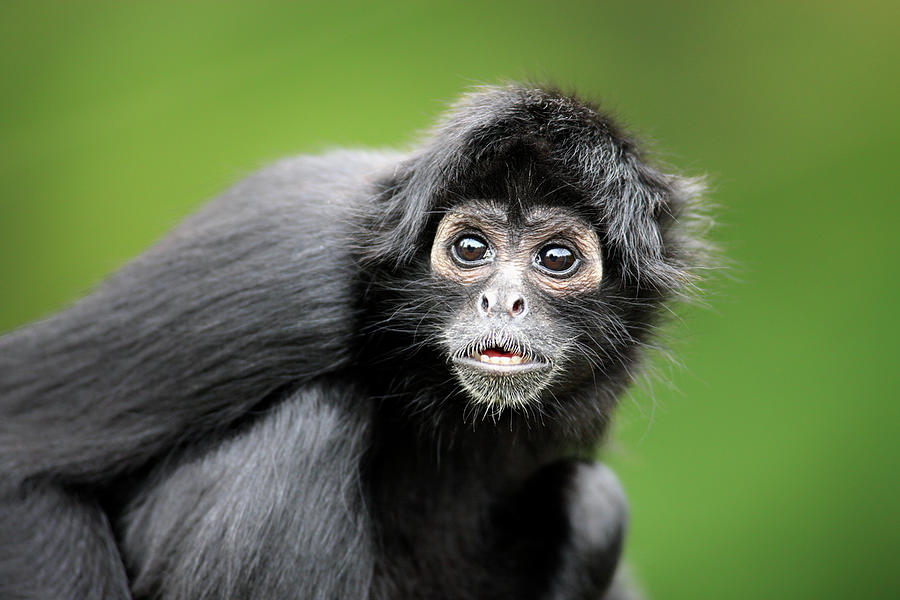
The black-headed spider monkey is an endangered monkey found in tropical & subtropical forests in Colombia, Ecuador, & Panama.

The black-headed spider monkey has black or dark brown fur (it is also known as the brown-headed spider monkey). Like all spider monkeys it has extremely long limbs & a long, prehensile tail. (Prehensile means “able to grab”.) The tail is used like a “5th hand” while the monkey is climbing.

Of the 7 species of spider monkey, five (including the black-headed spider monkey) are endangered, one is critically endangered, & one is rated “Vulnerable”.

Why are black-headed spider monkeys endangered?

The black-headed spider monkey is endangered due to being hunted for food, & by the loss & fragmentation of its forest habitat.

Cute Critter Pics: 


Weekly Chuckle:



Sunday, January 12, 2025

Jan. 8/2025


Hedgehog Care Sheet: Habitat, Food, & Care

By Melissa Witherell, DVM. Reviewed by Barri J. Morrison, DVM

Updated Sep. 29/2024

Hedgehog Care Sheet: Habitat, Food, and Care | PetMD

Hedgehog Species Overview

Hedgehogs are small nocturnal mammals that are blanketed with spikes along their backs. Like porcupines, hedgehogs have these quills for protections against predators.

However, hedgehog quills are not barbed & do not puncture the skin—but they can still hurt if handled improperly.

But can you have a hedgehog as a pet?

The answer is yes, you can have a hedgehog as a pet—but due to their quills & specific care, hedgehogs are not ideal for young children.

These spiny friends require a clean, comfortable hedgehog habitat & daily socialization in the evenings from their pet parents.

Hedgehogs can thrive living alone & do not need to be kept with other hedgehogs.

Occasionally, 2 females may be housed together but it’s typically recommended for hedgehogs to live alone. Additionally, they should not be housed with any other species in their enclosure. 

Hedgehogs can be extremely shy at first but are social animals at heart.

They like to ball up in a natural defense position, but with patience & daily social interaction, your hedgehog will start to feel safe & content with you.

When hedgehogs chirp, whistle, or purr, it indicates they feel comfortable. Snorting, clicking, or hissing indicates fear or aggression.

Hedgehog Characteristics

Difficulty of Care Intermediate

Average Lifespan 5–8 years

Average Adult Size 24–35 centimeters

Diet Insectivore

Minimum Enclosure Requirements 2' x 3' floor space

How Long Do Pet Hedgehogs Live?

With proper care, pet hedgehogs can live 6 years or more. Many can even live up to 8 years old.

Regular vet visits, nurturing pet parents, & preventative care can help hedgehogs live longer.

Wild hedgehogs usually live to be about only 3 years old.

How Big Do Hedgehogs Get? 

Pet hedgehogs are small, adorable creatures that are usually around 1 pound (453 grams) when they are full grown.

Male hedgehogs are usually larger at 400–600 grams & females are usually 300–400 grams.

Hedgehog Care

Let's take a look at a few key components of caring for hedgehogs.

Hedgehog Handling 

Hedgehogs have prickly quills along their back to protect them from predators. They are shy animals & will roll up into a tight ball & hide their face if they are frightened.

Always approach a hedgehog slowly & handle them with a small towel so you don’t prick yourself on one of their quills.

It’s important to include daily socializing time outside of the cage to help them get used to you & get comfortable with being handled.

Hedgehog Habitat 

Enclosure

Hedgehogs require an enclosure that is at minimum 3 x 2 feet for floor dimensions. The ideal habitat has wire sides–no more than 1 inch apart with a flat bottom such as plastic to prevent pressure sores on their feet. Wire sides provide adequate ventilation.

The habitat should have a secure lid because hedgehogs like to climb.

Environment

House your hedgehog in an area that you spend the most amount of time in–like your living room or bedroom so that they can spend time with you.

Hedgehog Temperature

Their home should not be in direct sunlight or in a drafty area. Optimal temperature is between 70–85 F; hedgehogs can overheat over 85 F.

If the temperature falls below 65 F hedgehogs will become less active, & this can cause a compromised immune system. Humidity in their room should be low, less than 40%.

A heating pad can be placed under part of the enclosure, or a ceramic heat emitter may be used to provide more heat as needed. It is ideal to have a temperature gradient in the enclosure, with one area warmer & the other cooler.

Bedding

Provide your hedgehog with at least 3–4 inches deep of high-quality paper bedding or crumbled paper.

Hedgehogs like to burrow so the more bedding the better for them. Recycled paper bedding & towels or blankets are often used inside the enclosure.

Remove any strings from the towels or blankets because these pieces could wrap around a hedgehog’s legs or feet.

Avoid clay or clumping litter & wood shavings as it can be ingested by the hedgehog & cause medical issues.

Feeding Dishes

A heavy bowl for food & water should be provided. Some hedgehogs will drink from a water bottle, & some prefer a bowl.

Other

Hedgehogs can be litter box trained.

Make sure the box has an opening low enough for them to climb in easily. Place it in the corner of the cage with paper-based litter inside.

You can also add hide boxes, fleece sleep sacks, PVC tubing, & cardboard boxes to the enclosure.

What Do Hedgehogs Eat?

Hedgehogs are insectivores & omnivores. 

This means they eat insects, plant material & occasionally baby mammals, mollusks, snails, & worms. 

Main Food

Domesticated hedgehogs should be fed a hedgehog pelleted diet every day. 

Depending on your hedgehog’s weight & activity level, feed 3–4 teaspoons of hedgehog pellets per day.

Since hedgehogs are nocturnal it's best to feed them at night.

Gut-loaded insects (i.e., 5 mealworms, 1 cricket) can be offered a few times a week.

One to 2 teaspoons of fresh produce can be offered daily to every other day.

Water

Fresh water should always be available in a water bottle or shallow bowl & changed daily.

Treats

Mealworms, crickets, earthworms, & waxworms can be fed up to 3 times per week.

Offer fresh fruit and vegetables weekly. These include:

Peas

Corn

Carrots

Apples

Bananas

These vegetables should all be cooked to prevent them from getting stuck on the roof your hedgehog’s mouth.

Supplements

Hedgehogs do not require vitamins or supplements unless otherwise directed by your veterinarian.

Foods to Avoid

Do not feed your hedgehog:

Celery or lettuce (low nutritional value)

Avocados

Raw meats

Raw eggs

Nuts

Seeds

Dairy products

Hard raw foods such as carrots

Do not offer your hedgehog any other items without checking with your veterinarian first.

Grooming & Care for Hedgehogs

Grooming

Bathe your hedgehog to remove any fecal material using a hedgehog-safe shampoo that’s fragrance-free.

Exercise

In their native habitat, hedgehogs travel long distances. Because of this, exercise is important for pet hedgehogs.

A flat exercise wheel is a great way for them to exercise as well as supervised roaming sessions outside of their enclosure.

Disinfecting & Cleaning

Cages should be emptied & cleaned at least once a week with soap & water.

Bedding should be replaced weekly.

Food & water bowls should be cleaned daily with soap & water. Your hedgehog’s cage should be spot cleaned once a day to remove & feces, wet/soiled bedding, & leftover food.

Enrichment & Training

When a hedgehog is presented with a new object or smell, they will lick, bite, or hold material in their mouth, & make a frothy saliva.

They will then apply the saliva to their spine with their tongue. This behavior can last minutes or up to one hour, & helps the hedgehog become better acquainted & comfortable.

In addition to exercise wheels, you can also provide them with swimming tubs outside their enclosure.

Hedgehogs like to climb, dig, swim, & jog on ramps, & climb structures & cardboard tubes inside their enclosure.

Make sure to provide your hedgehog with toys to encourage enrichment.

Hedgehog Health

Hedgehogs require annual checkups with your exotic veterinarian.

In addition to physical exam, blood work or X-rays may be recommended.

Signs of a Healthy Pet

Signs of healthy hedgehogs include:

Eating & drinking well

Healthy quills

Bright eyes

Walking & climbing without limping

Breathing comfortably without eye or nose discharge

Being active & playful at night

When To Call Your Vet

Signs that you should schedule an appointment with your veterinarian include:

Soft/loose poop

Not eating or drinking well

Quill loss

Muscle tremors

Wobbly gait

Lethargy

Eye or nose discharge

Overall decreased activity

If you have any concerns about your hedgehog, consult with your veterinarian immediately.

Common Illnesses in Hedgehogs

Hedgehogs commonly suffer from:

Corneal ulcers

Dental disease

Dilated cardiomyopathy

Cancer

Obesity

Wobbly hedgehog syndrome

Hedgehog Care Sheet FAQs

Are hedgehogs good pets?

Hedgehogs can make good pets for the right person that is able to care for them properly. 

Hedgehogs don’t make a good pet for young children (less than 5 years old) as their sharp quills & desire to be solo creatures make some less able to be handled often.

Where can you get a hedgehog?

There are a few places where you can get a hedgehog. You may look for a hedgehog breeder or adopt one from a rescue.

Asking your veterinarian or your local exotics veterinarian for recommendations is a great place to start—they might be able to point you in the right direction.

How much does a hedgehog cost?

To understand the cost of a hedgehog, you must consider not only the cost of the hedgehog himself, but also how much money it will take to set up the proper environment for him, as well as providing toys, food, treats, etc. throughout his life.

Hedgehogs themselves can cost anywhere from $100–$600, depending on where you get them from.

Do hedgehogs let you pet them?

If you get a pet hedgehog when they are young, they are more likely to let you pet them often. Hedgehogs are usually more social when they have been raised by pet parents or breeders.

Are hedgehogs aggressive?

Hedgehogs are not considered aggressive animals. However, they might not be friendly if they are not familiar with people & have not been handled at a young age.

Hedgehogs like to live alone & if they are forced to live together, some can get aggressive.

Cute Critter Pics:


Weekly Chuckle: 


Thursday, January 2, 2025

Jan. 1/2025


Torre Argentina (Roman Cat Sanctuary)

Added By Annetta Black

Roman Cat Sanctuary - Atlas Obscura

About

In Rome the cats have an ancient temple-complex all to themselves.

Known as Largo di Torre Argentina, this archaeological wonder was excavated as part of Mussolini's rebuilding efforts in 1929, revealing 4 Republican victory-temples that lie sunken 20 feet below modern street level.  In addition to the remains of 4 different temples, Torre Argentina also contains part of the famous portico of Pompey.

Today, volunteers at Torre Argentina care for approximately 130 cats, many of which are disabled or suffer from illness. After the site was excavated, Rome's feral cats moved in immediately, as they do all over the city, & the gattare, or cat ladies, began feeding & caring for them. Since the mid-1990s, the population has grown from about 90 to a peak of 250, & the organization has ramped up with care for sick or wounded cats, as well as an extensive spay & neuter program to keep the feral population in check. Most of the permanent residents have special needs—they are blind or missing legs or came from abusive homes.

On any given afternoon a small crowd gathers here to watch the cats sunbathe on ancient pillars & steps. At first it may be hard to spot the cats, but once you start to see them, they are everywhere. Visitors can admire the cats & their ruins from street level, or head down the steps to the underground office to volunteer, peruse the gift shop, donate, & even adopt cats.

There is another Roman cat sanctuary located at the Protestant Cemetery, near the Pyramid of Cestius.

Cute Critter Pics:


Weekly Chuckle: