11 Weird Desert Animals
"Deserts are not easy places to call home. Broiling in the day, frigid at night, & lacking ample water, these landscapes test their inhabitants. The creatures that call deserts home have adaptations to help them survive & thrive in these harsh conditions. Many of these creatures never need to drink & have skin or scales that enable them to hoard what little water they require; some have evolved to move & be active solely at night to avoid the punishing sun. Here are 11 of the strangest animals found in deserts around the world.
Fennec Fox
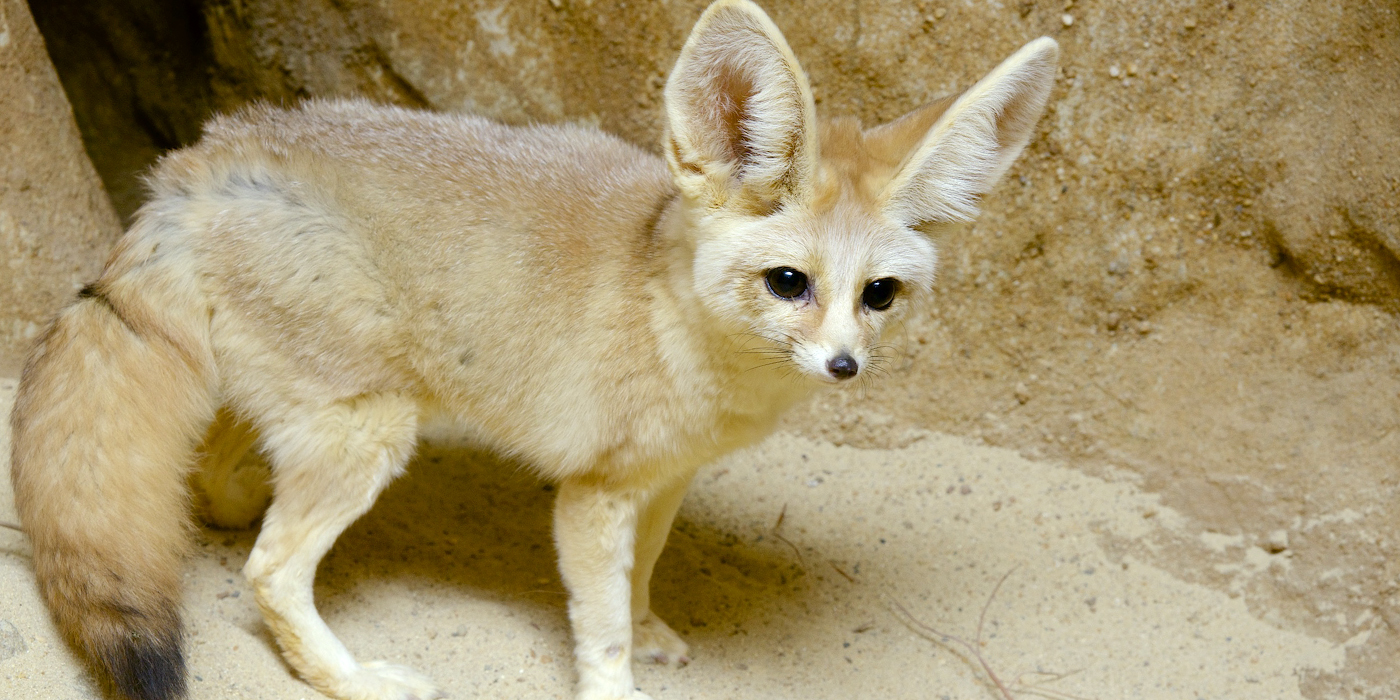
Desert animals don't get much cuter than fennec foxes (Vulpes zerda). These teeny canids are smaller than domestic cats, measuring 14 to 16 in (35.6 to 40.6 cm) long, not including their tails, but they sport enormous ears that can grow to be 4 to 6 in (10.2 to 15.2 cm) long. These ears help the foxes shed heat & listen for prey under the sand. When the foxes catch the sound of rodents, insects or other small animals they predate, they use all 4 paws to dig out their quarry in a shower of sand, according to the Smithsonian National Zoo.
Fennec foxes are well-adapted for life in African & Arabian deserts. Their pale fur camouflages them against the sand; it also grows on the bottoms of their feet to give them traction while running in the sand & protects their feet from the hot desert surface. When air temperatures rise, the foxes can pant up to 690 times per minute to cool down. Fennec foxes also dig elaborate burrows to escape the sun in the hottest part of the day.
Screaming Hairy Armadillo
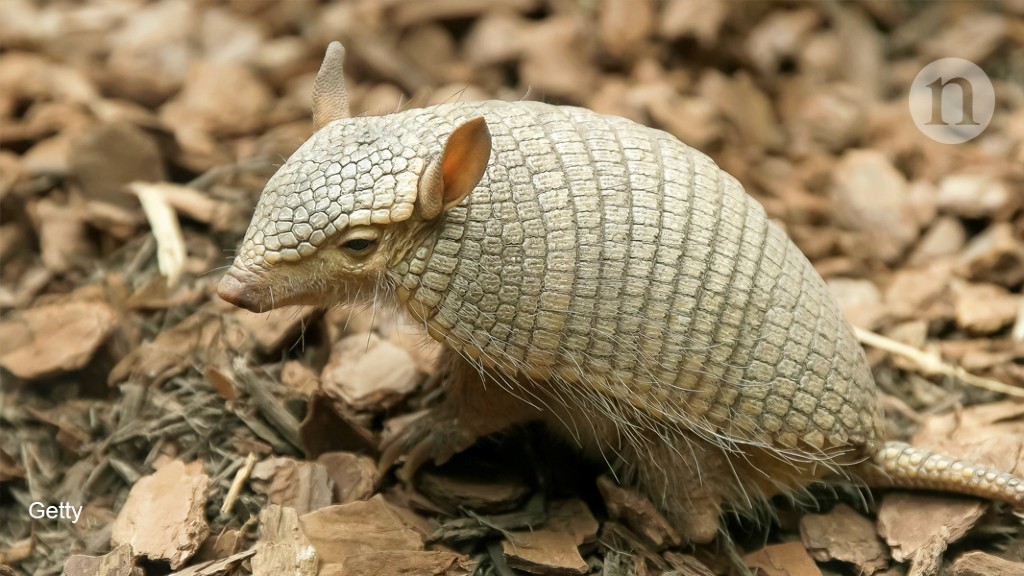
Perhaps less cute than fennec foxes — but no less well-adapted to their desert environment — are screaming hairy armadillos (Chaetophractus vellerosus). These armadillos really do scream; when threatened, they make a terrible cry that sounds similar to the wails of a newborn human baby. Research published in 2019 suggests that these screams are designed to startle predators, or to attract other predators to the scene, perhaps distracting an attacker & enabling the armadillo to get away.
Screaming hairy armadillos are small, weighing only 1.9 lbs (0.86 kg). They live in the Monte desert of Argentina, Bolivia, & Paraguay, preferring spots with loose, sandy soil where they can dig burrows, according to the Smithsonian National Zoo. The armadillos rarely need to drink. Their kidneys are highly efficient, & they get most of the water they need from the plants they eat. It's a waste not, want not environment in the desert, so screaming hairy armadillos are opportunistic eaters — they also consume insects & small animals such as lizards & rodents.
Hairy Desert Scorpion
Among the many scorpion species that call deserts home, the hairy desert scorpion (Hadrurus arizonensis) is a standout. These sorpions can measure between 4 & 7 in (10.2 to 17.8 cm) long, according to Utah's Hogle Zoo, making them North America's largest scorpions. Though they are a drab olive-green color, hairy desert scorpions fluoresce under ultraviolet (UV) light. No one knows exactly why scorpions fluoresce, but the best way to find these shy nocturnal predators is to take a UV light into the desert on a summer night, when they tend to be most active.
Hairy desert scorpions are found in North America's Sonoran & Mojave deserts, as well as in Nevada & Utah. When looking to mate, male & female hairy desert scorpions lock pincers in a mating dance that looks more like a wrestling match. In fact, if the male does not flee quickly after depositing his sperm, he might find himself becoming his mate's next meal.
Females gestate their young for 6 to 12 months, live-birthing up to 35 babies that piggyback on their mother's carapace until they're large enough to hunt on their own. Fortunately for humans, desert hairy scorpions would rather flee than sting, & their venom is relatively weak...
Harris' Hawk
Harris's hawks (Parabuteo unicinctus) are oddities in the falcon world. These impressive red-winged raptors sometimes hunt in packs, working together to pursue their prey around bushes, thickets, & the saguaro cactuses of Arizona's Sonoran desert. The birds eat lizards, other birds, & small desert mammals such as kangaroo rats & ground squirrels. When they catch large prey, they'll share the meat with their fellow hunters, according to the conservation nonprofit Audubon.
These birds also often work in groups to raise their young. 2 males may mate with a single female, & the trio work together peacefully to raise any ensuing hatchlings. Hawk siblings help each other, too; an older brood from earlier in the season may stick around to bring food to younger broods.
Desert Ironclad Beetle
The desert ironclad beetle (Asbolus verrucosus) is a tank of an insect. Its powder-blue color comes from a waxy coating that helps the beetle retain moisture in the dry Sonoran desert. The bumps on the beetle's shell give it an armored appearance that is even tougher than it looks. The ironclad beetle subfamily is known for its ultra-strong exoskeleton — it’s so strong, these beetles can shrug off being stepped on by a human, according to the University of Wisconsin, Milwaukee.
Desert ironclad beetles are also known as 'death-feigning beetles' for their defensive behavior in the face of threats. When alarmed, the beetles roll over & play dead, according to the Cincinnati Zoo & Botanical Garden. They eat plants & decaying organic matter, & — like many desert denizens — rarely, if ever, need to drink.

Sand Cat
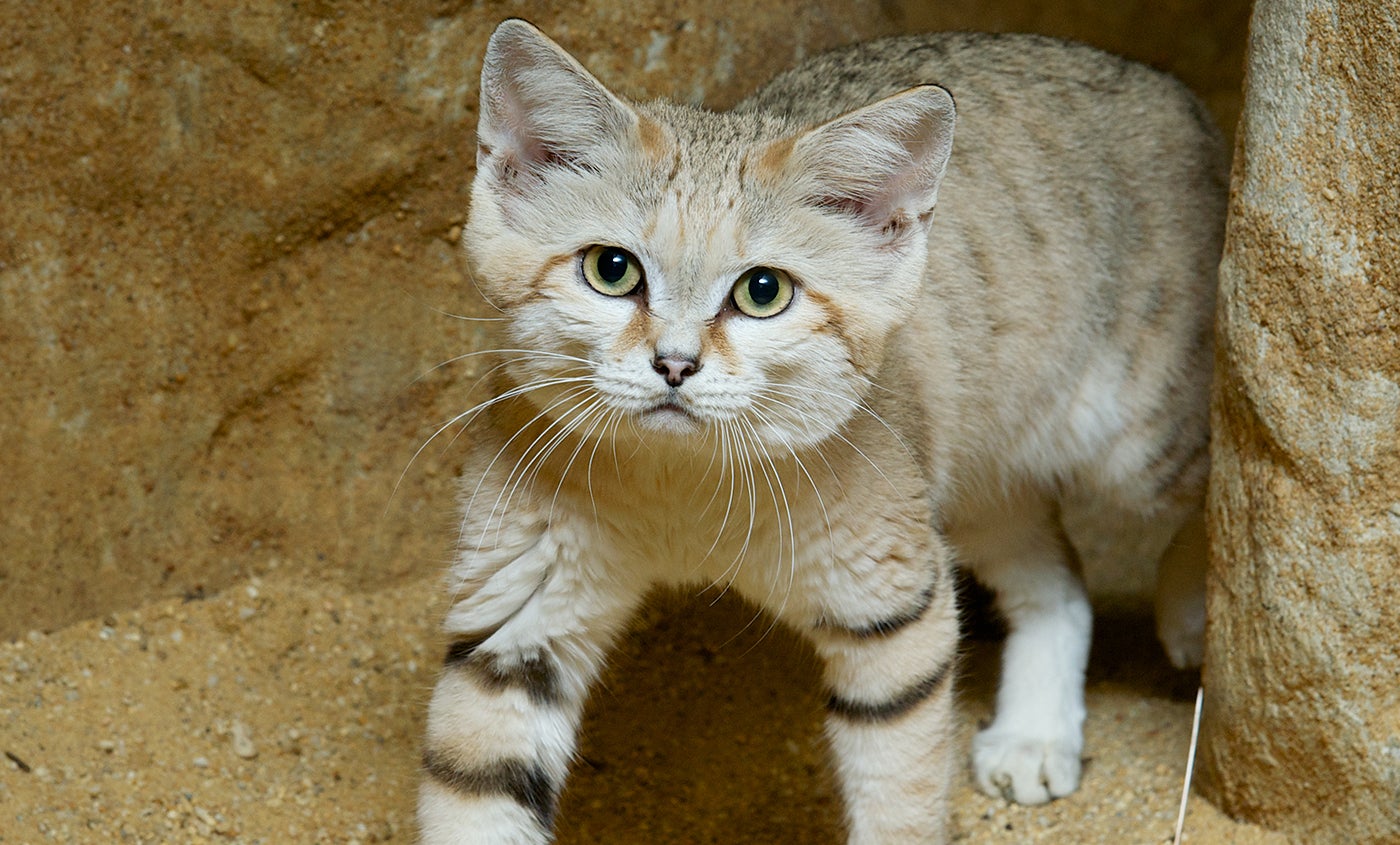
A softer, fuzzier desert denizen is the desert sand cat (Felis margarita). It is the only cat species that makes its home in true desert environments. Desert sand cats are found in the Sahara desert, the Arabian Peninsula, Turkmenistan, Kazakhstan, & Uzbekistan. Though they look remarkably similar to fluffy domestic kitties, sand cats are elusive & rarely seen by people. They're secretive & difficult to track, according to the International Society for Endangered Cats (ISEC) Canada. Researchers who tried to observe these animals in the wild found that the cats' fur-lined paws left no tracks, & their light-colored coats made them challenging to spot. What's more, the cats crouched low & closed their eyes against searchlights at night, hiding their reflective retinas.
Sand cats are stealthy hunters & are able to kill snakes as well as desert rodents & lizards. Their mating call sounds like a dog's bark.
Desert Long-Eared Bat
Once dubbed 'the hardest bat in the world,' the desert long-eared bat (Otonycteris hemprichii) is found in North Africa & the Middle East...its main diet is scorpions.
Desert long-eared bats hunt scorpions by falling onto them out of the sky & wrestling the venomous arachnids into submission. The bats are unbothered by the multiple scorpion stings they often receive in the process, according to research from Ben-Gurion University of the Negev in Israel. Ben-Gurion University researchers also found that desert long-eared bats can switch the settings on their sonar, using one type of echolocation to seek out ground-dwelling prey like scorpions & another type to hunt down flying insects.
Pink Cockatoo
Colorful birds are often found in lush, tropical rainforests & are scarce in arid regions — except if that region happens to be in Australia’s interior. One of the continent's most beloved bird species is the pink cockatoo (Lophochroa leadbeateri), which ekes out an existence in the semi-arid & arid Australian Outback.
Identifiable by its showy orange-&-yellow crest & its blush-shaded body, the pink cockatoo is divided into 2 subspecies: one found in western-central Australia & other in the east, according to the Australian Museum. These pretty birds live off seeds & insects. They mate for life, according to the Australian Foundation for National Parks & Wildlife (FNPW), & they can be found prancing on tree branches, bobbing their heads up & down to attract mates.
These iconic Australian birds have a variety of names & nicknames, according to FNPW. They're also known as Major Mitchell’s cockatoos (after the early English explorer who wrote about them for a global audience), as well as Leadbeater’s cockatoos, desert cockatoos, cocklerinas, chockalotts & — adorably — wee jugglers.
Sidewinder
Perhaps nothing screams 'desert' like the image of a sidewinder rattlesnake undulating over a sand dune, leaving behind bizarre curved tracks. Sidewinders (Crotalus cerastes) can slither at speeds of up to 18 mph (29 km/h) using their strange sideways crawl — even across loose sand, according to the Smithsonian Channel.
Sidewinders are ambush hunters. They bury themselves in sand, leaving only their eyes peeking upward. When a lizard happens by, they snap forward & spring the trap. These snakes strike in the blink of an eye, injecting venom that attacks both the blood & the nervous system of unwary prey.
Sidewinders are found in the southwestern United States & northwestern Mexico. They can be recognized by the protruding horn-like structures shading their eyes, which may keep sand from obscuring their vision.
Desert Pupfish
Fish in the desert? Desert pupfish (Cyprinodon macularis) are small, silvery fish that can survive remarkably well in parched conditions. Pupfish have evolved to thrive in water that flows through arid regions. They're found in California's Salton Sea & its tributaries, & in waterways along the lower Colorado River in Mexico.
These fish require a high degree of resiliency to survive in a desert's meager or brackish water sources. Special adaptations enable pupfish to survive despite conditions that would be deadly for most fish, according to the California Department of Fish & Wildlife. Pupfish can live in water ranging from fresh to 70 parts-per-thousand salt (most of the ocean is between 34 & 26 parts-per-thousand salt). They can live in water as cold as 40 degrees Fahrenheit (4.4 degrees Celsius) & as hot as 108 degrees F (42.2 C). They can even live in water as poorly oxygenated as 0.1 parts-per-million (ppm) oxygen (most warm-water fish require 5 ppm oxygen in their water to survive, according to Florida's Center for Aquatic & Invasive Plants).
Despite their toughness, desert pupfish are endangered in California, threatened by the introduction of non-native species & habitat loss.
Thorny Devil
No list of weird desert animals would be complete without a nod to lizard-kind. And no nod to lizard-kind would be complete without mentioning the thorny devil (Moloch horridus), the sole species in the genus Moloch, named for an ancient, sacrifice-demanding god worshipped by the Caanites & mentioned in the Hebrew Bible. Thorny devils are only found in Australia. They grow to be just over 8 inches (21 cm) long from nose to tail & are covered with sharp spines that serve as a defense against predators.
Thorny devils also have 2 heads — really. One is a false head, a protuberance that sits on top of the devil's neck. When threatened, a thorny devil will lower its real head, presenting the false head as a decoy. Thorny devils also have a distinctive jerky walk that may confuse predators, according to Bush Heritage Australia.
As intimidating as thorny devils may look, they're really only a danger to ants, which they lap up by the thousands with their sticky tongues, according to Bush Heritage Australia. These desert denizens 'drink' through their skin, collecting dew & moisture from sand with tiny channels between their scales. These straw-like channels, which direct the precious drops to the lizards’ mouths, are just one example of the creative hydration mechanisms that keep animals alive in the driest places on Earth."
Stephanie Pappas
livescience.com
Cute Critter Pics
Weekly Chuckle:
Slava Ukraine!




 Weekly Chuckle: