Saturday, August 21, 2021

August 18/2021


Feature:

STATUS OF 5 BIRD SPECIES ASSESSED BY COSEWIC IN MAY

"Twice a year, the independent Committee on the Status of Endangered Wildlife in Canada (COSEWIC) makes recommendations that the federal government uses to consider species’ legal protections under the Species at Risk Act. Birds Canada volunteers are at the foundation of this process.

'Citizen Science observers across the continent are fundamentally important in determining population trends for many species', commented Richard Elliot, 'we couldn’t do this without you.'

There are 7 COSEWIC status categories: Extinct, Extirpated (no longer exists in the wild in Canada, but still exists elsewhere), Endangered, Threatened, Special Concern, Data Deficient (meaning not enough information is available to assess the species), & Not at Risk. In May 2021, 26 species or discrete populations of wildlife were assessed, including 5 birds. This batch includes the usual indications of grave concern, but also room for a little cautious optimism.

The dainty, diminutive Ross’s Gull, with its soft pink, grey, & powder-white adult plumage, is among the most beautiful of seabirds. It is a rare treat to see one, & unfortunately, the likelihood of that happening in Canada is lessening. COSEWIC assessed Ross’s Gull as Endangered, 2 categories higher than 25 years ago. Fewer than 20 individuals are now known to breed in Canada, & no chicks have fledged in 14 years from Canada’s only known colony in the High Arctic. Canadian Low Arctic nest sites have been abandoned since the species was last assessed (as Threatened) in 2007. Major threats include chick mortality caused by Arctic Terns, & contamination from airborne toxic chemicals... Almost all of the global population of Ross’s Gull breeds in northeast Siberia, & at the global level, the species is assessed by BirdLife International as Least Concern: a silver lining, &, it is possible that small numbers may occur undetected in the Canadian High Arctic.

Short-eared Owl is one of the world’s most widespread owls. Active day & night, this nomadic, ground-nesting species breeds in open habitats in all Canadian provinces & territories...  New population estimates derived from Breeding Bird Atlas data suggest that the Canadian population is approximately 31,000 mature individuals, which is only about 10% of previous estimates.  A decline of more than 30% over the past 3 generations is inferred from data from the Breeding Bird Survey & Christmas Bird Counts.  It is consequently designated Threatened; previous assessments in 1994 & 2008 categorized it as Special Concern.  Continuing declines are projected due to ongoing loss of nesting & wintering habitat from crop conversion, agricultural intensification, urbanization, & invasive plants, &, in low Arctic habitats, climate-driven increases in shrub growth will further reduce prey availability & increase predation risk.

The fruit-eating, woodland–dwelling Band-tailed Pigeon of southwestern British Columbia still qualifies as Special Concern, as it did in 2008. However, Canadian birds are losing breeding habitat to forest harvest & urbanization, with the Breeding Bird Survey showing a continuing long-term decline of 11% in 3 generations. Species-specific surveys at sites where these birds congregate to consume mineral-rich water or soil suggest localized declines of about 40% in 3 generations. Most Canadian birds winter in the western United States where they are exposed to habitat loss, hunting, & a prevalent, parasite-caused disease. So the Band-tailed Pigeon may soon qualify for Threatened unless these threats can be mitigated.

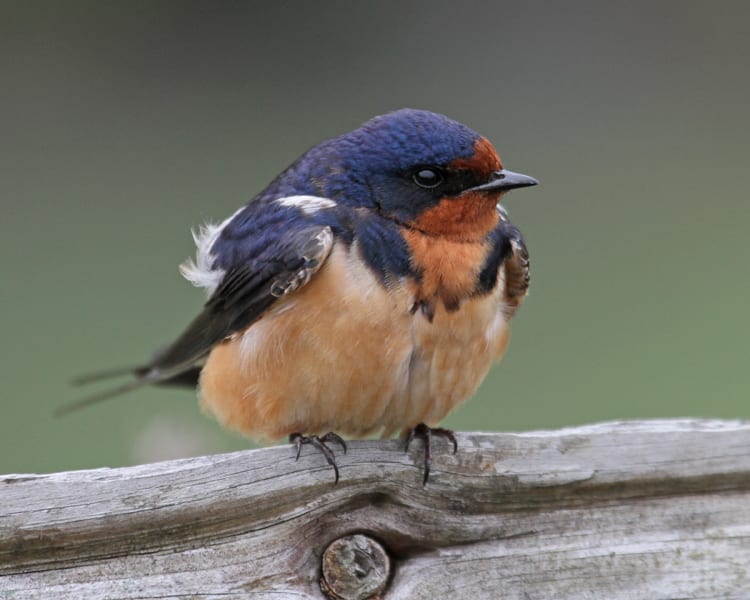
Encouraging news concerns a public favourite, & one of the world’s most widespread birds, the Barn Swallow. Readers will be pleased to learn that the substantial decline over 2 decades (starting in the late 1980s) prompting its designation as Threatened in 2008 has stabilized over the past 10 years. Ongoing declines in some provinces are offset by a substantial increase in Saskatchewan, warranting its re-designation as Special Concern. Although the Canadian population remains large, estimated at 6.4 million mature birds, it may once again become Threatened if threats continue or worsen.
The striking Ferruginous Hawk is the only bird of prey confined to the grasslands of the North American Great Plains. Population trends in the Canadian range of southern Alberta, Saskatchewan, & far southwest Manitoba have been stable or even slightly increasing over the past 3 generations, prompting a reclassification from Threatened to Special Concern. This hawk’s history of classification has seen it bounce between Threatened & Special Concern since initial designation as Threatened in 1980. This latest designation recognizes that the species may become Threatened again in the absence of effective management of ongoing loss of foraging & nesting habitats from threats such as displacement by energy production, increased competition, disturbance at nest sites, & persecution of prey."

By Pete Davidson, Senior Conservation Advisor, Birds Canada & COSEWIC Birds Specialist Sub-Committee Member; & Dr. Richard D. Elliot & Dr. Marcel H. Gahbauer, Co-Chairs of COSEWIC Birds Specialist Sub-Committee

June 25/2021

birdscanada.org

Cute Critter Pics: 


Weekly Chuckle: 
#StaySafe


Saturday, August 14, 2021

August 11/2021


Feature:

5 Fascinating Facts About Your Cat's Teeth

"Cats are interesting creatures. They have big personalities, they love a good laser pointer chase, & they can't get enough catnip...But did you know that what's inside of their mouths is as interesting as their character traits?

If you've ever looked at your cat's teeth, you may have noticed something different than you'd previously expected...so here are some fascinating facts about cat teeth that are likely to make you smile.

1.Domestic cats have 30 permanent teeth, also known as adult teeth.

When they are kittens, kittens have 26 baby teeth. This is fewer than both dogs & humans, who have 42 & 32 adult teeth, respectively. Cats get their adult teeth when they are between 11 to 24 weeks, with the different kinds coming in in various stages. For instance, they get their incisors at 11 to 16 weeks, their canines at 12 to 20 weeks, their premolars at 16 to 20 weeks, & their regular molars at 20 to 24 weeks.

2.Unlike humans, cats rarely get cavities.

This is because cats have a diet that's pretty low in sugar, their teeth are shaped differently, & they don't have the same oral bacteria as humans do. When cats do get cavities, you won't be able to see them, & your cat likely won't show that they are in pain. This is because instinctually, cats don't want to demonstrate any weakness. If they cried out in pain in the wild, a predator could come after them. But, just like human cavities, cat cavities are extremely painful.

3. Even though domestic cats mostly eat canned cat food that you provide for them, their teeth are equipped for hunting.

The teeth are specifically shaped so that cats are able to easily capture prey & tear up their flesh. There is a bleeding groove in their mouths as well. This means that when cats are eating prey, the blood bleeds around the tooth & won't choke the cats.

4. Along with hunting teeth, cats have grooming teeth, too.

The incisors, which are little teeth in the middle of the large canine teeth, can be used to nibble on their fur, which comes in handle when they are cleaning themselves.
                              
5. Cats & kittens can get severe dental & gum diseases, such as feline oral stomatitis.

This disease causes the gums to become inflamed, & causes bad breath, excessive salivating, & pain. Cats that get this disease may have a viral disease or issues with their immune system as well. Sometimes, teeth may need to be extracted in order to deal with feline oral stomatitis.
                        
Taking care of your cat’s teeth
It's always important to keep a close eye on your cat's teeth & gums. Cats need to go to the veterinarian to have their teeth cleaned at least once per year. You can regularly brush your cat's teeth— once a day is ideal—by making your cat comfortable, getting a toothbrush specifically for a cat or a finger brush, using pet toothpaste, brushing with gentle motion, & making sure to brush the back teeth as well. In addition, feeding your cat high-quality food will keep their teeth healthy.

Telling the veterinarian about any problems you encounter as soon as possible is critical. This is because when issues like gum disease, gingivitis, & tartar buildup are not treated, it can lead to fatal conditions like heart disease & organ failure. If need be, your veterinarian will at the very least deep clean your cat's teeth. The vet may even give your cat medicine or have to extract a tooth or multiple teeth.

Always check with your veterinarian before changing your pet’s diet, medication, or physical activity routines. This information is not a substitute for a vet’s opinion."

Kylie Ora Lobell  
Jan. 12/2020
cuteness.com

Cute Critter Pics:


Weekly Chuckle:

#StaySafe


Saturday, August 7, 2021

August 4/2021


Feature:
Dangerous Looking Animals Who Are Total Sweethearts

"We evolved to take animal threats seriously. But sometimes the animal in question is a show off. Many dangerous looking animals are harmless.

#1 Basking Shark

People believe that all sharks are dangerous but this species prefers a different sort of food. They mostly feast on zooplankton & wouldn’t even be able to take a bite of a human. So despite its impressive size, it’s unlikely that this endangered ocean dweller will cause any harm.

#2 Vulture

Vultures look intimidating. They’re a huge bird with an impressive wingspan & they’re food of choice is quite unsightly to human sensibilities. Their proclivity for rotted meat along with their dangerous looking claws & beaks make them quite unpopular. But these creatures won’t be chasing you around. Chances are, if you still have a pulse, vultures will leave you well alone.

#3 Goliath Birdeater

Spiders are always candidates for people’s fears & this one really looks the part. It’s huge, hairy & there are depictions of it eating whole hummingbirds, dating as far back as the 18th century. But this reputation is undeserved as well. The Goliath Birdeater would rather be left alone & if left unprovoked, will likely never bite a human.

#4 Gharial

Gharial look a lot like crocodiles & therefore inherit their more violent cousins’ dread. But if you look closely you’ll see that the snout of this species is very thin. It’s actually not suited for eating large prey at all. The gharial’s food of choice is in the size range of frogs, fish, & insects.

#5 Giant African Millipede

Completely harmless but very weird looking, this African insect is among the largest of its kind. They clock in around 400 legs & grow to be 12 inches long. But despite their creepy appearance, they pose no danger."

brian l

8/5/2021

quizzclub.com

Cute Critter Pics: 


Weekly Chuckle: 

#StaySafe


Friday, July 30, 2021

July 28/2021


Feature:
The Difference Between Dog People & Cat People, According to Science

"There are certain things in this world that divide us... And perhaps the greatest dividing line of all is the one between dog people & cat people. But why does that divide exist? Cats & dogs are both cute & fluffy & amazing in their own ways. Why, then, are people so firm in taking a stance between the 2? To answer that eternal question, we must turn to science.

The science behind why humans love dogs

For dog parents, there's an inherent, undeniable truth to the label 'man's best friend.' For dog people, the bond between pups & humans feels natural & right. But why is that? Well, for one thing, the relationship between humans & dogs goes way back—at least 14,000 years back, to be precise.

In that time, dogs & humans have developed a shared language that seems to impress scientists more & more the more it's studied. According to a study published in Animal Cognition, dogs can actually smell our emotional states. Stanley Coren, Ph.D., DSc, FRSC, suggested, 'dogs do seem to be able to smell our emotional state, & they then seem to trust our responses to the situation by adopting those emotional states as their own.' Recent research from the Department of Veterinary Medicine at the University of Bari Aldo Moro in southern Italy found that dogs also seem to be able to hear difference in our emotions.

But does understanding us mean that dogs love us? The skeptics of the world might argue that dogs are just leveraging their ability to read us to get things they want or need (like food & shelter & treats & toys) & that it's a stretch to assume that they really love us back.

Over the years, scientists have designed a range of experiments aimed at answering the question: Do our dogs really love us...

...some studies have found that oxytocin, also known as the 'love hormone' because it gives us warm-fuzzies & is released during moments of social bonding & physical affection, is released in greater amounts by both humans & dogs when we interact. Translation: Cuddling with your dog isn't just proven to make you feel good—it's also proven to make him feel good too.

The science behind why humans love cats

Team Cats has plenty of evidence to back up cat parents' bonds with their 4-legged friends, too, though. When it comes to pure numbers, cats reign supreme as the world's most popular pet & the cat/human relationship can be traced back between 10,000 & 15,000 years, with DNA evidence placing the first appearance of the pet cat's ancestor, the Arabian wildcat Felis silvestris lybica, somewhere in that timeframe.

Although the fact that cats actually domesticated themselves has led some to assume that their relationship with humans is more give than take, there's plenty of scientific evidence that cats don't just pretend to love humans because they feed them...

Cats (kittens in particular) also have neuroscience on their side when it comes to courting human love. The human brain is wired to want to protect & love on cute things as a way to make sure we take care of our own babies. Kittens, it turns out, are cute enough to trigger the same response the brain has to human babies, leaving us inclined to love & want to care for little kitties.

And the awws that cats & kittens elicit are good for our mental health, too. In a study published in the journal Computers in Human Behavior, researchers found that just watching videos of cats online lowers stress levels.

What science says about the difference between dog people & cat people

...In a study conducted by researchers at the University of Florida, participants were given a personality test as well as a test to determine their preferences for dogs versus cats, with people who identified as liking both dogs & cats (or to disliking both animals) being eliminated from the final findings. The study found that dog people were, on the whole, more extroverted & outgoing with richer social lives & that dog lovers were more likely to be 'tough-minded'—meaning that they tended to focus more on situations than emotions.

In their analysis of the results, the researchers wrote, 'Taken together, these findings describe the personalities of the average cat person as shy, solitary, impersonal, serious, & nonconformist, but also creative, sentimental, independent, & self-sufficient. Conversely, these findings describe dog people as grounded, pragmatic, & dutiful, as well as warm, outgoing, sociable, expressive, & group oriented.'

A 2010 study compared 4,565 participants' self-reported preferences for dogs or cats with their results in the Big 5 Inventory & found that dog people rated higher on Extraversion, Agreeableness, & Conscientiousness, but lower on Neuroticism & Openness than did cat people...

Some differences between dog people & cat people are self-reported. In one recent survey, dog owners were more likely to describe themselves as fun to be with, while cat owners were more likely to describe themselves as dependable & emotionally sensitive. For what it's worth, fish owners described themselves as being the happiest & reptile owners reported being the most independent.

According to some researchers, the differences between cat & dog people is likely a combination of innate qualities & those self-reported preferences & ideals. Denise Guastello, an associate professor of psychology at Carroll University in Waukesha, Wisconsin, who presented the findings of a study she worked on at an Association for Psychological Science meeting in 2014, says people may gravitate toward pets that fit the vision they have of themselves or the lifestyle they want to lead.

'It makes sense that a dog person is going to be more lively, because they're going to want to be out there, outside, talking to people, bringing their dog,' Guastello said. 'Whereas, if you're more introverted, & sensitive, maybe you're more at home reading a book, & your cat doesn't need to go outside for a walk.'

Conclusion

Whether you're a cat person or a dog person, there is plenty of science to back up your undying affections. This is definitely one divide where there is no such thing as a wrong choice."

Kayleigh Roberts  

May 29/2020

cuteness.com

Cute Critter Pics: 


Weekly Chuckle:

#StaySafe


Sunday, July 25, 2021

July 21/2021


Feature:

8 Unexpectedly Beautiful Sea Creatures

"...when is the last time you paid mind to the humble snail or mollusk? In 2019, a lobsterman in Maine reminded us of the lesser-known beauties of the ocean when he caught a rare cotton candy lobster, named, & admired for its bright blue, pink, & purple shell. If a species as pretty as this is lurking in the water, what other beautiful sea creatures are out there?

1. Nudibranch
You probably know of nudibranchs by their informal name: sea slugs. These soft-bodied marine mollusks include more than 3,000 species & live in seas all over the world.

Nudibranchs can be a variety of bright, beautiful colors & patterns. This is a defense mechanism because of their lack of shell. They resemble the plants around them to camouflage themselves from predators. Additionally, bright colors scare away potential dangers as they generally signal that a creature is poisonous (even if it isn't).

2. Coconut Octopus
The coconut octopus is considered one of the most intelligent invertebrates in the animal kingdom. It impressively uses tools — such as coconut shells — to conceal itself & protect from predators.

When it's not hiding in a self-made bunker, the coconut octopus is a beautiful sea creature. Its appearance is notable for its contrast between light & dark tones. The textured pattern of its main body is reminiscent of snakeskin, & light-colored suckers pop underneath the darker body as this cephalopod swims & even walks along the ocean floor.

3. Brittle Star
Closely related to starfish, brittle stars move briskly along the seafloor, thanks to long, slender arms. Their attractiveness can be attributed to their symmetry, with each arm protruding from a central disk.

Brittle stars are majestic & agile in their movement. They combine a graceful, snakelike quality with flexibility to pull themselves toward their intended direction.

They are also excellent multitaskers, with a 5-jawed mouth & the ability to regenerate lost arms.

4. Mantis Shrimp
Neither a shrimp nor a mantis, this stomatopod is only 4 inches long. With a long, colorful body & big, bright eyes, the mantis shrimp surely turns heads.

However, this sea creature is more dangerous than it lets on. It uses its tiny but powerful clubs to break the shells of its prey with punches with the force of a .22 caliber bullet. In fact, when being studied, scientists must keep mantis shrimp in thick plastic tanks because their powerful punches can actually break glass.

5. Leafy Seadragon
Though they may look like pieces of seaweed, the leafy seadragon is a fish related to the seahorse. Known as 'leafies,' these creatures are kings of camouflage, living among kelp and seaweed in the waters off south & east Australia.

The flowing protrusions may look like functioning appendages, but the leafy seadragon uses thin, nearly transparent fins to propel itself through the water. Most impressively, this beautiful sea creature has the ability to change color to match its surroundings for better camouflage.

6. Flying Gurnard
The flying gurnard is most notable for its eye-catching 'wingspan.' Gurnards usually keep their huge pectoral fins held close against their body, but they flare out spectacularly when a predator is near. The transparency of the fins combined with the blue spots that adorn them make this creature especially beautiful underwater.

While their name suggests that they fly through the water, flying gurnards are bottom dwellers. Their large fins do little to help them swim — they don't soar so much as move in short bursts. The name gurnard is derived from the French word for 'grunt,' which is the sound made by their swim bladder as water moves through it.

7. Christmas Tree Worms
One look at a Christmas tree worm is all it takes to know where they get their name. These beautiful creatures are scattered throughout tropical oceans worldwide, but you'll most likely find them embedded in coral reefs. The feathery 'crowns' that give them their distinct yuletide appearance act as both a filter for food & a harness for oxygen. Each worm has 2.

Unlike their namesake, Christmas tree worms come in a variety of colors including red, blue, orange, & yellow. They can live for as long as 40 years, making them a much better investment than your typical Christmas fir tree.

8. Enypniastes Eximia
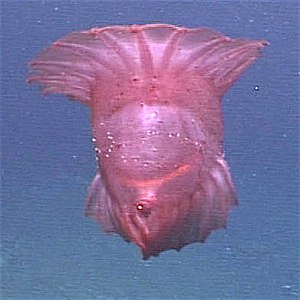
Despite being discovered in the 1880s, the enypniastes eximia was not caught on camera until 2017. This genus of deep-sea sea cucumber is unkindly called a 'headless chicken monster' by scientists, & it has neither a true brain nor sensory organs. Still, it plays a valuable role in filtering sediment off the ocean floor.

The colors of the enypniastes eximia vary from bright pink to reddish-brown. Notably, it is also transparent, which allows its digestive system to be visible."
by Lindsey Reynolds
Nov. 6/2020
treehugger.com

Cute Critter Pics:


Weekly Chuckle:
#StaySafe