Thursday, July 1, 2021

June 30/2021


Feature:

9 Breeds of Long-Haired Guinea Pigs With Amazing Manes

"When thinking about guinea pigs, most people have a picture in their minds of the well-known, common American guinea pig breed that has a short coat. However, unbeknownst to most people, guinea pigs come in a variety of breeds with different shapes, slightly different sizes, & different coat colors & lengths...

So, if you’re considering getting one of these adorable little rodents as a pet, be sure that you get a proper guinea pig cage, including guinea pig supplies such as water & food dishes, guinea pig food & bedding. You should also purchase a wide-tooth comb or soft-bristled brush to do daily brushing of your long-haired guinea pig.

While the different long-haired breeds of guinea pigs all share the feature of a mane-like coat, they each have their own unique characteristics that make them special...

Abyssinian Guinea Pig
Originally from South America, these guinea pigs have a rough-textured, spiky coat that can grow nearly 2 inches long. Their coat grows in swirls or cowlicks, called rosettes, that are paired across their body, typically with 8 rosettes total. Their hair comes in a variety of colors & patterns, including brindle, roan, tortoiseshell, & solid. Abyssinians are known to be very affectionate & outgoing but can get into trouble for being too curious. They make great first-time guinea pigs for families.
Peruvian Guinea Pig
With extremely long, straight hair all over its body, the Peruvian is harder to care for when compared to short-haired guinea pig breeds. Their coat can grow as long as 24 inches, & it requires a lot of daily grooming. Once referred to as Angora guinea pigs, Peruvians have hair that hangs over their foreheads like bangs, which may grow long enough to cover their eyes.

Their coats part down their backs, hanging down on both sides of their spines. Typically, their hair is arranged in 2 rosettes—one in which the hair extends forward, & the other in which it extends backward. Peruvians bond closely with their owners & are often considered the most alert & engaged of the guinea pig breeds.
Texel Guinea Pig
Also called Curlies, Texels are originally from England & have stout bodies & broad heads. They have soft, thick fur that is arranged in curls all over their bodies (including their bellies) & is often parted in the middle of their backs. They usually have shorter hair on their faces & may have longer curls behind their ears & along their lower jaws. Due to their long ringlets, Texels require quite a bit of daily brushing to maintain their coats free of tangles; thus, this breed is not ideal for children or very busy adults.
Silkie Guinea Pig
Also known as Shelties, this breed of guinea pig comes from England & is called a Silkie because of its long, soft, smooth, shiny haircoat. Unlike some of the other long-haired guinea pig breeds, the Silkie has a coat that is not parted or arranged in rosettes. Instead it sweeps backward, like it’s slicked back, away from its face, giving its body a teardrop shape. Although sometimes shy at first, Silkies are known to be gentle & laid back & are good family pets, as long as their coat is brushed daily to keep it free of debris & knotting.
Coronet Guinea Pig
Sometimes called the English guinea pig, the Coronet resembles the Silkie in that they have smooth coats that grow backwards over their bodies. However, unlike the Silkie, the Coronet has a rosette, or coronet, of hair in the center of its head. The rest of their hair is not parted. The Coronets are known to be affectionate & inquisitive & can make wonderful companions.
Lunkarya Guinea Pig
Occasionally called the 'Lunk,' the Lunkarya is originally from Sweden & is rarely seen in the US. The Lunk has rough-textured, dense, long, curly hair that sticks out in all directions & cannot be combed flat. There are 3 breed variations: the Lunkarya Peruvian—with a distinct forelock on its head, the Lunkarya Sheltie—with hair flowing back over its body, & the Lunkarya Coronet—with a crest of hair on its forehead.
Sheba Guinea Pig
Originating in Australia, the Sheba mini yak, or Sheba for short, has a stocky body & a tousled-looking coat. Their dense hair is arranged in rosettes, similar to that of the Abyssinian & the Peruvian. They have square heads & hair arranged around the sides of their faces, so it looks like they have mutton-chop whiskers. They are gentle & curious & make excellent family pets if someone is willing to groom them each day.
Alpaca Guinea Pig
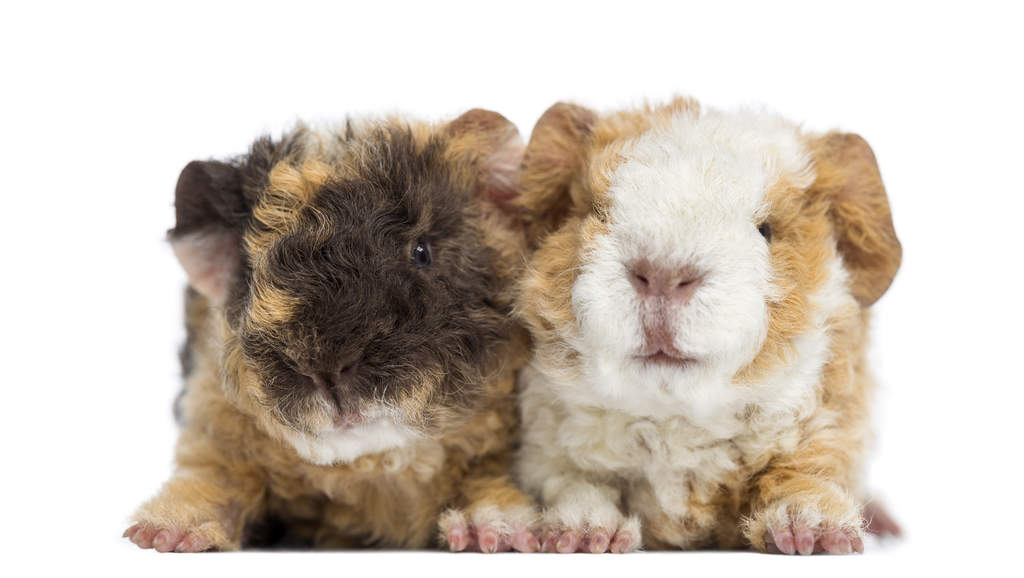
These guinea pigs are also called the boucle, English Peruvian & curly coated Coronet. They have wavy, coarse hair, similar to that of the camel-like alpaca. Each strand of hair varies in color from its root to its end. They also have a rosette of hair on their foreheads. As a result of their thick coats, they should be kept indoors or they risk overheating outside in warm weather. Alpacas are extremely high-maintenance guinea pigs because their dense hair requires daily brushing & detangling.
Merino Guinea Pig
Also called the English Merino & the Merino Peruvian, the Merino has a curly coat like that of a Texel. The hair is short on their broad heads & is arranged in a crest-type rosette right on top, between their eyes & ears. They make wonderful pets, as they are typically sweet & gentle.
While the different breeds of long-haired guinea pigs have subtle differences in personality & more extreme differences in appearance, in general, they all require quite a bit more grooming than short-haired guinea pigs to keep their long coats healthy. So, if you’re thinking about taking one of these precious piggies home, just be sure your schedule can accommodate extra time for daily brushing & care."

Laurie Hess, DVM, DABVP
Oct. 31/2018
petmed.com

Cute Critter Pics:


Weekly Chuckle:
#StaySafe


Saturday, June 26, 2021

June 23/2021


Feature:

Do Cats Need Wet Food? The Benefits of Wet Cat Food

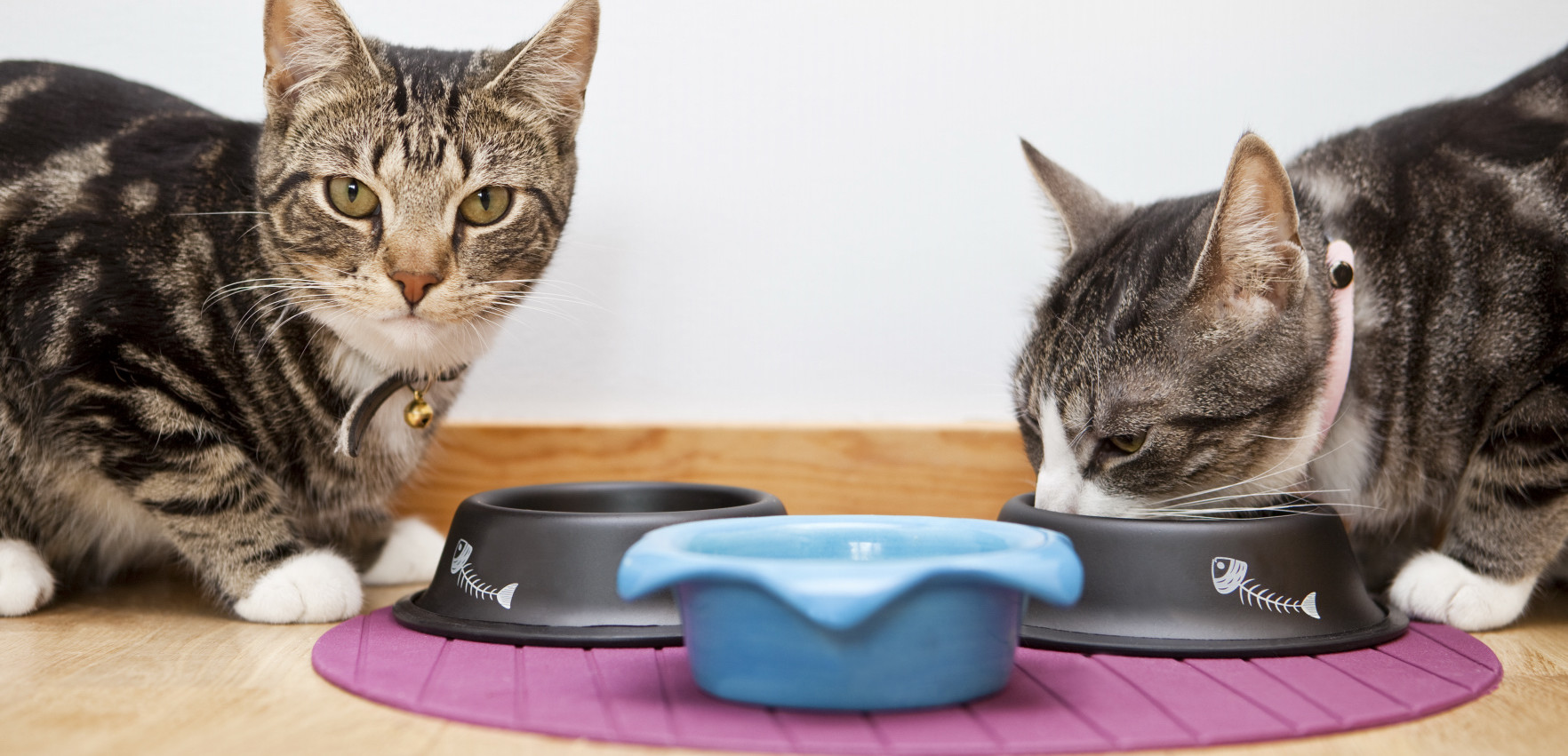
"If your cat loves munching on dry kibble, you may have wondered if cats need wet food in their diets as well. In general, dry kibble has little moisture, so your cat needs to get water from a different source, such as a water bowl. If you’re concerned about keeping your cat hydrated, feeding both wet & dry food is a great way to ensure she gets more water...
3 Benefits of Wet Cat Food
If you’re wondering whether or not your cat needs wet food, here are 3 ways it can benefit your cat:

1. It Keeps your Cat Hydrated
Did you know that in nature cats tend to avoid standing water? This is because it’s typically a breeding ground for bacteria & insects. So, many cats are finicky about drinking water from a bowl or dish.

However, water is vital for your cat’s health, making up 60% of your cat’s body. So, you must make sure your cat is getting enough water daily.

How do you get cats to drink more water? Making sure to provide fresh water daily or purchasing a cat water fountain can help. You can also increase her water intake through feeding wet cat food. While wet cat food doesn’t replace water altogether, it can help keep your cat hydrated.
2. Helps Promote Lean Body Mass
Wet cat food is typically high in protein, which helps support strong muscles. It can also help maintain muscle mass throughout your cat’s life – from adulthood into your cat’s senior years.

Your cat’s body weight is made up of lean body mass (LBM) & fat mass. Muscles, ligaments, bones & organs are all part of LBM. Organs & muscles are the main sources of metabolic activity, helping to support vital functions, like immunity, mobility & more. Typically, as cats age, they can lose LBM. Wet cat food that’s high in protein can help maintain LBM as your cat ages.
3. Gives Variety to Meal Time
Many people would get tired of eating the same food every day. In the same way, your cat can get bored with her food. Feeding only dry food may not satisfy your cat’s craving for variety.

Because of wet cat food’s small portions, you can try a variety of flavours easily to see what your cat loves. Not only are there many flavours to choose from, but you can also choose different textures too – from paté to wet cat food in a hearty gravy.
Other Benefits of Wet Cat Food
Wet cat food is highly digestible & it contains all the same essential nutrients as dry food. This includes vitamins & minerals such as:

Iron: To help support healthy blood & tissue.
Zinc: Which helps support immune system development & maintains the eyes, skin, & bones.
Biotin:  To help regulate energy release from food & promote healthy skin by maintaining skin integrity.

So, do cats need wet food? It’s not a necessity, but a combination of wet & dry food can give your cat the benefits of both. Wet food can increase your cat’s water intake & give her a variety of flavours. On the other hand, kibble can help keep her teeth clean..."
purina.ca

Cute Critter Pics


Weekly Chuckle:
#StaySafe


Saturday, June 19, 2021

June16/2021


Feature:

Fainting Goats

   "A Fainting Goat, also known as Tennessee Fainting Goat or Myotonic goat, is a unique breed of domestic goat. Domestic goats are a subspecies of the wild goat (Capra aegagrus), & all of the various breeds share the same species. This breed, is best known for its propensity to 'faint.'...
Description of the Fainting Goat
Like all goats, these creatures have hooves on their feet, with 2 primary 'toes' rather than a single hoof like that of a horse. Many also have a pair of horns. This breed comes in a variety of different colors & patterns. They grow between 17 & 25 in. tall at the shoulder, & weigh between 60 & 175 lbs. or so.

Interesting Facts About the Fainting Goat 
This interesting breed of goat has a number of unique traits & behaviors...
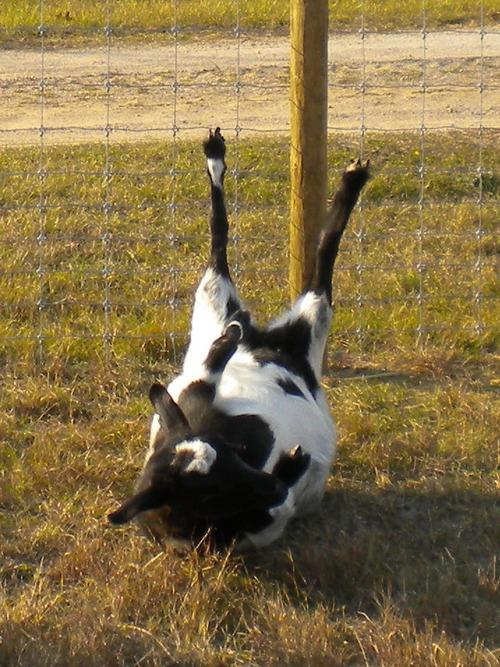
Fainting Behavior – The first thing you’ll notice about this breed is that they 'faint.' When surprised, individuals stiffen up & fall over. This is not a true 'faint,' as the goats do not lose consciousness.

The Mechanics – These goats 'faint' because of a genetic disorder known as Myotonia congenita. To put it simply, this disorder causes the muscles to contract & stiffen when something frightens the animal.

Why Fainting Goats? – Hypothetically, you wouldn’t want to breed a goat with a genetic disorder, so why have breeders continued this line of goats? Farmers originally kept this breed as a 'sacrificial lamb.' If a predator attacks a herd of expensive farm animals, it will eat the Myotonic goat because the goat is easy prey, saving the farmer money.

Modern Purpose – Nowadays, people tend to keep this breed as a novelty. They raise them as pets, & breed them to maintain the fainting behavior. Some individuals 'faint' more than others.
Habitat of the Fainting Goat
This breed came from other fully domestic goats. People domesticated those goats many years ago. They have always lived in manmade habitats.

Generally, people keep these goats on farmland or pasture with plenty of grass & shrubbery to eat. However, some also keep them in forests, mountainous regions, marshes, woodlands, & more.

Distribution of the Fainting Goat
The original ancestors of this breed came from Tennessee. You can trace their ancestry back to a single herd of goats. The breed quickly garnered popularity & interest, spreading across the state & throughout the nation. Now, you can find this breed in various regions of the world.

Diet of the Fainting Goat
Like all goats, this breed has herbivorous feeding habits. They will eat a wide variety of different plants. Unlike horses & sheep, goats do not only graze on grass, but browse on just about any plant. This means that their diet contains grass, shrubs, leaves, bushes, & virtually any edible plant matter.

Fainting Goat and Human Interaction
Like any domestic breed, this goat would not exist without human interaction. Farmers have used this breed historically to protect more expensive livestock. When the Fainting Goat falls over, the predator attacks them & leaves the more valuable livestock. Now people also keep them as pets, breed them, & use their meat.

Domestication
The original ancestors of this breed came from other domestic goats. A farmer in Tennessee had a herd of goats with this genetic deformity. From this herd, people continued to breed the goats to expand the genetics. Breeders select goats with the strongest 'fainting' behavior to reproduce.

Does the Fainting Goat Make a Good Pet
Yes, this breed of goat can make a wonderful pet, but they are not house pets. Properly socialized individuals have a friendly demeanor. If you keep this breed, you must provide ample space & pasture for them to graze & exercise, medical care, & shelter from the elements. You should do your research before purchasing any pet.

Fainting Goat Care
All goat breeds have social behavior, & you must house them in groups. They need plenty of space to exercise & forage for food, & you should provide them with additional hay or grain to supplement their diet. Additionally, this breed in particular can fall prey to predators quite easily, & you must have secure fencing to keep them safe.

Behavior of the Fainting Goat
The most notable feature of this breed’s behavior is its propensity to 'faint.' When frightened, be it by a person, dog, loud noise, or unknown object, the goat’s muscles stiffen & some even fall over. Some individuals have a stronger reaction to a frightening stimulus, while others have a less severe reaction.

Reproduction of the Fainting Goat
Though females reach sexual maturity at just a few months old, you should not breed them until they reach about 6 to 9 months of age. Males reproduce with multiple females. After mating, the gestation period lasts about 5 months. The females give birth to 2 or 3 offspring, known as 'kids.' A single female can breed every 6 months."
Animals Network Team
animals.net/fainting-goat

Cute Critter Pics:


Weekly Chuckle:
#StaySafe


Saturday, June 12, 2021

June 9/2021


Feature:
Why Do Cats Wag Their Tails?

"Cats wag their tails for many reasons, & deciphering what a wag could mean is going to depend heavily on the individual cat & her personality. Here are just a few of the things it can mean when your cat wags her tail.

She's Happy to See You- If your cat is wagging her tail & showing other positive, friendly body language such as alert, blinking eyes, & ears that are pointed forward, she might just be happy to see you. Look for fanned-out whiskers, a head held upright & meowing or purring sounds.

She's Scared- Cats are known for being stoic, & they might not show fear directly. However, a wagging tail along with flattened ears, dilated pupils, & flattened whiskers could indicate the cat is scared. If it's an unfamiliar cat, it's best to approach slowly or not at all to avoid frightening her more & risking an attack.

She Wants to Play- Cats can also wag their tails when they want to play. Key body language signs to look for here are a tail that is curled & ears that are pointed forward. She may also be showing her belly or rolling around on the ground to indicate that she wants you to interact with her.

She's Relaxed- Relaxed cats often wag their tails just as a natural movement when they are calm & peaceful. A relaxed cat will have a calm facial expression with the whiskers fanned out a bit. A cat that is hiding can also look similar to a relaxed, crouched pose, but the key thing to look for here is tension.
A scared cat will be tense & ready to jump at any moment, whereas a relaxed cat is more fluid.

She Wants to Be Left Alone- A tail wag isn't always a good thing, & sometimes that back & forth could be a warning from your cat to stay away. Other negative body language cues to look for include flattened ears, dilated pupils, the hair on her back being raised & any kind of hissing or growling noises.

Common Cat Tail Movements & What They Mean

...looking for other body language signs to help you interpret what your cat's tail wagging means is helpful, but you can also look at the type of tail movement to get some clues. Here are a few common cat tail movements & what they might mean for your cat.

The Low Flick- If your cat's tail is low & flicking back & forth quickly, this is a sign that she needs some space. Cats usually display this behaviour when they are not happy.

The Low Wag- A low tail that is slowly wagging back & forth is an indication that the cat may be frightened. A low tail in general is a sign that things aren't going well for your cat, & a wag can turn into the flick that is mentioned above if you don't take the cue to back off.

The Slow Swish- If your cat is slowly swishing her tail from side to side, even if it's not in the low position, this could indicate that she is annoyed. You might see this when you're late for feeding time or when you aren't giving her the attention she wants.

The Quick Swish- A tail that is quickly swishing from side to side is indicative of a playful cat. The main difference between this & the low flick above that indicates an angry cat is the position of the tail. The quick swish usually appears with a high tail & is often seen when your cat is playing with you or other cats or getting ready to pounce on a toy.

The Quick Twitch- Another cat tail movement associated with pouncing & hunting behaviours is the quick twitch. This is a short movement that happens right at the end of the cat's tail & is something you would likely see when your cat is looking at birds out the window or stalking a toy.

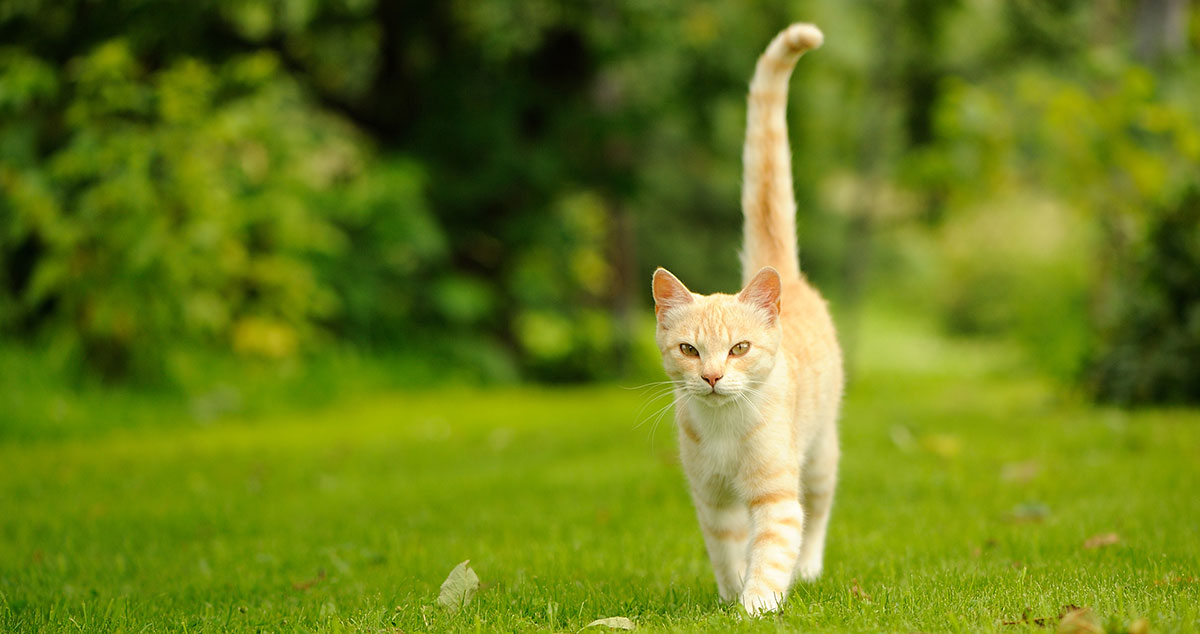
The Quiver- If your cat comes up to you with her tail held high & the tip quivering like a rattlesnake, good news! Your cat is happy to see you. You may see this kind of tail movement when you come home from work or first thing in the morning when your cat sees you.

The Wrap- Sometimes, you may notice your cat wrapping her tail around your hand or neck. This is a sign of affection & can be a way to ask for physical contact, similar to your cat head-butting you to get you to pet her.

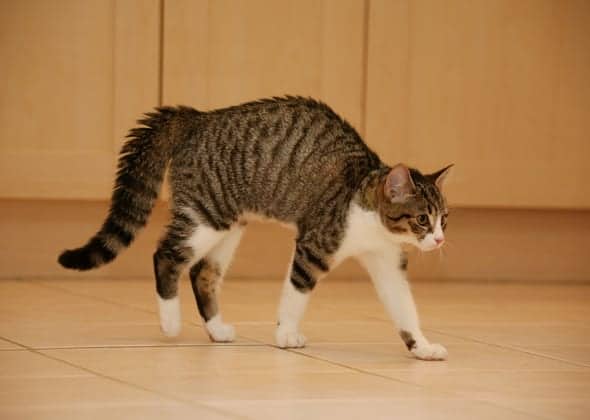
The Fluff- When your cat is scared or anxious, you may see her fluff up her tail. This is a way to make her look bigger to other cats, other animals & possible predators & scare them away from a possible attack.

The Sleep Twitch- When your cat is sleeping, you may notice her twitch her tail if you talk to her or go over to pet her. She twitches her tail to acknowledge your presence & say 'Hi' as she continues sleeping.

The Lying-Down Wave- Sometimes cat tail wagging may indicate that your cat is in pain or feeling unwell. A sign that your cat isn't feeling her best is if you see her lying down & wagging her tail. If there are other signs, such as the cat hiding more than usual or not eating, it may be time for a vet visit."

Purina.ca

Cute Critter Pics: 


Weekly Chuckle:
#StaySafe