Thursday, June 3, 2021

June 2/2021


Feature:

Wild Tasmanian devils born on mainland Australia for 1st time in 3,000 years

"Tasmanian devil joeys have been born in the wild on mainland Australia for the first time in over 3,000 years, according to Aussie Ark. Conservationists say it is a landmark moment in the effort to reintroduce the marsupials to the mainland.

Tasmanian devils (Sarcophilus harrisii) are the world's largest carnivorous marsupials & were once found across mainland Australia. But the introduction of invasive dingoes (Canis lupus dingo) by early human settlers quickly wiped out Tasmanian devils there... As a result, Tasmanian devils are now endemic to Tasmania, an island off the south coast of the mainland...

To save the species from extinction, conservation organization Aussie Ark, in partnership with Re:wild & WildArk, started a rewilding project in 2011 to reintroduce Tasmanian devils to mainland Australia. That year, they transferred 44 Tasmanian devils to a captive breeding site, Devil Ark, in Australia,  where more than 390 joeys have since been born under human supervision, according to Aussie Ark. 

Last year, the team at Devil Ark released 26 of the captive Tasmanian devils, including 7 reproductive-age females, into a 1,000-acre (400 hectares) sanctuary, making them the first wild Tasmanian devils in Australia since they were wiped out... Now, at least 7 joeys have been born among the wild devils, with the actual number likely to be closer to 20, Aussie Ark said.

'We have been working tirelessly for the better part of 10 years to return devils to the wild of mainland Australia, with the hope that they would establish a sustainable population,' Tim Faulkner, president of Aussie Ark, said in a statement. 'Once they were back in the wild, it was up to them.'

 Tiny joeys 

Tasmanian devils reproduce in the same way as kangaroos: Offspring are born prematurely & then continue to develop inside the mother's pouch. Females give birth to between 20 & 30 tiny joeys after just 3 weeks of pregnancy. These hairless, peanut-size babies, which are not much more developed than embryos, then crawl up the mother's fur, toward her pouch, where they attach to the mother's teats & continue to develop for another 3 months, before becoming big enough to leave the pouch. However, the mother has only 4 teats in her pouch, so a maximum of 4 joeys survive... 

Because of the way Tasmanian devils reproduce, conservationists can't determine by observation alone if reproduction has been successful in the wild. Therefore, rangers had to recapture the released female devils to look inside their pouches for developing joeys, according to Aussie Ark.

Australian devils 

Reintroducing Tasmanian devils to mainland Australia will not only safeguard the species... but also benefit the rest of the ecosystem. 

Tasmanian devils are predatory animals but prefer to scavenge on carrion left behind by other predators & from roadkill. They have an excellent sense of smell to detect these leftovers & also powerful jaws that allow them to devour bones. Scavengers like Tasmanian devils are important because they help keep ecosystems clean & free of diseases that sprout up in decaying corpses, according to Aussie Ark. The devils may be able to keep small pests — like mice, feral cats & foxes — under control, according to CNN.

The wild population will continue to develop within the safety of the devils' sanctuary, which protects them from cars, feral pests, noxious weeds, & wildfires, according to Aussie Ark, which also plans to reintroduce 20 additional captive devils to the sanctuary in late 2021 & 2022. 

'The fact that the adults have adapted so quickly is remarkable, & the joeys are one of the most tangible signs that the reintroduction of Tasmanian devils is working,' Don Church, president of Re:wild, said in the statement. 'This doesn't just bode well for this endangered species but also for the many other endangered species that can be saved if we rewild Australia.'

Aussie Ark plans to reintroduce 6 other 'cornerstone species' to the Australian ecosystem in the future: the eastern quoll, brush-tail rock wallaby, rufous bettong, long-nosed potoroo, parma wallaby, & southern brown bandicoot."

Harry Baker 

livescience.com

May 31/2021

Cute Critter Pics:


Weekly Chuckle:

#StaySafe


Friday, May 28, 2021

May 26/2021

Feature:

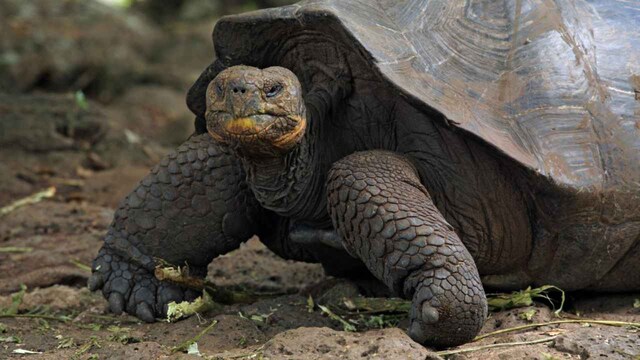
Giant tortoise thought extinct 100 years ago is living in Galapagos, Ecuador says

"Ecuador confirmed...that a giant tortoise found in 2019 in the Galapagos Islands is a species considered extinct a century ago.

The Galapagos National Park is preparing an expedition to search for more of the giant tortoises in an attempt to save the species.


The turtle was found 2 years ago on Fernandina Island, one of the youngest & most pristine in the archipelago, during a joint expedition between the Galapagos National Park & the Galapagos Conservancy.

Scientists from Yale University then identified it as the Chelonoidis phantasticus species, which had
been considered extinct more than a century ago.

'Yale University revealed the results of genetic studies & the respective DNA comparison that was made with a specimen extracted in 1906,' the Galapagos Park said in a statement.

In the Galapagos Islands, which served as the basis for the British scientist Charles Darwin's theory of the evolution of species in the 19th century, many varieties of tortoises live together with flamingos, boobies, albatrosses, & cormorants, a family of species of aquatic birds.

It also houses a large amount of flora & fauna in danger of extinction.

'It was believed extinct more than 100 years ago! We have reconfirmed its existence,' Environment Minister Gustavo Manrique wrote on his Twitter account.

The current population of giant tortoises from various species is estimated at 60,000, according to data from the Galapagos National Park..."

Reuters 

May 27/2021

CNN.com

Cute Critter Pics: 
 

Weekly Chuckle:

#StaySafe


Saturday, May 22, 2021

May 19/2021


Feature:

Study finds first scientific evidence that emotional support animals benefit those with chronic mental illness

"A team led by a social work researcher at The University of Toledo has published the first empirical evidence that emotional support animals can provide quantifiable benefits to individuals with serious mental illness who are experiencing depression, anxiety, & loneliness.

The research brings credence to the many anecdotal reports of emotional support animals having positive impacts on chronic mental health issues.

'This is the first peer-reviewed, published scientific evidence that emotional support animals may benefit people's mental health,' said Dr. Janet Hoy-Gerlach, a professor of social work & the lead investigator on the project...

Frequently misunderstood & often maligned, emotional support animals are neither household pets nor highly trained service animals.

Emotional support animals need no formal training or certification but are recognized in writing by a health or mental healthcare professional as therapeutically needed for a person with a health or mental health condition. The person's condition must meet the definition of a disability under the Fair Housing Act, a federal housing policy that protects against disability-related housing discrimination.

While there is a sizeable body of research on the benefits of pets that helps to inform the recommendation of emotional support animals in healthcare, there has been no previously published scientific research focusing specifically on the benefits of emotional support animals.

In the UToledo pilot study, researchers from the College of Health & Human Services followed a small group of study participants who were paired with a shelter dog or cat through the Hope & Recovery Pet Program, an innovative community partnership of UToledo, the Toledo Humane Society & ProMedica.

Participants in the study, all of whom met low-income criteria & were identified as at risk of social isolation, were referred by their mental health providers.

Hoy-Gerlach & her collaborators regularly tested participants for changes in a trio of biomarkers related to stress & bonding, & administered surveys about participants' depression, anxiety, & loneliness prior to adoption & at the end of the 12-month study period.

At the conclusion of the study, they found a statistically significant decrease in participants' depression, anxiety, & loneliness as measured by standardized scales.

The researchers also observed a consistent pattern of higher amounts of the bonding hormone oxytocin & lower amounts of the stress hormone cortisol after participants engaged in focused interactions with their emotional support animal for 10-minute periods.

While not a statistically significant finding, the analysis hinted that participants may have benefited from their animals at a biological level.

'The biomarker findings, along with the standardized stress, anxiety, & loneliness surveys & qualitative interviews together suggest insights into how emotional support animals may help reduce symptoms & loneliness associated with chronic mental illness,' Hoy-Gerlach said. 'We can't make any generalizations or big sweeping claims, but the findings are pretty straightforward for this particular group of people.'

Researchers observed the highest oxytocin increase at the 12-month mark, which could indicate participants' bond with their dog or cat had strengthened over time.

Qualitative research corroborated this idea: In open-ended interviews, study participants talked about feeling much more emotionally attached to their respective animals at the end of the study.

The research, published... in the Human-Animal Interaction Bulletin, builds on Hoy-Gerlach's previous research into the human-animal bond & could lead the way toward new thinking about how emotional support animals can be implemented as a tool in managing chronic mental health issues.

A trained clinical social worker who has extensive experience in counseling, crisis work, & public mental health, Hoy-Gerlach's interest in studying how animals affect mental health began after working on assessments for suicide & finding people's pets were frequently a protective factor.

She has since devoted much of her academic research to the topic. In 2017, she published the book 'Human-Animal Interactions: A Social Work Guide.'

While the recently published study was small in nature, Hoy-Gerlach said it could serve as a major step toward demonstrating the value of emotional support animals for human health.

'We have seen a significant increase in social isolation because of COVID-19, particularly among those most vulnerable to its effects. While our research was initiated before the pandemic, the findings couldn't be more applicable,' she said. 'Now more than ever, we need to be thinking about leveraging every resource at our disposal.'

Such efforts can benefit both people & animals in need. The Hope & Recovery Pet Program exemplifies this, Hoy-Gerlach said, providing emotional support animals for people with mental illness while placing homeless animals into permanent, loving homes.

'The human-animal bond is an underutilized resource for both human & animal well-being,' Hoy-Gerlach said.

Hoy-Gerlach's findings also serve to push back against the idea that emotional support animals are little more than a scheme aimed at exploiting the system to give household pets special status.

'The narrative of emotional support animal fraud has unfortunately gained traction in the media & public eye, & that obscures the very real ways in which emotional support animals can benefit people,' Hoy-Gerlach said. 'For the individuals in our study who are living with chronic mental illness, being paired with an appropriate animal appears to have demonstrable positive effects on their well-being.'"

Tyrel Linkhorn

May 20/2021

medicalexpress.com

Cute Critter Pics:


Weekly Chuckle:

#Stay Safe


Thursday, May 13, 2021

May 12/2021


Feature: 
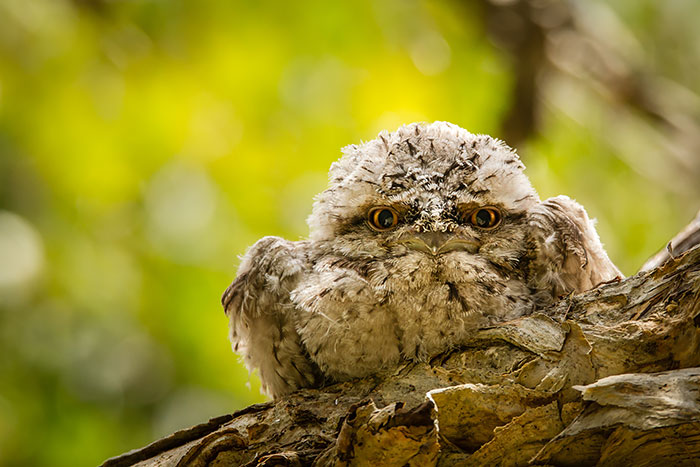
This Muppet-faced frogmouth is the 'most Instagrammable bird' on Earth

"...Meet the frogmouth — that is, if you haven't already brushed feathers with this big-eyed owl lookalike on Instagram. This nocturnal, Muppet-faced avian was once hailed as 'the world's most unfortunate-looking bird' in a 2004 paper in the journal Nature Australia. Now, scientists writing in the journal i-Perception have given the frogmouth a new title: The 'most Instagrammable bird' on Earth.

What does that mean, exactly? It's not that the frogmouth appears in more Instagram photos than any other avian; Indeed, after looking at more than 27,000 bird photos on Instagram, the researchers found the frogmouth appeared in only 65 of them, they wrote in their study, published April 22. However, in those 65 photos, the frogmouth garnered far more likes than it should have — & more likes than any other bird species — based on the number of users who likely saw those photos.
In their study, the researchers looked at photos posted by 9 of the most-followed bird accounts on Instagram (Those accounts are @best_birds_planet, @best_birds_of_world, @nuts_about_birds, @birdfreaks, @birdsonearth, @bestbirdshots, @audubonsociety, @bird_brilliance, @your_best_birds). Together, those accounts serve an audience of nearly 3.5 million users.

To judge a bird's Instagrammability, the researchers calculated the expected number of likes each photo should get based on the time the photo was posted & the audience size of the account. Photos that got more likes than expected got a positive score, while photos that got fewer likes got a negative score.
A few aesthetic factors seemed to consistently bump photos higher in the rankings. For example, the researchers wrote, birds with blue & yellow plumage consistently scored higher than birds with yellow & green feathers. Unsurprisingly, the team also found that birds tended to perform better the more unique or unusual they looked.

Besides the frogmouth, other high-ranking birds included 'colorful pigeons with decorative plumage, the emerald turaco with its crown-like head feathers & the hoopoe, also wearing a distinct feather crown & showing off typical high-contrast feathering,' the team wrote.

As for the bottom of the list? 2 seabirds — the sandpiper & the oystercatcher — consistently failed to catch users' eyes, as did storks & vultures.

The frogmouth's 'surprising' victory in this study is a 'matter of poetic justice,' the authors wrote, considering its reputation as the 'most unfortunate-looking bird.' Perhaps it's time for froggy to pack in its career as a bird & become a full-time Instagram influencer..."
Brandon Specktor 
livescience.com  

Cute Critter Pics:


Weekly Chuckle:
#StaySafe


Friday, May 7, 2021

May 5/2021


Feature:
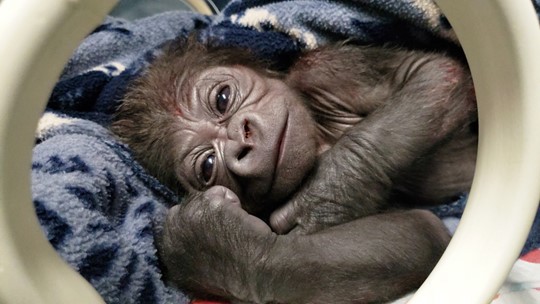
Franklin Park Zoo welcomes baby gorilla delivered via C-section
"A mama gorilla & her baby 'are both safe & healthy' after she gave birth via C-section at the Franklin Park Zoo, according to a press release.

Weighing in at 6 pounds & 3 ounces, a male gorilla baby was born...thanks to a team of veterinarians & physicians.
'In the days leading up to the delivery, Kiki, a 39-year-old western lowland gorilla, experienced vaginal bleeding, which at times was significant,' the release noted. 'With Kiki’s due date just days away, the veterinary team at Zoo New England became concerned that she may have placenta previa, a condition where the placenta lies over the entrance to the cervix, blocking the path for delivery of the baby.'

The Zoo New England veterinary team, along with specialists from Brigham & Women’s Hospital & Cummings School of Veterinary Medicine at Tufts University, acted quickly & performed an ultrasound.

They determined that she did, in fact, have placenta previa, & immediately prepared her for surgery.

Within about 2 & a half hours, the baby gorilla was delivered.
Described as a big baby, as gorilla infants typically weigh 3 to 5 pounds, he is the first male gorilla ever born at Franklin Park Zoo. Western lowland gorillas are considered critically endangered in the wild.

'For the health of mom & baby, it was imperative to quickly diagnose Kiki’s condition & perform a C-section before she went into labor on her own. We were fortunate to quickly mobilize an amazing team with our colleagues at Brigham & Women’s Hospital & Cummings School of Veterinary Medicine,' Dr. Eric Baitchman, who is the vice president of Animal Health & Conservation at Zoo New England, noted in the release. 'This was truly a team effort, & we are relieved & happy that the surgery went smoothly & that mom & baby are both safe & healthy.'

The release also noted that Zoo staff cared for the baby while Kiki recovered, with Kiki close enough to see & hear her baby.

'The pair were successfully reunited the following afternoon...& Kiki has been very attentive, holding the baby close,' according to the release. 'Mother & baby have bonded well & continue to be closely monitored & cared for behind the scenes.'”

NBC 10 News 

turnto10.com

Oct. 20/2020 

Cute Critter Pics:


Weekly Chuckle: 

#StaySafe


Friday, April 30, 2021

April 28/2021

Feature:
Why Do Cats Have Whiskers?

"Whiskers on cats, although super-cute, have quite a number of important functions. From helping your cat judge distance to assisting your kitty with seeing things close to them, whiskers are quite remarkable.

Your cat's whiskers are an integral part of her anatomy. The purposes served by whiskers are mainly sensory, allowing your cat to get highly sensitive signals about the world around her, somewhat like an onboard radar system that's just for her.

If you've been pondering on what whiskers are for & what they do, we're ready to give you the 411 on these little projections, from how they help your kitty find her way in the dark to how they help her judge heights when jumping.

Whiskers on Cats: Why Do Cats Have Whiskers?

Of the many purposes served by your cat's whiskers, none is more important than their use as her very own sensory tool. Whiskers, scientifically known as vibrissae from the Latin word ‘vibrio,' which means ‘to vibrate,' actually do vibrate. Although not technically hairs, whiskers are made up of hair follicles that are brimming with nerves. The tip of the whisker has a proprioceptor, a sensory organ that allows them to capture vibrations & environmental changes, both of which your cat is mysteriously predisposed to interpret, much like a 6th sense that helps her navigate her world.

Why Do Cats Need Whiskers?

Simply put, navigation. Although you can't tell by looking, whiskers are embedded deeply into your cat's body, much further than regular fur, & it is there that they are connected to your cat's nervous & muscular systems. This connection allows your cat's crazy whiskers to send sensory messages to her brain in relation to her surroundings.

Let's run down 10 things you need to know about your furball's awe-inspiring built-in navigation system — her whiskers — so you'll know exactly what's going on the next time she brushes your face with these coarse appendages.

1. Your cat has whiskers in other areas of her body, not just her face. You may have noticed some stray whiskers here & there on your feline's body & thought she was just getting older. Not so. Those are also whiskers, & they can appear above your cat's eyes, jaws, ears, & forelegs, the latter of which are known as carpal whiskers. It's these carpal whiskers that help cats track their prey & part of the reason they're so good at it.

2. The distribution of muzzle whiskers is symmetrical, & there's a reason why. Cats have 24 total whiskers on their muzzles, with 12 on each side. This allows them to gain accurate measurements of the environment around them.

3. Your cat's whiskers are like an on-board measuring tape, allowing her to gauge the tightness of a space. If you've observed your cat sticking her head into a space before she comes on in, this is her way of judging whether or not she will fit.

4. Whiskers pick up vibrations. Each whisker is a vibration sensor, picking up vibrations in the air, which your cat uses when she's chasing a mouse...& measuring distances. And if you've ever felt like your cat can sense a storm rolling in before your weatherman ever mentions it, you were onto something there. Whiskers can detect air current changes, which helps them sense danger approaching.

5. Whiskers aid in vision. You likely don't know it, but your cat can't see anything close up. If an object is 30cm or closer to your cat's vision, she relies on her whiskers to tell her the location, size, & texture of the object in front of her, a useful skill that helps her navigate her world.

6. Whiskers are like night vision for cats. As you're aware, your cat can slink around in the dark without knocking over a single item. And she owes that marvelous ability to her whiskers, which sense the room's air currents based on things like furniture placement & then relay the info back to the brain so she can do her magic night walks without notice.

7. Your cat's whiskers are an emotion meter. She can't hide her true feelings if you know how to read her whisker clues. Pushed-forward whiskers show her interest & curiosity, while relaxed whiskers indicate contentment & happiness. If you see her whiskers pulled around her face or rigid, she may feel scared or threatened, or she may be stressed out.

8. Her whiskers are a defense mechanism. Your cat's whiskers also help protect sensitive areas of her body. For example, the whiskers around her eyes can alert her to close her eyes quickly before debris (even tiny dust specks) gets inside. Whiskers also detect sharp items, so your cat can steer clear & avoid injury to her face or eyes.

9. Whiskers change with age. Despite having 9 lives, your kitty can still show her age much like her human counterparts — by going grey or black.

10. Whiskers require no trimming, so keep that in mind when grooming your furry friend. Trimming your cat's whiskers is a huge faux pas that can cause her to become scared & disoriented because she loses much of their navigational power. However, if you find she has lost a whisker or 2 somehow, bear in mind that missing whiskers will grow back over time."

purina.ca

Cute Cat Pics:


Weekly Chuckle:


#StaySafe