Friday, February 12, 2021

Feb. 10/2021


Feature:

It’s time for the Great Backyard Bird Count — see how many you can spot

"...During the long, dark days of winter, every Canadian looks for illumination.

One bright light to look for are the native birds with their hardy, courageous natures that stay with us over winter. And when has there been a better time to slow down & observe avian activity than during the pandemic?

Now is the time to birdwatch with a purpose: The Great Backyard Bird Count is on, running Feb. 12-15, & it’s your chance to get in on the action — from a backyard, a park, on a walk through a forest or anywhere that birds can be seen & counted.

The bird count was the first online citizen-science project to collect data on wild birds when it launched in 1998 as a joint program of the Cornell Lab of Ornithology & National Audubon Society. Canadian partner Birds Canada joined the program in 2009.

Steven Price, president of Birds Canada, said the annual 4-day event last year attracted 40,000 volunteers in Canada & more than 250,000 participants around the world. Together, they counted over 27 million birds — almost 7,000 species.

'The information is used is used to help scientists around the world understand the range of birds, threats like climate change & habitat loss, & it helps Birds Canada demonstrate where conservation action is working to conserve nature,' said Price.

Participation is simple. Log onto the Birds Canada website at birdscanada.org & click on the Great-Backyard-Bird-Count link. Sign up & you are in. Now all you have to do is count birds &, if possible, name them & record the results on the website.

Between us, we have 16 bird feeders. We offer our feathered friends a mixture of quality, corn-free seed, pure black oil sunflower seeds, nyjer seed for the little songlets like nuthatches, suet for chickadees & woodpeckers, & bird-quality peanuts for even more woodpeckers (always salt free).

Our favourite birds this time of year & how best to attract them:

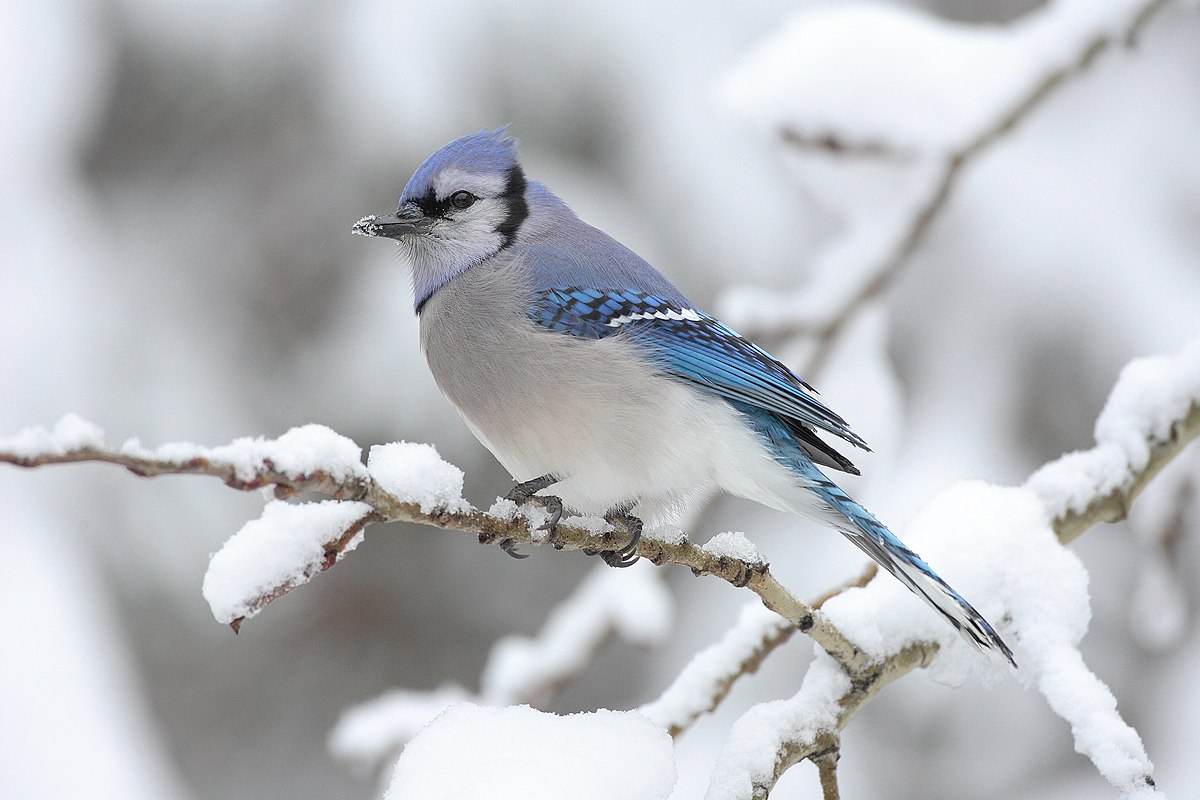
Blue jays. No need to wait for the season opener...since the jays are lurking in your nearest cedar hedge waiting for peanuts. In the shell or out, bird peanuts are like candy to blue jays. Black oil sunflower seeds also work well. Members of the crow family, they are smart, noisy & bossy. Most other birds step aside when they’re around...
                          

Chickadees. Cute, friendly (you can train them to take seed from your open hand) & chirpy. Chickadees get their name from their 'chick-a-dee-dee-dee' song. Black oil sunflower seeds are best.

Nuthatches. One of the few birds that travel down a tree trunk headfirst, they’re like fearless kids on a playset. Nyjer seed & black oil sunflower seeds for these little ones.

Downy & hairy woodpeckers. Downy, the smaller of the 2, & hairy’s look alike but have different stature. Suet is a sure draw, as are raw, salt-free peanuts out of the shell. Look for the distinct red flash on the back of the head of the males & the black & white markings on feathers.
Red bellied woodpecker. Known best for their brilliantly coloured red head. Their red belly is hard to see, but it is there. Feed the same as downy & hairy woodpeckers.
Cardinal. At this time of year the male’s vibrant red feathers make a sharp contrast against the snow. They are a true winter wonder worth watching. Feed same as blue jays, with black oil sunflower seeds & bird peanuts.
Challenge your friends & family to get in on the Great Backyard Bird Count this year & let our feathered friends help light up your winter.

Mark

Ben Cullen 

Toronto Star

Feb. 9/2021

Cute Critter Pics:


Weekly Chuckle:


#StaySafe


Wednesday, February 3, 2021

Feb. 3/2021


Feature:

Scientists Discover Massive ‘Silly String’ Creature in Deep Sea

"...scientists @ the Schmidt Ocean Institute captured footage of a massive siphonophore in the Indian Ocean. Siphonophores are closely related to the jellyfish & this could have been the largest ever recorded. The institute shared a stunning video & images of this giant ocean creatures that created a ‘galaxy-like spiral’ floating off Western Australia.

The footage was captured during an expedition of the deep sea Ningaloo Canyons. Although it’s unclear exactly how long the animal is, the pilot of a remotely operated vehicle used lasers to determine the size of the siphonophore’s outer ring & estimated it was 154 feet long (!), based on its diameter.

Siphonophores are deep-sea predators related to jellyfish & corals that catch prey including tiny crustaceans & fish, in their curtain of stinging cells. The colony in the images is made up of thousands of individual, specialized clone bodies, that work together as a team.

'There is so much we don’t know about the deep sea, & there are countless species never before seen,' said Wendy Schmidt, co-founder of Schmidt Ocean Institute, in a statement. 'The Ningaloo Canyons are just one of many vast underwater wonders we are about to discover that can help us better understand our planet.'

freetheocean.com 

Cute Critter Pics:


Weekly Chuckle:
#StaySafe


Wednesday, January 27, 2021

Jan. 27/2021


Feature:

First dogs Champ & Major moved into the White House Sunday

"(CNN)The first dogs have entered the White House -- the Bidens' 2 German shepherds, Champ & Major, officially joined the first family in their new residence at 1600 Pennsylvania Avenue on Sunday.

'The First Family wanted to get settled before bringing the dogs down to Washington from Delaware. Champ is enjoying his new dog bed by the fireplace, & Major loved running around on the South Lawn,' First Lady Jill Biden's press secretary Michael LaRosa told CNN in a statement...


The Bidens' dogs moving in marks a return to a longstanding tradition of Presidents & their families bringing their pets with them to the White House...

Champ has been with the Biden family for more than 10 years -- since December 2008, weeks after Biden became Barack Obama's vice president-elect. Major, a shelter dog, joined the Biden family more recently. He was adopted in November 2018, months before Biden announced he would run for president in the 2020 election cycle.

Major is the first shelter dog to live in the White House. Earlier this month, the Delaware Humane Association, where he was adopted from, & Pumpkin Pet Insurance hosted a virtual celebration — an 'Indoguration Party' — for Major.

Though he is the first shelter dog at the White House, Major is not the first rescue...

Former President Lyndon B. Johnson's daughter, Luci, rescued a mixed-breed pup abandoned by his owner at a gas station in Texas named Yuki. Former President Bill Clinton's family cat, Socks, was also a rescue.

Jill Biden has also said she would 'love to get a cat,' telling Fox 5 in Washington, 'I love having animals around the house.'

White House press secretary Jen Psaki said Sunday she did not have an update about the cat.

'I'm also wondering about the cat, because the cat is going to dominate the internet whenever the cat is announced & wherever that cat is found,' Psaki said in a Sunday evening video answering questions posed on Twitter.

The tradition of keeping pets in the White House dates back to Thomas Jefferson, who kept a mockingbird & a couple of bear cubs during his presidency. Throughout the years, presidential pets have become celebrities of sorts."

Donald Judd & Kate Sullivan

CNN.com

Jan. 25/2021

Cute Critter Pics:


Weekly Chuckle:
#StaySafe


Thursday, January 21, 2021

Jan. 20/2021


Feature:

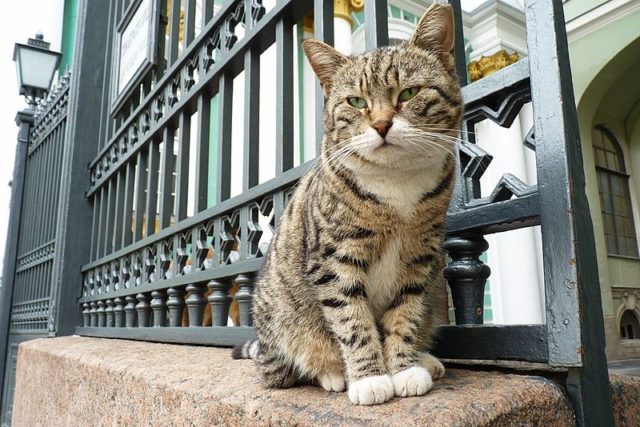
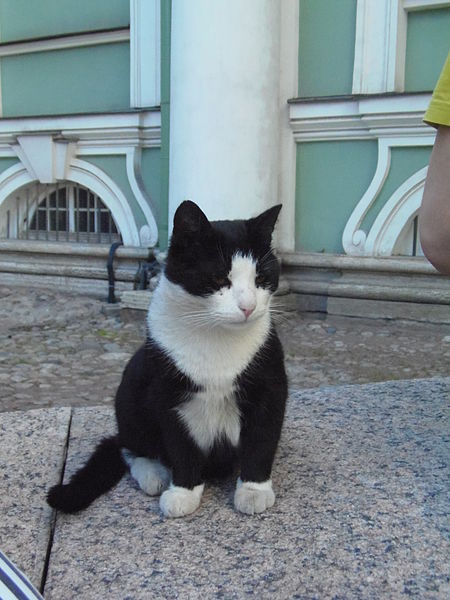
A French man has left money to 50 cats who live in Russia's Hermitage Museum

"Moscow (CNN) — A generous French philanthropist has left a sum of money to some unusual beneficiaries in his will -- a bunch of cats living in the basement of the State Hermitage Museum in Russia.
Around 50 cats live in the famous St. Petersburg museum... which is home to 3 million works of art, artifacts, & sculptures spread across buildings including the Winter Palace.
The site has been home to cats since the time of Empress Elizabeth, who reigned from 1741 to 1761, according to the museum.
Catherine the Great, the founder of the Hermitage, gave the cats the status of guardians of the art galleries, Russian state-run news agency RIA Novosti reported, noting that the cats were housed to keep rodents from the premises.
Now, they are taken care of by volunteers & museum staff, & supported by donations, according to the museum, which notes that the animals have their own washing machine & the services of a local veterinarian.
The museum's general director, Mikhail Piotrovsky, said in a press conference...that the unnamed French philanthropist was so taken with the animals that he left a 'small sum' to them in his will.
'Our French friend did a very good thing; this is brilliant PR for both the cats & charity...'
'Such a nice gesture that came from France,' he added.
The funds will likely be used to repair the museum's basements, where the cats live, Piotrovsky said.
'I think the cats will express their will -- our colleagues are well-versed in communicating with them & understanding their language,' he added.
The unnamed benefactor certainly wasn't the only person to have fallen for the cats' charms -- according to Piotrovsky, the former president of the Russian Academy of Sciences, Vladimir Fortov, was a 'constant friend' of the Hermitage cats. Fortov, who died last month, would sometimes stop by the museum to leave money for the animals, Piotrovsky said.
This year, more than 800 people submitted pictures & photographs of the cats for the museum's Day of the Hermitage Cat."
Mary Ilyushina & Amy Woodyatt
CNN.com 
Dec. 7/2020
Cute Critter Pics: 


Weekly Chuckle:
#StaySafe


Wednesday, January 13, 2021

Jan. 13/2021


Feature:

You can't squish this 'iron' beetle. Now, scientists know why

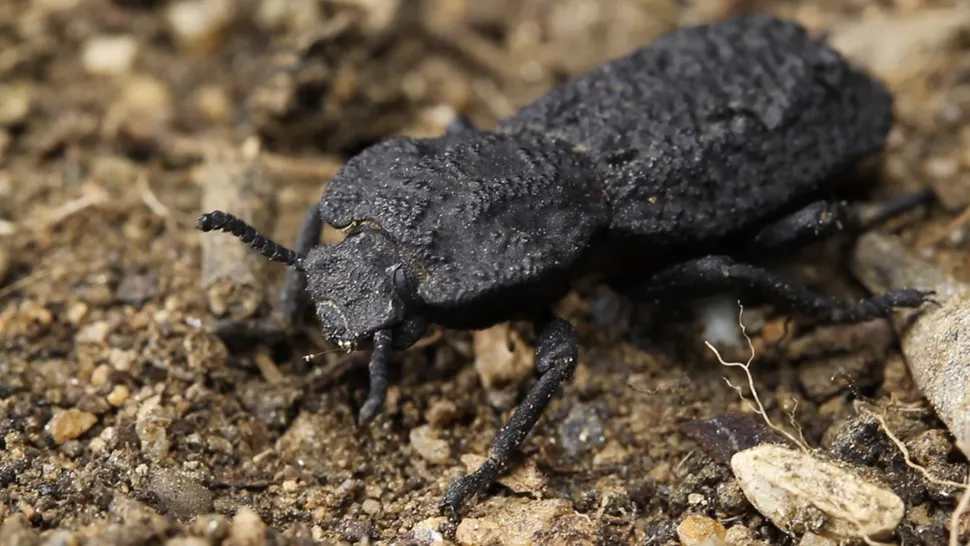
"Diabolical ironclad beetles are almost unbreakable — you can smack them, stomp on them or run them over with a car, & they'll scamper away uncrushed.

Now, scientists know why these beetles' outer wing cases, known as elytra, are so tough — they're made up of a series of smoothly interlocking puzzle parts; the geometry & internal structure of this 'jigsaw' design increase the strength of the beetle's armor. 

Ironclad beetles (Phloeodes diabolicus) measure about 0.6 to 1 inch (15 to 25 mm) in length, & are found in woodland habitats in western North America, where they live under tree bark. Though their ancestors could fly, ironclad beetles lost their flight capabilities long ago, and their elytra are fused together, forming a crush-resistant shield... 

Microscopic analysis of exoskeleton cross-sections showed lateral support structures that made some parts of the elytra stiffer than others, to distribute weight uniformly over the beetle's back & protect its organs. And further reinforcement came from the seam where the elytra fused together. 

In the ironclad beetle's flying relatives, the elytra notch together in 'a tongue-&-groove design,' allowing them to smoothly open, close, & release the lower wings for flight... But in ironclad beetles, the fused elytra fit together like pieces in a jigsaw puzzle along the length of the insect's abdomen. The protruding parts of these interlocking pieces, called blades, also distribute stress across the exoskeleton, preventing it from cracking...

Revealing the biological architecture that makes ironclad beetle exoskeletons near-uncrushable could help engineers design structures that are more impact-resistant..."


Mindy Weisberger 

                                                           Oct. 21/2020

                                                           livescience.com

Cute Critter Pics:


Weekly Chuckle:


#StaySafe


Thursday, January 7, 2021

Jan. 6/2021


Feature:

You've got snail: why the best pet of 2020 is slow and slimy
"Snails are having a moment as the pandemic is making our worlds smaller, forcing us to slow down our speed.

'You would never imagine that you could connect with a snail,' says Nadia Giosia. But the evidence is inching slowly up her hand.

When the pandemic forced her into her Los Angeles apartment, her initial response was to bring the outdoors inside: she bought houseplants. Giosia did not anticipate a stowaway – but when her new ivy arrived, nestled within its leaves was a snail.

Giosia debated what to do... 
At the start of 2020, Giosia – a comedian & television chef, & former host of the Food Network series Nadia G’s Bitchin’ Kitchen – had been gearing up to pitch a new show. When coronavirus struck, she was able to support herself with consulting work, but she had time to fill.

'And I’ve got to say,' she says, 'a mollusc is a nice companion.'

Giosia kept the snail & called him Leroy. 3 months later, Leroy is 3 times the size he was when he arrived, nourished by cuttlefish bone (for calcium) & cucumber (as a treat).

'What’s nice about snails,' Giosa says, holding up Leroy on her hand to her computer’s camera, 'is that they are very obvious creatures: if they don’t like something, they go into their shell.'

Leroy, antennae waggling, is plausibly upbeat. Now, after all, is his time to shine.
*
Snails are having a moment in 2020, their silvery trail stretching from TikTok, where the #snail hashtag has more than 100m views (& #snailmom, 10m); to the New York Times, which published a 'letter of recommendation' for snails as pets in July. That same month, The Snail Hospital joined Instagram, sharing stories of injured snails on the road to recovery.

This new appreciation seems to be an outcome of the pandemic making our worlds smaller, forcing us to slow down to their speed.

New Zealand pop singer Benee said she was 'fascinated' by snails while in lockdown in Auckland: 'There wasn’t really a lot to be doing, so I would spend a lot of time outside looking at snails.'

The molluscs were mobile where she was not. She started to imagine the pandemic from their perspective: did they wonder where the people had gone?

The result was a song called Snail – with the refrain “When it’s day, hide away / But come out, when it rains”... She called it her 'lockdown song'.
*
On Instagram, snails have emerged not just as a source of inspiration for artists, but their subjects. In September, artist Chloe Wise shared a photo of a tiny snail with the caption: 'Friend'.

Chicago-based creative duo Aleia Murawski & Sam Copeland have been shooting snails in elaborate miniature sets – a bowling alley, a diner, a mall – since about 2016, but their projects have become more ambitious in quarantine. In May, they started staging scenes from classic horror films featuring their snail Velveeta, starting with the bloody elevator from The Shining...
 
For Victoria Cottrell, a 21-year-old engineering student in Los Angeles, what began as a boredom-buster through quarantine sparked a surprisingly lucrative business.

About 6 months ago, she came upon some snails in her neighbor’s yard & thought them 'cute'...Cottrell saw a potential pet.

She took some home & put them in an empty tank. In the summer months, she would spend entire days outside with Gary, Turbo, & Maurice: 'They’d be hanging out on the grass, I’d take a book – it was fun.'
*
But Cottrell was not prepared for them to reproduce: all snails have both male & female reproductive organs. Within a month, she says, 'I had maybe 100, 200 baby snails that I did not know what to do with'.

She took a punt on listing them for sale on Etsy – & was flooded with interest. Today she has sold 57 garden snails at $8 a pop (excluding shipping).

Cottrell is somewhat bemused by her success: 'They’re not different from any other snail than you would find in the garden.' Nevertheless, her customers have been delighted.

...Last month, New York magazine’s cutting-edge consumer vertical The Strategist declared snails the perfect 'pandemic pet' – not least for their ease of disposal, should the novelty wear off.
*
Giosia...does not anticipate losing interest. 3 months ago she knew nothing about snails... Now she rattles off facts with enthusiasm...

Giosia has even acquired a 2nd snail from Cottrell: a 'partner in slime' for Leroy, which she named Edna. They share a 12 sq in tank, kitted out with organic coconut coir, sphagnum moss, filtered water, & a jade plant to climb on.

...One of them is now pregnant; & though Giosia has no desire to branch into snail breeding herself, it at least promises some excitement in the coming weeks.

Leroy’s arrival in her life was a 'slimy little blessing' – not only for adding interest to her days, but also showing her how to pass them. In lockdown, Giosia observes, we have all been forced into the slow lane: 'He really was a great teacher in that regard.'"
*
* All snail pics feature Atticus

Elle Hunt
Nov. 17/2020
theguardian.com

Cute Critter Pics:


Weekly Chuckle:

#StaySafe