Thursday, August 28, 2025

Aug. 27/2025


10 Fun Facts About Cats

By Sandra C. Mitchell, DVM, DABVP

5/9/ 2023

Cats are unique animals, adored for both cuteness & behavior quirks, like their obsession with knocking things off tables & their headbutting love language. But there’s so much more to know (& love!) about cats. Here are some well-hidden secrets & fun facts about cats.

1. Only 20% of Orange Cats Are Female
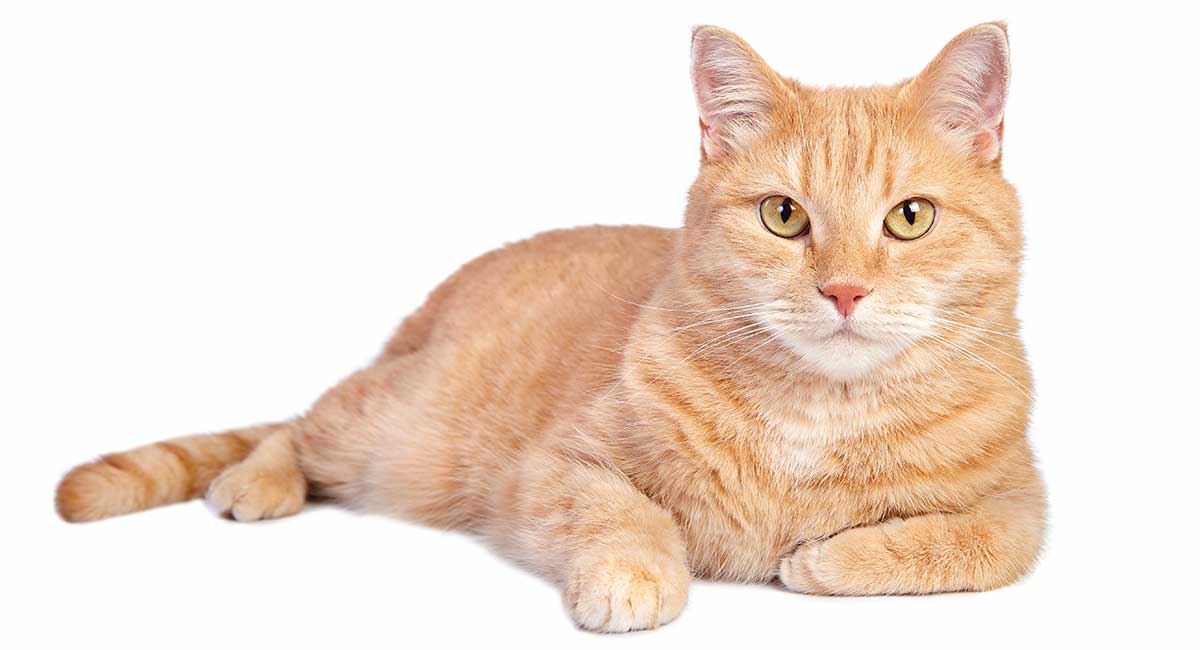
Female cats have 2 X chromosomes (XX), while a male cat has one X chromosome & one Y chromosome (XY). Color in cats is mostly related to their sex because the gene causing color is on the X chromosome.

Because a male cat has only one X gene, if that X chromosome has the orange gene, he will be orange. This means that if an orange female cat has a litter of kittens, all the males will be orange—regardless of their dad’s color. But a female cat will only be orange if both of those X chromosomes carry the orange color, meaning both parents must be orange to create an orange female kitten.

We don’t actually know what percentage of cats are orange, but there are estimates that it’s somewhere between 2–5% of all cats. So if your kitty is an orange female, she belongs to an elite club!

2. Cats Have Fewer Taste Buds Than Dogs or People

Cats have about 473 taste buds, which is far fewer than people (we have 9,000) or dogs (who have 1,700). Cats can taste savory, salty, bitter, & sour flavors, but they don’t taste sweets.

But don’t be too sad that your kitty can’t taste ice cream—as obligate carnivores, they’re happy to stick to eating meat.

3. Cats Don’t Get Cavities

This doesn’t mean that cats don’t get dental disease—in fact, up to 90% of cats more than 4 years old have dental problems. However, they don’t get the types of cavities that people do, in part because of the pointed shape of cat teeth (compared to the flat teeth in humans).

Instead, cats get feline resorptive lesions, in which the dentin wears away, leaving them with a painful mouth. Cats also get gingivitis, stomatitis, & periodontal disease.

Dental disease is not just painful; it can shorten the life of your cat. Keep up with regular tooth brushing at home with a cat-friendly toothpaste & schedule dental cleanings as recommended by your vet.

4. Many Cats Get the Zoomies After Using the Litter Box

Think of it as sort of a victory lap. Lots of cats will run like crazy after using the litter pan for a bowel movement. But sometimes they’ll run away from the box if the experience was uncomfortable—such as if they were constipated or have swelling in the gastrointestinal or urinary tract.

If your cat shows any unusual bathroom habits, discuss these zoomies with your veterinarian. But for most cats, post-pooping zoomies are just a way to celebrate a job well done.

5. Cat Whiskers Are as Sensitive as Human Fingertips

Cat whiskers are thicker & coarser than regular fur & have roots that are 3 times deeper. They are strategically located on the cat’s face to provide sensory equipment to help guide a cat through the day, aiding vision & helping the cat to navigate, much like antennae on insects.

Although the number of whiskers will vary by breed, most cats have 12 whiskers arranged in 4 rows on each cheek. These whiskers are very sensitive, & this part of the face also contains small glands that smell like your cat. This is one reason many cats love to have their faces rubbed!

6. Cats are Nearsighted, but See Great in the Dark

This is all thanks to those sensitive whiskers! Compared to humans, cats are nearsighted because their eyes are so large & placed so forward on their face. In fact, they can’t focus on anything less than 1 foot in front of them. This is where the whiskers come into play, as they can swing the whiskers forward to feel in front of them.

However, they make up for this nearsightedness with an excellent ability to see in the dark. Cats have extra dark-specializing cells called rods & a “reflective mirror” called a tapetum in the back of the eye. These work together, so cats can see light at 8 times dimmer illumination than you can.

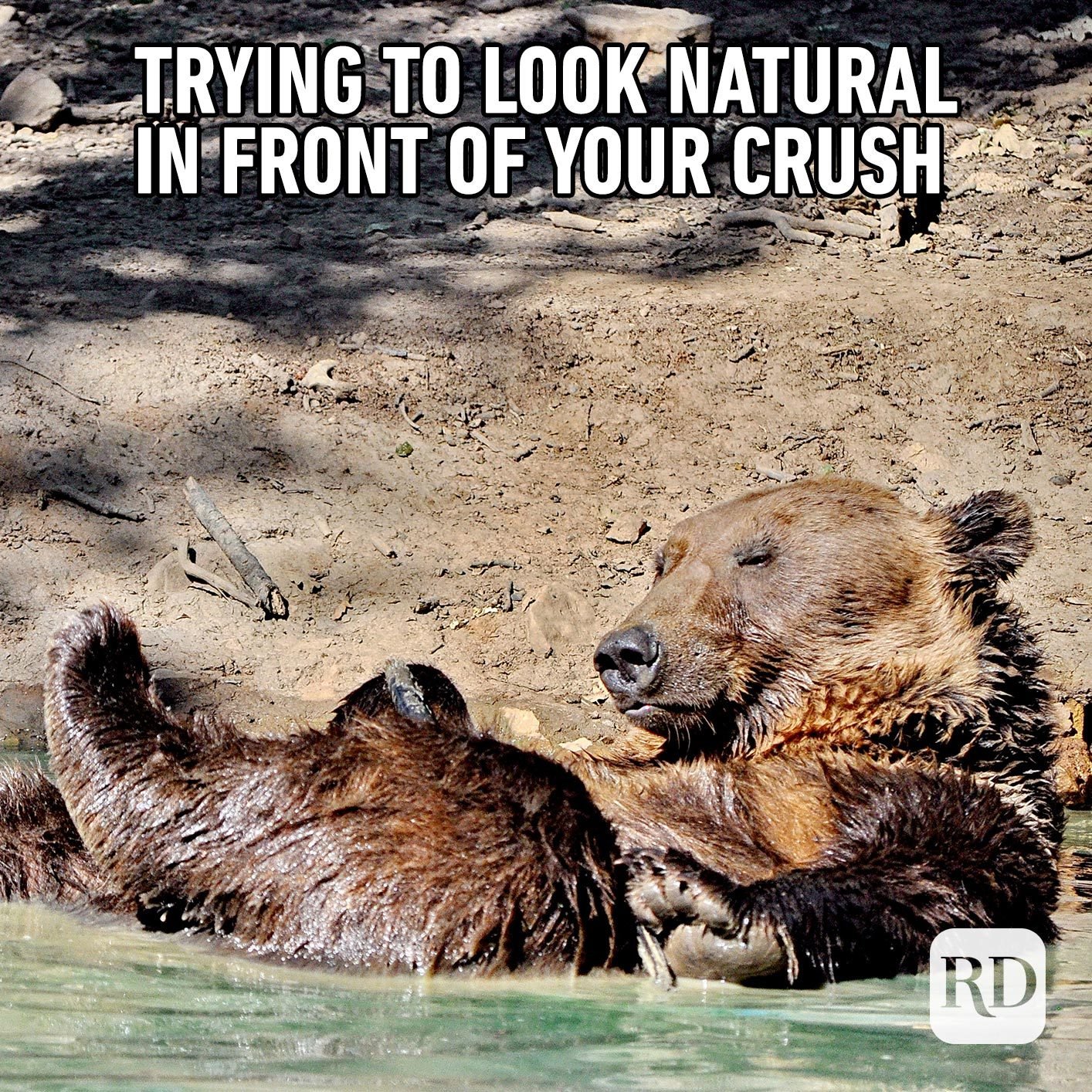
7. Cats Have the Same Number of Brain Cells in Their Cerebral Cortex as Brown Bears

Even though a bear’s brain is 10 times bigger than a cat brain, cats have about the same number of information processing cells. The cerebral cortex of a bear has 251 million cells, while the tabby has about 250 million cells.

This still pales in comparison to humans, however—we have up to 26 billion cells in our cerebral cortexes.

8. Cats Use Dewclaws To Help Them Grip

The dewclaw is the tiny little claw found up on the inner wrist of your cat—the one that is hard to clip & that overgrows very quickly.  Technically, the dewclaw is very similar to the human thumb, although it isn’t opposable. But cats can use it very effectively to grip onto a tree when climbing or to hold onto prey when hunting.

Dewclaws on cats rarely cause problems, but they will sometimes overgrow if they’re not trimmed regularly. In most cases, it isn’t necessary to surgically remove a cat’s dewclaws. And, like all other cat claws, it serves a function that your cat would miss if it wasn’t there.

9. That Adorable Paunch on a Cat’s Belly Is Also Found in Lions & Tigers
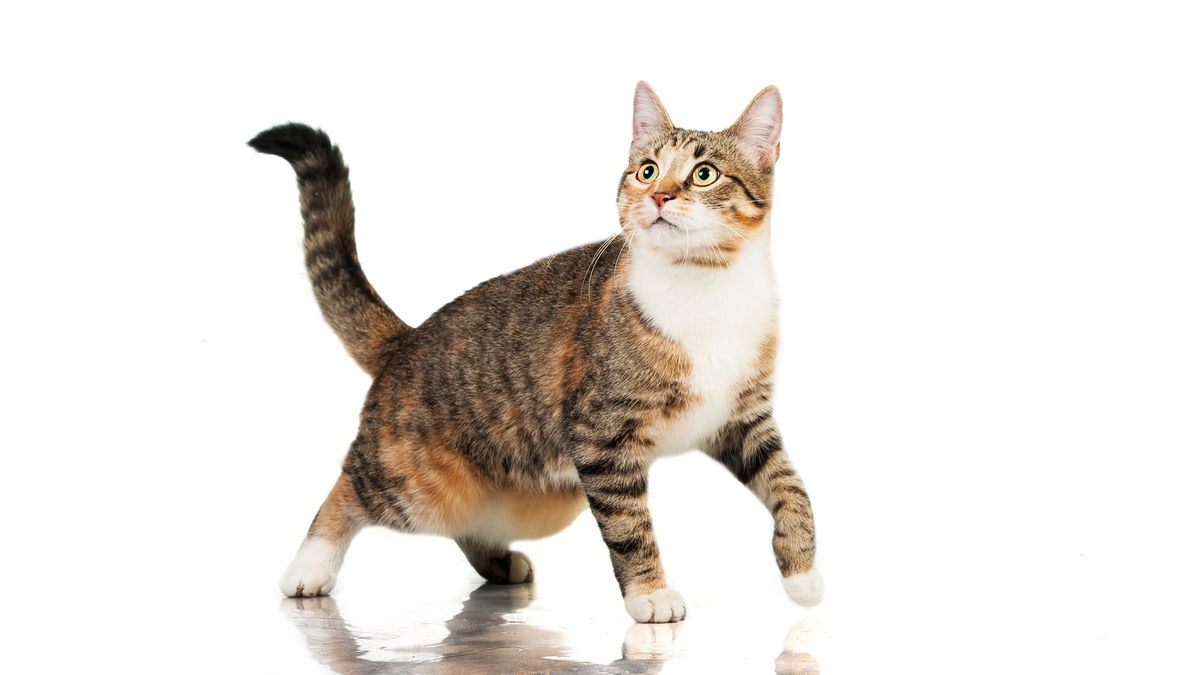
That swinging, dangling pouch on your cat’s belly is actually a normal structure found in all cats—wild & domestic. However, it’s important to tell the difference between a normal pouch & a big fat pad associated with obesity. But don’t worry—your veterinarian will tell you if your cat is overweight.

There are several thoughts as to why cats get these pouches. Some think this is a padded layer meant to protect the internal organs during a fight. The pouch may also simply provide some extra skin that lets them widely spread their legs when running. Or, because wild cats tend to eat a lot when they catch prey, it might just be room to expand after a large meal. Whatever the reason, it certainly is a cute part of your cat.

10. Cats That Scratch Furniture Are Often Marking Their Territory

Cats have tiny scent glands on their feet, & when they scratch furniture they leave just a little bit of their smell on it. This tells other cats, “This sofa is in my territory, & these are my people—keep away!” Additionally, shredded corners of a couch or chair are a visual sign of your cat’s space. So although you don’t want your cat destroying your furniture, the scratching is a signal that they love you & their space.

One step to teaching your cat not to ruin your furniture is to provide them a large, sturdy cat tree or scratching post they’re allowed to mark. If possible, place it near their favorite forbidden piece of furniture. This way they have something they are allowed to claim as their own.

10 Fun Facts About Cats | PetMD

Cute Critter Pics: 


Weekly Chuckle:

Slava Ukraine!


Thursday, August 21, 2025

Aug. 20/2025


Cows Have Distinct Social Classes & 'Boss Cows'

By Anna O'Brien, DVM

Published 2/ 12/ 2014

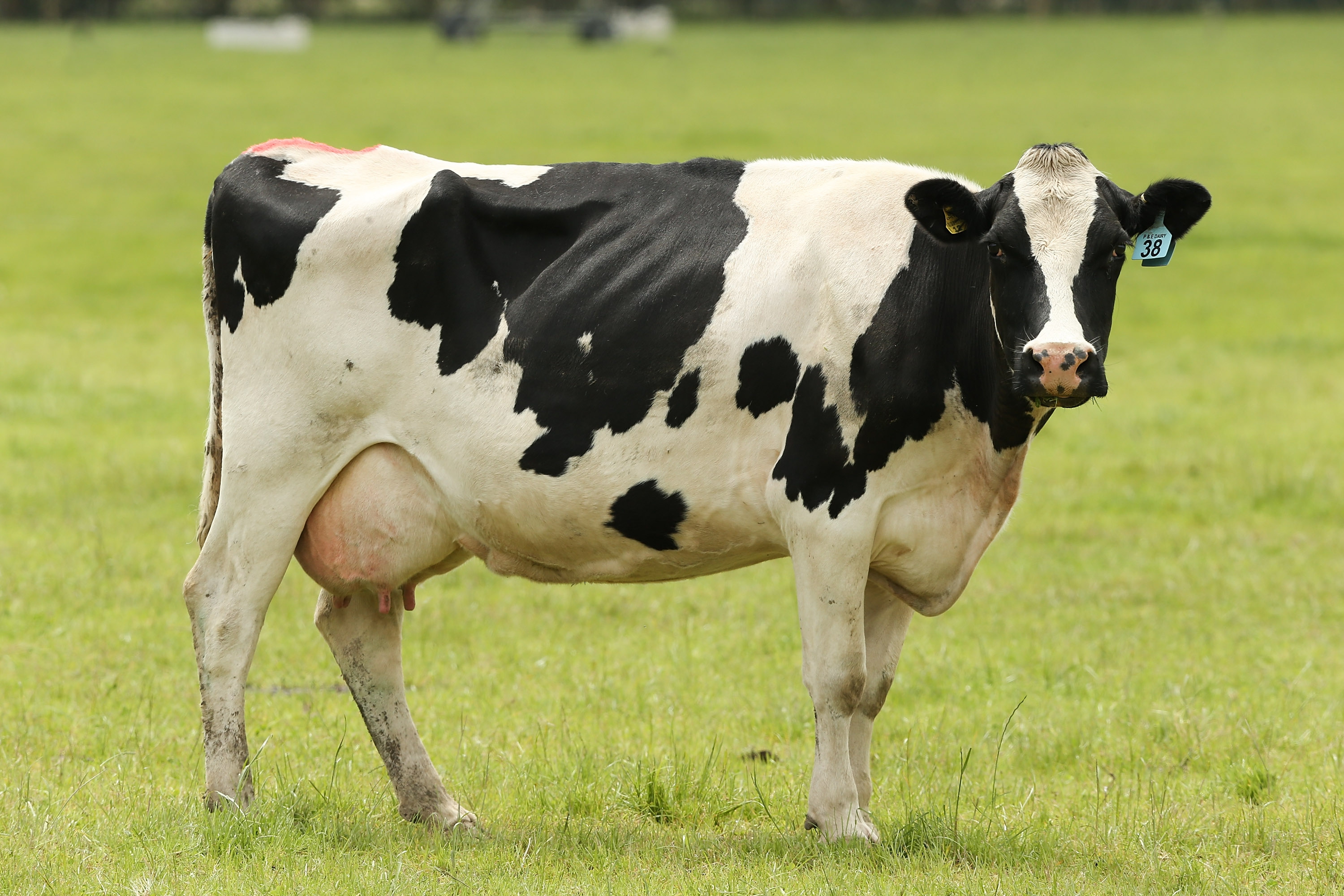
For most pet owners, it is obvious that cats & dogs all have unique personalities & social quirks; that’s part of what makes them so endearing to have as companions. Perhaps most people realize that horses, although considered large animals, have their own personalities as well. But what about the quintessential livestock animal, the cow? Do these herd-oriented animals actually have personalities? Do they make friends? Do they hold grudges? As it turns out, the answer to all these questions is yes.

Over the past few decades, research into the behavior of cattle, especially dairy cattle, has shown these animals have a surprisingly complex social life. This, of course, is no news to the dairy farmer, who, through years of closely working with these animals day after day, knows which are the calm ones, which are the skittish ones, which get lonely, which are crafty, & which are just plain mean. And if you’re on good terms with these dairy farmers, they’ll usually let you know as you’re walking into the barn for an appointment which cow you’re getting ready to work on & if you’re going to have a good day or a bad day because of her.

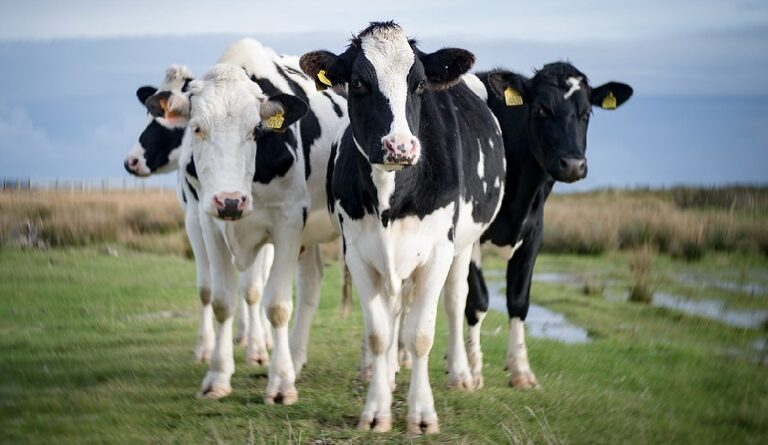
At the risk of sounding cynical, most of this research stems from devising ways to save money in the milking parlor. If cows are stressed, their milk production is affected, so can social change stress cows? Studies say yes. Once in a herd, cows develop a social hierarchy. There are even what are called “boss cows” at the apex of this social ladder. These are the cows that push their way through to the feed bunk no matter who is in their way &, sorry ladies, no one is getting seconds until these queens of the corral have had their fill.

As you might imagine, it takes time for the intricacies of the social ladder to be worked out within a herd. If cows are moved from one barn to another frequently, this social stress can start to affect their well-being. Reestablishing who’s who in a crowd can lead to tension, stress, & the release of cortisol, the stress hormone that’s been shown to have detrimental effects on milk production.

If cows are allowed to choose where they rest in a free-stall barn (a common type of dairy barn that has many different stalls where the cows themselves choose where to rest), they will choose to rest near acquaintances, not strangers. Boss cows will often rest near other boss cows, with the mid-level & bottom-level animals more commonly associating with others of their “class.”

One study identified 3 different social structures within a dairy herd: a milking order, a leadership-followership pattern, & a dominance hierarchy, suggesting that the social dynamic isn’t just a social ladder, but rather a more complicated web. Social dynamics affect the order cows enter the milking parlor twice a day, who follows who in the field & around the barn, and who gets pushed out of the way when push comes to shove.

An interesting side note, in case you were wondering, is that studies have shown that social dominance does not appear to influence milk production. A boss cow is just as likely to produce the same amount of milk as a lower-ranked cow in the herd. Instead, milk production is influenced much more by breed genetics (milk production of the parents, grandparents, etc.), health, type of diet, & overall farm management.

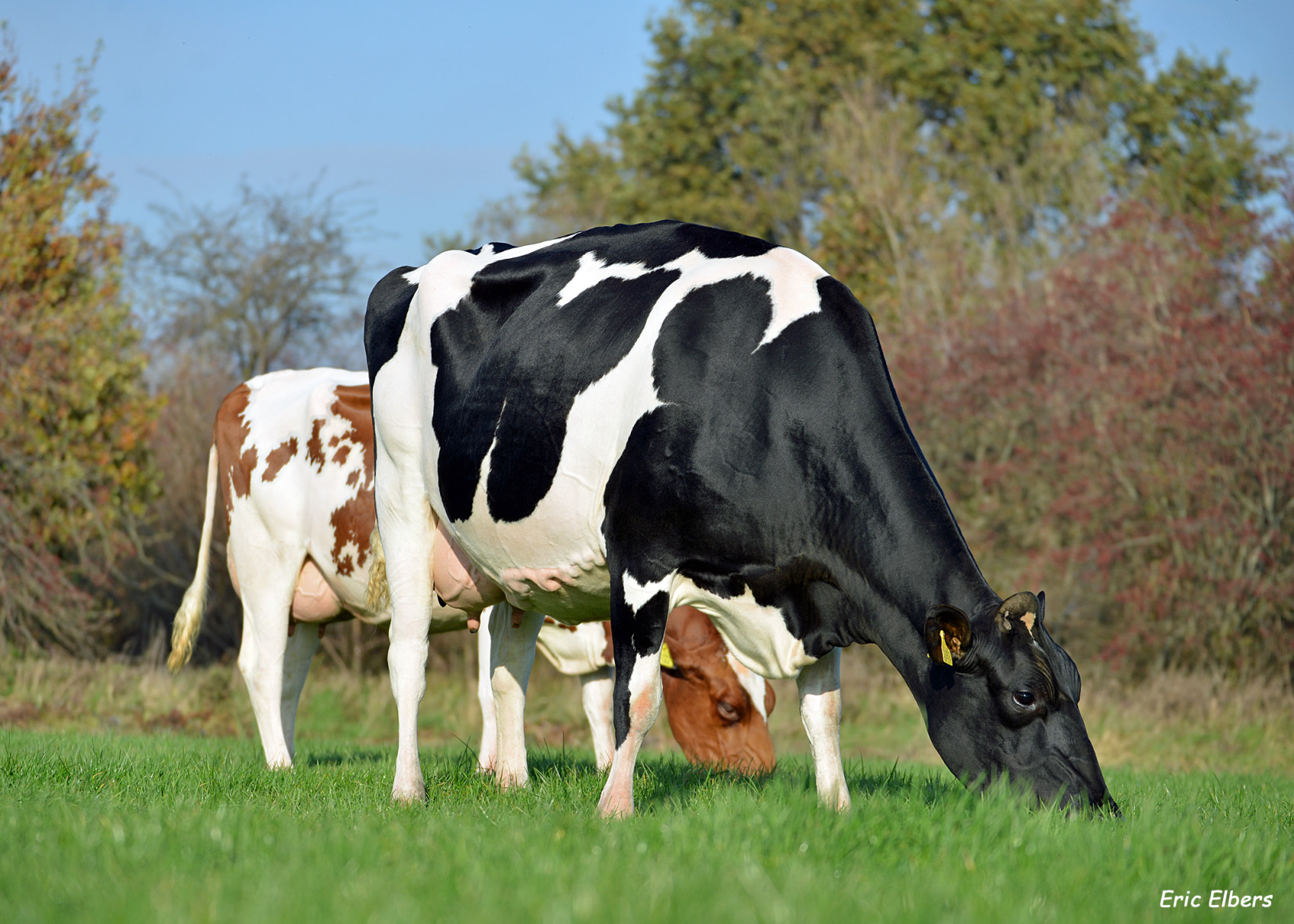
So next time you happen to drive by a pastoral scene of green grass & happily grazing Holsteins, you might stop to consider the fact that all things may not be as peaceful as they seem. My conclusion from these studies is that dairy cows are prone to gossip.

The Social Lives of Cows | PetMD

Cute Critter Pics: 


Weekly Chuckle:

Slava Ukraine!


Wednesday, August 13, 2025

August 13/2025

18 Types of Turtles You Can Keep as Pets

By Lauren Jones, VMD. Reviewed by Sean Perry, DVM

3/ 28/ 2025

Different types of turtles can make great pets, but not all turtles are ideal for every household due to their behavior & ability to spread salmonella. Like all reptile species, they require a certain amount of veterinary care & complex habitat & diet requirements.

Because there are many types of pet turtles to choose from, it is important to research full-grown size, general habitat requirements, & lifespan to find the best fit for your family.

Popular Turtle Species

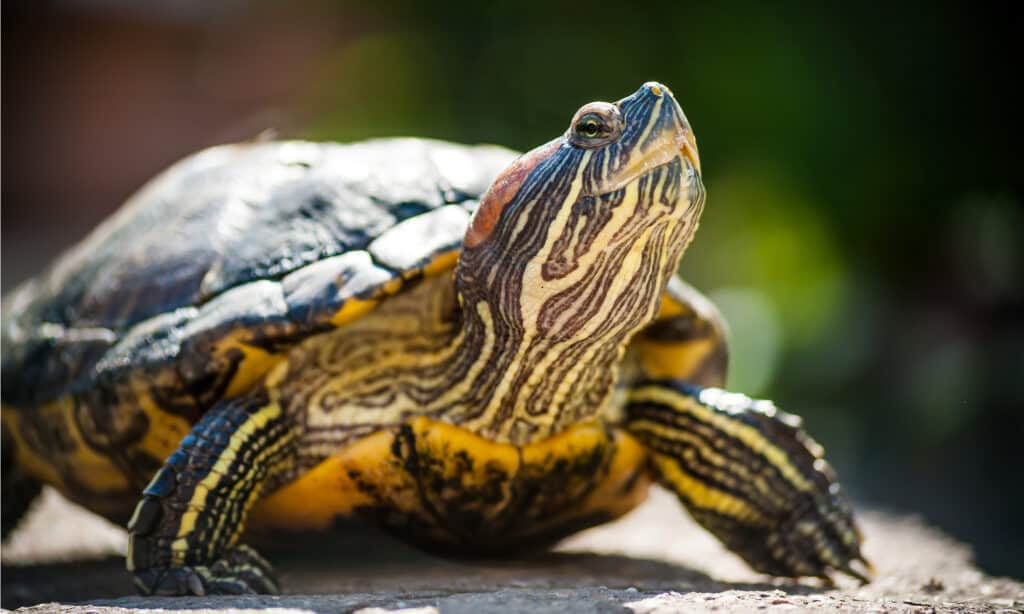
Red-Eared Slider

Red-eared sliders are be the most commonly sold aquatic turtle & tend to be more social. They can live over 30 years & grow 12–14 inches long. This species grows quickly & can outgrow a 20-gallon habitat within a couple of years.

Based on their enclosure requirements & diet needs, red-eared sliders may be more expensive & difficult to keep than other options.

Painted Turtle

Painted turtles are known for beautiful markings on their body & shell. They do not enjoy handling & can be shy—therefore interactions should be kept to a minimum.

There are 4 types of painted turtles, including the Eastern, the Midland, the Western, & the Southern.

This species is social with other turtles, if enough space is given.

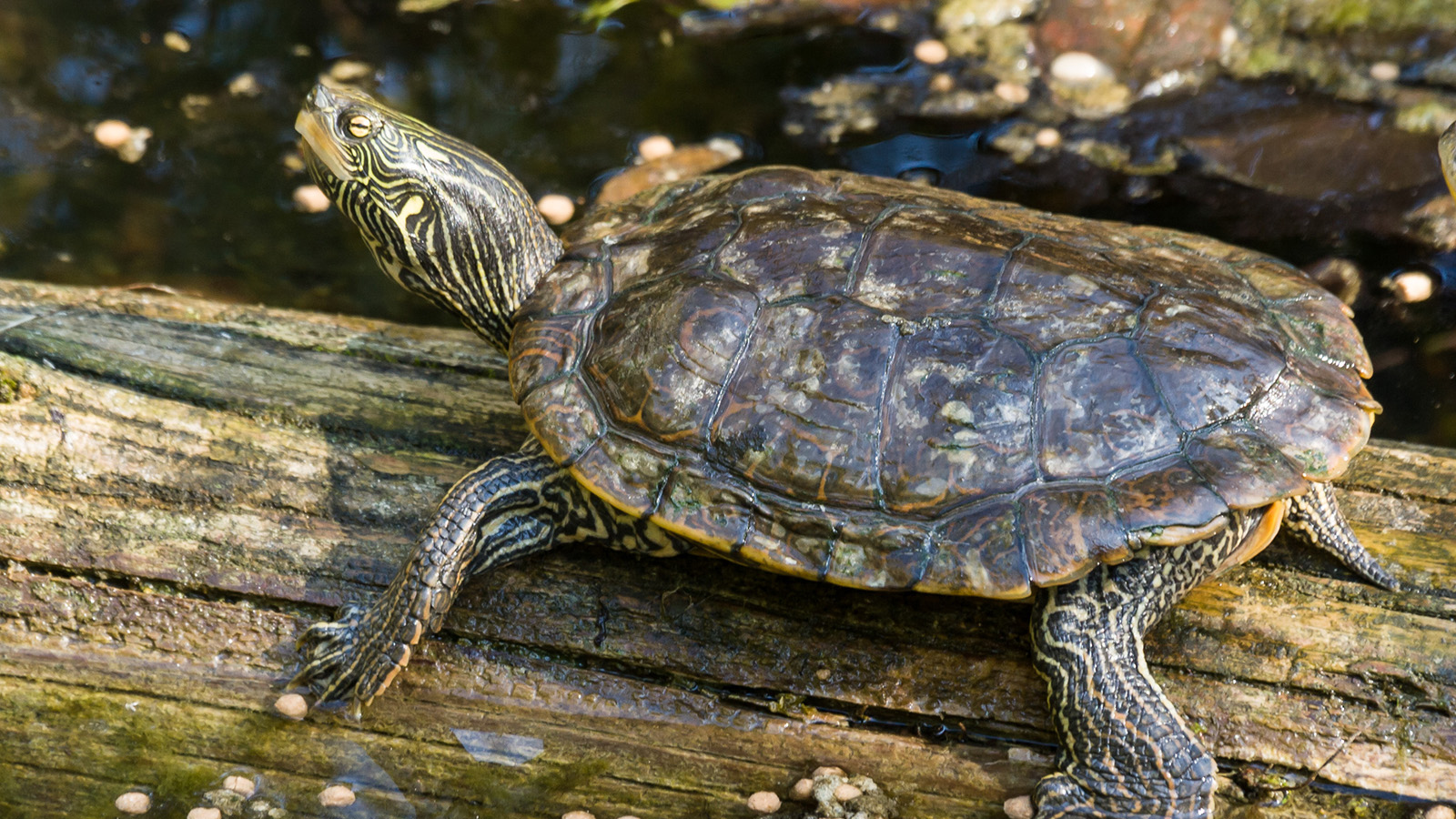
Map Turtle

Map turtles are known for having a “fin” running down the back of their shell.

This species may have a shorter lifespan than other species.

Females grow up to 12 inches long, while males may only grow to 5 inches.

Cooter Turtle

Most commonly found in the southern states, cooter turtles are also known as redbelly turtles & often grow to over 12 inches. They typically have yellow lines running down their head, neck, & legs.

They are sensitive to proper water quality, so good filtration is required. Opt for a high-quality turtle tank filter, & clean your cooter turtle's tank regularly.

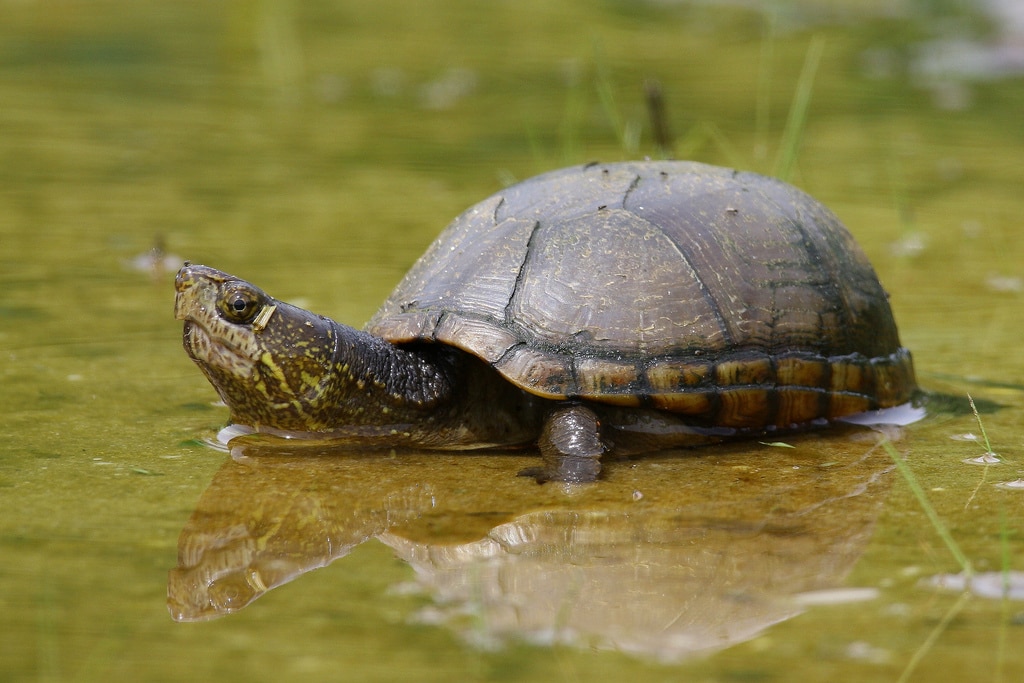
Stinkpot or Musk Turtle

Musk turtles are small—only 3–5 inches—& may have less complex care than other turtles. They are not social with people & should only be handled when required.


Musk turtles may bite & release a foul, musty odor when they feel scared or stressed, hence their name.

This species also prefers more shallow water, as they aren’t adept at swimming.

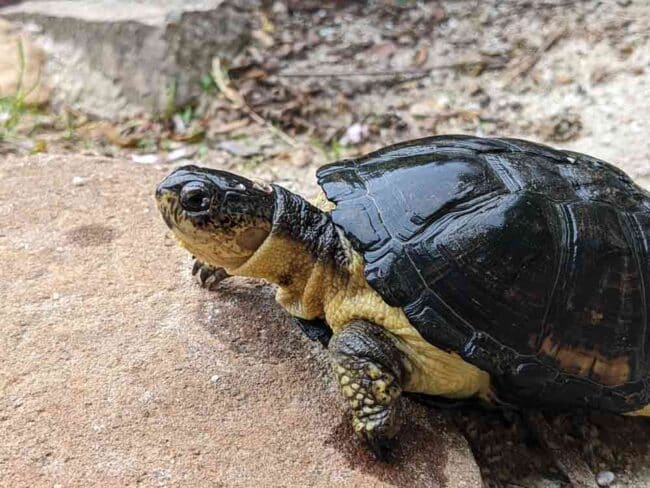
Mud Turtle

Mud turtles tend to be shy & nocturnal, spending most of their time at the bottom of the habitat. Like musk turtles, they can also release foul odors when stressed.

These turtles are not very social with other turtles & may become aggressive when housed in groups.

Common Snapping Turtle

Snapping turtles are some of the largest freshwater turtles in North America & require large aquariums. They only leave the water to lay eggs & tend to be sedentary.

As their name implies, snapping turtles will bite if threatened & have very strong jaws & beaks capable of serious damage.

Softshell Turtle

Softshell turtles can grow up to 36 inches, with females larger than males. They are unique looking with flat round shells that are leathery instead of bony. Their soft shell is more prone to damage & injuries.

These turtles are very large & also aggressive—they may bite & scratch when threatened.

Spotted Turtle

Spotted turtles are one of the smallest species of pet turtles, at only 3–6 inches. They have a distinct polka-dot pattern on their shell.

This species is known for its longevity—with some spotted turtles recorded living over 100 years old.

Wood Turtle

Wood turtles are more friendly in the right environment. They are not true aquatic turtles, so their water must not be too deep to prevent drowning. They grow up to 8 inches long.

Wood turtles may not be legal to keep as pets in all states, so check your local laws before adopting a pet wood turtle.

Yellow Pond Turtle

Yellow pond turtles are rare turtles that love to swim & are social with other turtles. Only growing to around 6–7 inches, these turtles have a yellow stripe behind their eye & down the neck.

Yellow pond turtles are threatened to become extinct in the wild.

Asian Leaf Turtle

Asian leaf turtles have rounded shells & grow up to 10 inches. They have a unique serrated or saw-tooth design on the shell margin, which may aid in protection from predators.

Reeve’s Turtle

Reeve’s turtles are one of the more social turtle species. They may even enjoy physical touch with caretakers over time, although it is still recommended to handle them as little as possible.

Reeve’s turtles have similar requirements as red-eared sliders, although at only 6–9 inches, they can manage in a smaller tank.

Reeve’s turtles are relatively healthy, but usually only live up to 20 years.

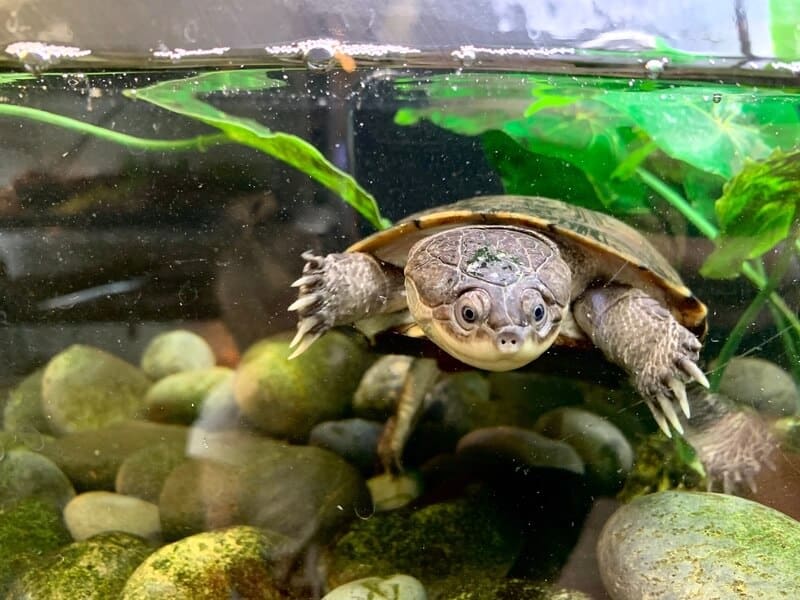
African Mud Turtle

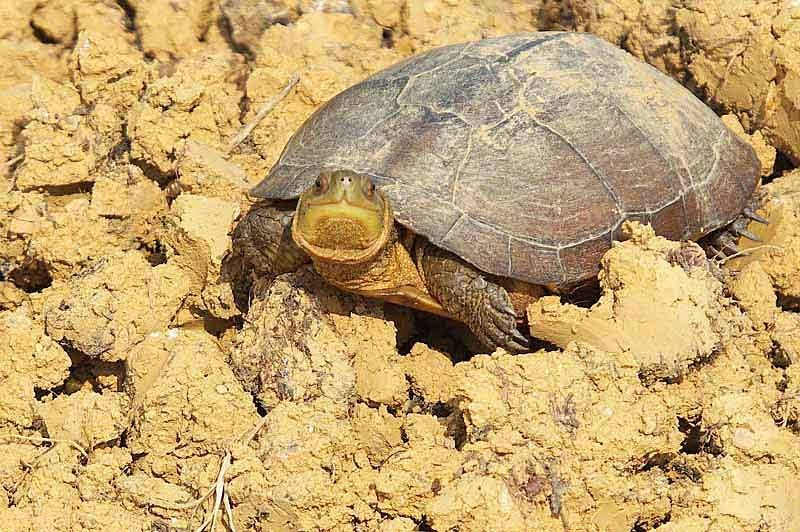
African mud turtles frequently grow to around 11 inches long & are best known for their comical expression that looks like they are smiling.

African mud turtles aren’t as flashy looking as some other turtles, & therefore a little less common as pets. However, they tend to be easy keepers with big personalities.

African Side Neck Turtle

African side neck turtles are a unique turtle species with a long neck. They are small at only 6–9 inches, with slightly different neck anatomy than other turtles.

These turtles require pristine water—with at least weekly changes & a good filtration system.

Even though they are small, this species requires at least a 75-gallon tank with platforms & lights. They are best kept indoors.

Snake-Necked Turtle

Snake-necked, or long-neck, turtles are known for their snake-like neck that can fold into their shell.

They are rare in captivity & very difficult to keep healthy.

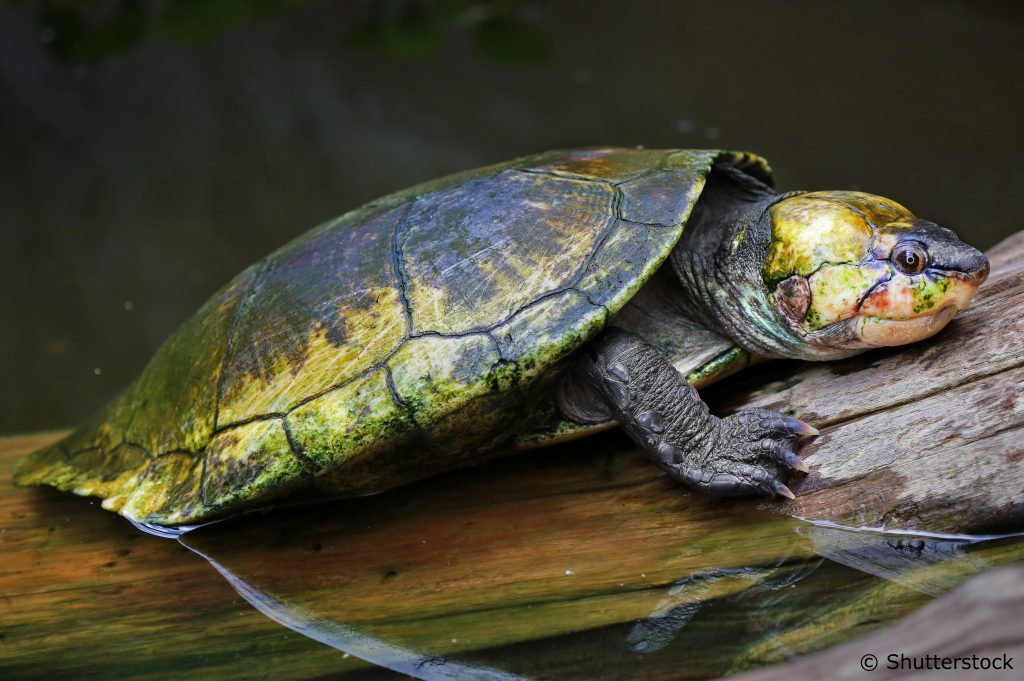
Big-Headed Turtle

Big-headed turtles have large heads—so big that they cannot fit into their shell.

They are poor swimmers & relatively uncommon in captivity.

Mata Mata Turtle

Mata mata turtles are beautifully camouflaged to look like leaves & debris at the bottom of pond or river.

They can grow quite large at over 2 feet & likely live between 40 & 75 years.

Cute Critter Pics:


Weekly Chuckle:

Slava Ukraine!