Wednesday, April 30, 2025
April 30/2025
Thursday, April 24, 2025
April 23/2025
By Sarah Kloepple. Reviewed by Veronica Higgs, DVM
Updated 3/18/2025
The American Kennel Club (AKC) recently released its annual list of the most popular dog breeds, & this year’s results are largely similar to the last.
The French Bulldog maintained the title of the most popular dog breed in the U.S. for the 3rd year in a row. In fact, the top 5 dog breeds are the same, though there was some shuffling in the back half of this list. The Bulldog, for instance, dropped from No. 7 to No. 9, & the Rottweiler overtook the Beagle.
What other dog breeds were deemed the most popular in the country? We’ve got a rundown of the results, & what you can expect from each if you’re looking to add one of these sought-after breeds to your home.
1. French Bulldog
The French Bulldog has been climbing the ranks in popularity over the last 10 years, according to the AKC. They were first named the most popular dog breed in 2022 & still hold that title today.
It’s not hard to see why—Frenchies, as they’re often called, are easygoing, happy, compact dogs with a good-natured temperament & a bright personality.
They enjoy short walks, playing fetch, & games of tug-of-war. Their smaller size is ideal for any type of home, which has no doubt contributed to their popularity.
French Bulldogs are prone to a handful of health issues, though, including brachycephalic airway syndrome, ear infections, & back injuries.
Frenchies, like other breeds, should be fed a size & age-appropriate diet, & cleaning their ears regularly can help prevent frequent ear infections.
2. Labrador Retriever
Labrador Retrievers are known for their affectionate nature toward everyone they meet—even strangers—& they do exceptionally well with children & other dogs. This breed loves the water & makes a great companion for families who spend a lot of time outdoors.
Labrador Retrievers love to play & are known to be highly energetic throughout most of their lives. They should be fed a high-quality diet appropriate for their age & size, & exercised regularly to maintain a healthy weight. Frequent games of fetch will keep your Lab active.
Labs are a generally healthy breed, but common health issues include hip & elbow dysplasia, ear infections, & exercise-induced collapse.
3. Golden Retriever
Goldens enjoy a wide variety of activities, including running, long walks, retrieving, & swimming. They also make excellent therapy dogs & guide dogs for people with impaired vision. Goldens thrive with regular activity & enrichment, & being fed a large breed-specific diet.
Golden Retrievers are usually healthy dogs, but some may have allergies, heart disease, eye issues, & hip dysplasia.
4. German Shepherd
These pups love having a job to do, & German Shepherds are commonly used as working dogs in the military & police for patrolling, bomb sniffing, & search & rescue. A German shepherd named Mercedes also won the herding group in the 2024 Westminster Dog Show.
Although they have a long life expectancy for a large breed dog, they are prone to health issues such as gastric dilation & volvulus (which can be life-threatening), as well as cancer, allergies, & heart disease. German Shepherds should be fed a large breed-appropriate diet, & puppies should be fed a large breed puppy food.
5. Poodle
As an athletic, smart, & good-natured breed, the Poodle rounds out the top 5 most popular dog breeds. This breed comes in 3 distinct sizes: Standard, Miniature, & Toy.
Their recognizable curly coat gives them their reputation as “hypoallergenic” dogs & requires regular & consistent grooming by a professional to stay healthy & mat-free. Regular brushing & combing at home can help decrease tangles between grooming appointments.
Poodles generally have a kind & friendly personality, but they’re very energetic & do best with regular exercise & training. A few health issues to keep an eye on include hip dysplasia, idiopathic epilepsy, & Von Willebrand disease.
Poodles should be fed a diet based on their size & age. Toy Poodles, Miniature Poodles, & Standard Poodles may all thrive on different food formulas because of the difference in their sizes.
6. Dachshund
Dachshunds are commonly called “Doxies,” or “wiener dogs,” & they’re known for their long silhouette, short, & muscular legs, brave & energetic personality, & alert nature. They’re also known for being willful, headstrong, playful, & mischievous.
Although Doxies are down for anything their favorite humans are doing, these pups aren’t built for extensive running, jumping, or swimming—all these activities can make them susceptible to injuring their long back. Offering a ramp or dog stairs in the house is great injury-prevention for long-backed Dachshunds.
Instead of high-impact activities, Dachshund pet parents should try low-impact, brain stimulating activities like scent tracking, nose work, & puzzle toys.
Dachshund parents should also consider a breed-specific food, since the breed is prone to joint & bone problems from their long backs & short limbs. Royal Canin's Dachshund-specific food contains calcium & phosphorus for additional bone & joint support.
7. Beagle
Beagles are famously led by their nose. This makes them a curious breed, but they’re also loving, affectionate, & active. Their sense of smell keeps their nose to the ground, & they love wagging their tails.
Beagles are also very smart, but they can be willful & have a short attention span when it comes to training. They respond best when you tap into their food-motivated nature! Using snuffle mats during mealtime will offer your Beagle some mental stimulation using their nose.
Common health issues that can afflict Beagles include ear infections, allergies, cherry eye, & obesity. Feeding your Beagle the recommended serving size of a size, age, & breed-appropriate diet will help prevent obesity.
8. Rottweiler
Rottweilers are loyal dogs that are eager to please their humans. They’re intelligent & respond well to positive reinforcement training, but if they grow bored, they can develop unwanted behaviors to entertain themselves.
Providing mental stimulation is important for Rottweilers. They’re fans of running, hiking, dock diving, & tracking. Despite how active they are, the breed is prone to health problems including obesity. Feeding your Rottweiler the recommended serving sizes of a vet-recommended diet will reduce the risk of obesity.
9. English Bulldog
Another identifiable breed—thanks to their wide stance, muscular low profile, & flat & wrinkled face with an underbite—Bulldogs (commonly called English Bulldogs) are a popular dog breed with a laid-back attitude.
Though they have a reputation for laziness, but the breed does enjoy (& benefit from!) daily moderate exercise. Exercise could include brisk walks & backyard games of tug-of-war, but keep all exercise out of the sun—thanks to their smooshed-in face, Bulldogs can easily overheat.
Bulldogs should be fed a breed, age, & size appropriate diet to maintain a healthy weight.
Bulldogs also commonly have skin & ear issues, most often due to allergies or moisture getting trapped in their adorable wrinkles. Wipe your Bulldog's face using a cleansing dog wet wipe to keep them clean.
10. German Shorthaired Pointer
German Shorthaired Pointers (GSP for short) are known for their speed, agility, & endurance. They’re often trained as hunting dogs & will point & signal when they’re trailing a game scent by stopping & standing with their nose pointing in the direction of the scent.
Despite their need for adventure, they’re typically a low-maintenance breed. Running, fetching, or agility games are great ways to spend time with them. But be on the lookout for health issues such as bloat, hip dysplasia, & elbow dysplasia.
Cute Critter Pics:
Wednesday, April 16, 2025
April 16/2025
By Lauren Jones, VMD
Published 5/20/2022
Guinea pigs are rodents originally from the Andes Mountains of South America, & variations still live in the wild across the continent today.
Guinea pigs live in a variety of habitats, ranging from moist savannas to forests & deserts. They can be found from Venezuela to Patagonia. However, they are not found in western Chile or the Amazon River basin.
While some members of the guinea pig family are still found in the wild, they were originally domesticated as house pets.
Wild guinea pigs were selectively bred by guinea pig breeders to produce the many breeds of domesticated guinea pigs we know today.
Guinea Pig Classification
Guinea pigs are actually rodents, not pigs.
They are small, stocky mammals with very short tails & are generally larger than other rodents. Guinea pigs are loving, social animals & typically display a group hierarchy, which is usually male-dominated.
They are members of the family Caviidae, which is most closely related to capybara & mara.
Guinea pigs are often referred to as “cavies,” which is a term from the South American vernacular. A cavy is any member of the Caviidae family, which includes 14 different species from South America:
- Guinea pigs
- Maras
- Yellow-toothed cavies
- Mountain cavies
- Rock cavies
Where Did Guinea Pigs Come From?
The first members of the Caviidae family likely evolved sometime between 26 & 7 million years ago. Their ancestors were also rodents, likely larger than a ferret.
These ancestors traveled to South America from North America, Europe, & Asia. The Caviidae family evolved into the guinea pigs we know today once they reached South America.
Wild Guinea Pigs
Domesticated guinea pigs are no longer found in the wild, but their relatives are still living in forests, savannas, deserts, & grasslands in South America.
The most common wild guinea pigs include:
Brazilian guinea pig—Found in Brazil, Venezuela, Colombia, Ecuador, Guyana, Bolivia, Argentina, Uruguay, & Paraguay
Moleques do Sul guinea pig—Found on a small island in Santa Catarina, Brazil
Shiny guinea pig—Found in coastal areas of southeastern Brazil
Greater guinea pig—Found in Southern Brazil & Uruguay
Montane guinea pig—found in Northwestern Argentina to Northern Chile & Peru
Domestication of Guinea Pigs
Guinea pigs were domesticated originally by the Incas as early as 5000 BC. In the 1600s, guinea pigs were brought to Europe by Spanish, English, & Dutch explorers.
Since then, breeders have bred certain traits, resulting in the 13 breeds of guinea pigs that the American Cavy Breeders Association recognizes today—& more are added all the time.
Based on selective breeding, guinea pigs now have a variety of coat colors, patterns, & textures. Queen Elizabeth I even kept a guinea pig as a pet, establishing their role in royal societies as pets & companions.
The name “guinea pig” is a misnomer, as they are not from Guinea & they are rodents, not pigs. It's generally accepted that guinea pigs got their name partially from the squealing & wheeking noises they make, similar to a pig.
They may have obtained the “guinea” part of their name from the original cost to obtain a guinea pig, such as 1 guinea. Alternate theories speculate that ships from Guinea may have carried some of the animals to Europe.
Guinea pigs—both wild & domesticated—are crepuscular, meaning they are most active at dawn & dusk. They don't dig their own dens or burrows; instead, they take over abandoned, established underground homes made by other animals.
This is how wild guinea pigs lived when the Incas domesticated them. Either a now-extinct species or the Montane guinea pig were most likely the original domestic guinea pigs, which are bred to be tame & gentle.
Some guinea pigs—especially those with black coats—were thought in the Andean culture to have special powers to diagnose medical conditions like arthritis.
Cute Critter Pics:
Friday, April 11, 2025
April 9/2025
By Laurie Hess, DVM, DABVP
Published 7/30/2020
petmd.com
If you want an active, playful, mischievous pet that will bring endless fun, then a ferret may be the right pet for you.
But before you bring one of these rambunctious little creatures into your home, here are 11 things to know about ferrets & proper ferret care.
1. Ferrets are illegal in some areas of the United States.
Before you adopt or purchase a ferret, you should check out your local laws. Pet ferrets are prohibited in California, Hawaii, & New York City.
While veterinarians in these locations will still treat sick ferrets, the adoption or purchase of new ferrets is not allowed. If you live in one of these areas, it’s best to consider getting another type of pet.
2. Ferrets have a strong, musky odor, even when they’re de-scented.
Ferrets have scent glands near the base of their tails that produce a potent, musky-smelling oil.
For many pet ferrets, these glands are surgically removed during the process of “de-scenting” when the animals are very young—before they are sold. Ferrets that retain these glands smell so musky that most people would never want them as pets.
However, even after they are de-scented, ferrets will still retain a milder musky odor that some people find unpleasant.
So, if you are sensitive to odor, & you’re considering a ferret as a pet, you might want to spend some time around one to be sure you can tolerate the smell before you bring a ferret home.
3. Ferrets love company.
Ferrets are social creatures that typically live in groups or colonies in the wild. Because they love company, pet ferrets generally look for human family members or other ferrets to hang out with.
It’s much more fun to play when you have friends to play with. Consequently, many ferret owners end up owning more than one ferret.
On rare occasions, 2 ferrets might not get along. So, if you get more than one ferret, you’ll need to supervise their interactions for several days to ensure they get along before you can safely leave them alone together.
To minimize competition between ferrets, each one should have equal access to food, toys, hiding spots, & sleeping areas so that they’re less likely to fight over resources.
4. Ferrets need to run!
Ferrets love to curl up & sleep, particularly if they can find a warm place to nap, but when they’re not napping, they also love to run, jump, climb, & hide. Ferrets also love toys.
Young ferrets, in particular, enjoying skittering across the floor & chasing toys. Exercise for ferrets is key, or they will overeat from boredom & become obese.
So, if you’re going to own a ferret, plan on lots of out-of-cage time for them to run around.
5. Ferrets chew EVERYTHING.
Ferrets are called ferrets because they literally “ferret out” everything. They chew on, dig up, & pull out nearly every object they encounter—especially when they’re young & very curious.
Objects made of foam, rubber, or cloth, including furniture & shoes, are special favorites. Ferrets notoriously steal everything they can get their mouths on & store their treasures in closets, under beds, or anywhere they can hide them.
This mischievous behavior can lead to significant health problems, since foreign objects they inadvertently swallow can get stuck in their gastrointestinal (GI) tracts & cause life-threatening obstructions that require surgical treatment.
So, if you decide to get a pet ferret, you’ll need to commit to ferret-proofing your home. That means picking up everything from the floor, creating a ferret-proofed area that’s free of tempting things to chew on, & supervising your new pet whenever he or she is out of the cage.
6. Ferrets eat meat.
Wild ferrets are carnivores that hunt for & consume rodents & rabbits. Their GI tracts have evolved to digest animal protein & not vegetable matter.
While a pet ferret should also be eating meat, their intestinal tract is not adapted to consuming raw meat in the same way as their wild counterparts. In fact, pet ferrets can develop severe intestinal infection with toxic bacteria such as Salmonella.
Pet ferrets should be fed commercially formulated, high-protein/moderate-fat/low-carbohydrate diets that contain all the nutrients that ferrets require. These diets have also been prepared to eliminate potentially harmful bacteria.
Several kibble diets are available for pet ferrets, & they generally love them.
Before diets were developed specifically for ferrets, many people fed their pet ferrets cat food. In general, it’s preferable to use commercially available ferret food over cat food because ferret-specific diets meet the nutritional needs of ferrets more closely.
7. Ferrets need annual veterinary checkups.
Ferrets can live to be 6-9 years old or more, so it’s important to provide consistent, preventative veterinary care. They should see their veterinarian annually & then semi-annually as they age.
By examining ferrets every year, veterinarians may diagnose & treat conditions earlier & may help ferrets live longer, happier lives.
After 3 years of age, ferrets also should have annual blood tests to help ensure that their blood sugar levels & kidney & liver functions are normal.
After 5 years of age, ferrets should be checked every 6 months, since by this age, they have often developed more than one of the conditions they commonly encounter as they age.
8. Ferrets often develop certain diseases as they age.
Ferrets sold in pet stores in the United States are typically from one of 2 very large breeding facilities, & consequently, they are extremely inbred.
Inbreeding, unfortunately, increases the chances for developing certain diseases, including adrenal gland tumors & pancreatic tumors called insulinomas.
These illnesses can occur in ferrets as young as a year of age. Older ferrets commonly develop heart disease & other types of cancer.
If you’re planning on getting a ferret, you should expect that at some point, your ferret will develop one or more of these conditions & will require veterinary treatment.
9. Ferrets need shots.
Ferrets can contract & pass on rabies. Therefore, in many of the states in which they are legal as pets, ferrets are required by law to be vaccinated for rabies at 4-5 months of age & then annually after that.
Ferrets are also very susceptible to the deadly canine distemper virus that commonly affects dogs, but it’s preventable through vaccination. There is a ferret-specific distemper virus vaccine that should be administered initially in a series of 3 shots (3 weeks apart), starting at 2 months of age, & then annually after that.
Very rarely, ferrets can develop diarrhea, vomiting, or collapse after receiving either the rabies or distemper vaccine. For this reason, ferrets that receive vaccines should wait at the veterinary hospital for 15 minutes after receiving their shots to ensure they’re not having a reaction.
Ferrets that suffer from vaccine reactions should not be revaccinated in the future if their reaction is severe.
Even if pet ferrets are kept indoors, they should receive annual booster vaccines against both rabies & distemper viruses for life. This is because their owners can track distemper virus inside their homes on their shoes, & pet ferrets might also have contact with wildlife, like bats, which can carry the deadly rabies virus.
10. Ferrets need flea & heartworm disease preventative.
Just like cats & dogs, ferrets are susceptible to flea infestation & deadly heartworm infection. This is true even for ferrets kept indoors, as fleas can come in from outside, especially if there are dogs & cats in the home. Mosquitos can also make their way indoors & transmit heartworm disease to indoor ferrets.
Ferret-savvy veterinarians can prescribe flea & heartworm preventatives that are safe for use in ferrets, as not all flea & heartworm products are appropriate for ferrets.
11. Ferrets get hairballs.
Ferrets shed a lot of hair, particularly when the weather gets warm, & like cats, they may ingest this hair as they lick & groom themselves. This means that—like cats—ferrets can produce hairballs too.
If they ingest a large amount of hair, it can stick together in their intestines & cause a potentially life-threatening obstruction.
Ferrets with adrenal gland tumors commonly lose lots of hair as a result of hormones secreted by their tumors, & this often predisposes them to hairball development.
To help prevent hairballs from forming, ferrets should be brushed at least once a week with a narrow-toothed hair comb meant for brushing either a ferret or a cat.
If a ferret is shedding excessively, hairball laxatives made for either ferrets or cats can help hair pass through the GI tract more easily. These can be given by mouth once or twice a week.
Talk with your veterinarian to find out more if you are worried about hairballs in your ferret.
How to Find a Pet Ferret
If you decide that a ferret is right for you, you can rescue a ferret from one of several shelters across the United States, purchase one from reputable pet stores, or adopt one from a private breeder.
If you are rescuing a ferret from a shelter, be sure to quarantine them from other pets, as animals from rescue facilities can carry illness (e.g., GI parasites, mild upper respiratory tract infections, etc.) that they could potentially transmit to other ferrets or to cats or dogs.
Try to find out as much about the ferret’s history (i.e., why they were given up to the shelter) as you can, so that you can make the transition to your home as easy as possible.
If you adopt a ferret from a breeder, be sure to ask the breeder these questions:
Has the ferret been vaccinated?
What diet has the ferret been eating?
Does the ferret get along with other animals?
What is the ferret’s health history? Do they have veterinary records?
What is your policy regarding a guarantee if the ferret is sick?
Cute Critter Pics:
Weekly Chuckle:
Slava UkraineWednesday, April 2, 2025
April 2/2025
A New Study Explains Cat Facial Expressions — All 276 Of Them!
By Krissy Howard
11/ 23/ 2023
Ever feel like your cat might be making faces at you? If you have, you aren't wrong! In fact, they can conceivably make up to 276 faces at you, according to a new study published in Behavioural Processes. If you're wondering how an animal with no eyebrows & an average head size that measures no more than 4 inches in diameter can make hundreds of different faces, read on to hear about the exciting recent research that indicates new ideas about feline domestication.
Feline faces & composition
In the 2023 study, 2 researchers, Lauren Scott, & Brittany Florkiewicz, examined 53 adult domestic shorthair felines at the Los Angeles, California, establishment, CatCafé Lounge. The duo used the Facial Action Coding System for cats to measure unique facial movements in both affiliative, or bonding, & non-affiliative contexts. They looked at how complex their facial muscle movements were, as well as the overall composition of the cats' heads, ear positions, whiskers, & pupil sizes. After reviewing nearly 200 minutes of video, they documented 276 distinct facial expressions among the cats, & more than half of them were done for building social bonds among them.
Different facial expressions recorded
It's not hard to measure when cats are using their body language to express unfriendly or even aggressive signals toward another animal, be that a fellow feline, a dog, or a human. It makes sense that cats would act this way because of their comparatively small stature in these cases, & because cats don't really need to rely on one another for survival. In this study, cats of both sexes, all of whom were spayed & neutered, were shown to express assertive or aggressive behaviors about 48.5% of the time. The majority of the time, the cats displayed positive, friendly behaviors to help grow & nurture social bonds more than half of the time.
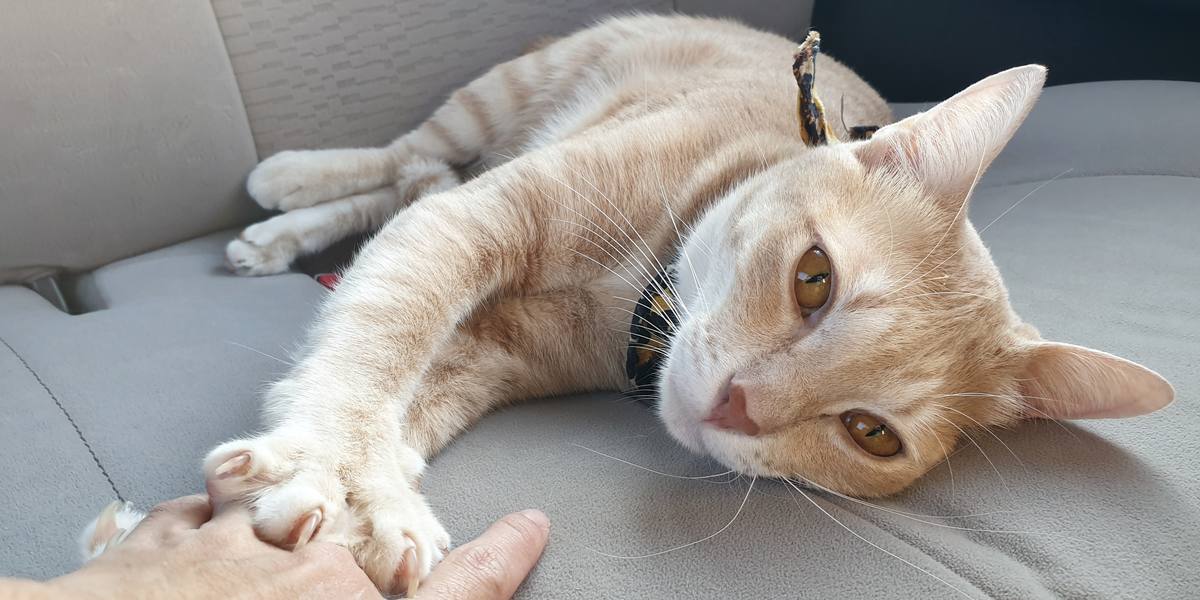
The friendly expressions appeared as closed eyes with both the ears & whiskers positioned forward on the head, according to a report from CNN. Non-friendly facial signals included ears flattened against the head, narrow pupils, & lip-licking to signal that other cats should stay away. The affiliative, or friendly, signals may be recent adaptations to cats' facial expressions due to things like cohabitation within the same home, feral colonies where multiple cats are fed & housed together, & overcrowding in heavily populated cities. As none of these would likely happen among wild cats, the research team's findings suggest that domestication likely has a huge part in how & why pet cats make so many faces.Cat body language
The body language of cats has long been heralded as the go-to language for understanding cat communication — both among feline friends & between felines & humans. Anyone who's lived with a cat has seen examples of this, including hissing, switching or tapping their tails, slow blinking, purring, & meowing, to name a few. Cats are generally solitary creatures, & many wildcat species don't really live in packs or groups in the wild. Thanks to domestication, housecats are subjected to far more cat-to-cat interaction than their wild ancestors were, which has forced them to develop more complex ways of communicating with one another. Because domesticated cats live in such close proximity to people, it's not out of the question that they've adapted to communicate in similar ways that we do, as evidenced by their preference toward people who use so-called "baby talk" when addressing them.
The bottom line
Domesticated cats can make up to 276 distinct facial expressions, & more than half of them are used to form positive & productive social bonds with other cats around them. Examples of friendly cat facial expressions include forward-facing whiskers & ears, & closed eyes, or eyes that blink slowly, which suggests that a cat is comfortable with those around them. While there's still more work to be done in the area of understanding cat communication, this research makes huge strides in measuring the effects of domestication on our feline friends.
Read More: https://www.cuteness.com/13778868/cat-facial-expressions-explained/
Cute Critter Pics:


/cat-on-bed-629219532-591322493df78c92832645b9.jpg)


:max_bytes(150000):strip_icc()/headshot-of-rottweiler-678833089-5873e32f3df78c17b60f57a6.jpg)
:strip_icc()/bulldog-4584344-hero-8b60f1e867f046e792ba092eec669256.jpg)










/Mustela_nigripes_2-5b5ddc9946e0fb0025dd3626.jpg)


/7789894772_027b57f7ba_o-56a2bcdc3df78cf77279608f.jpg)
.jpeg)


.jpeg)
.jpeg)