Wednesday, October 29, 2025

Oct. 29/2025

                           
What Do Deer Eat, & Should You Feed Them?

By Katrina Eresman. Reviewed by Courtnee Morton, DVM, CVA, CVC

9/23/2024

Many people know the joy of spotting a deer in the wild, but not many people know about a deer’s diet & routine. So, what do deer eat? And can you feed them & make them the next addition to your animal-loving family?

Here’s what the experts have to say about deer diets, eating habits, & whether humans should play a part in securing a deer’s next meal.

What Do Deer Eat?

Deer are herbivores that browse rather than graze, meaning they eat parts of woody vegetation that are off the ground. This includes:

- Flower buds & blooms

- Bark, twigs, & branches

- Seasonal weeds

- Invasive plants, including multiflora roses

- Landscaping plants, such as hostas

Because they are prey animals & grazers, deer often keep moving as they eat, says Ame Vanorio, founder & executive director of Fox Run Environmental Education Center in Middleton, Wisconsin.

According to Vanorio, deer are extremely adaptable animals, & their diet varies depending on the region. Whether they’re living in an urban area or an arid climate, deer can usually find the nutrients needed to sustain them. 

“The categories [of plants] are the same, but species change,” says James C. Kroll, PhD, professor emeritus of forest wildlife management at Stephen F. Austin State University in Nacogdoches, Texas. For example, a deer might eat the leaves from thorny bushes in South Texas & Mexico, he says, but go for the stems of a similar shrub in the Northern U.S.

Should You Feed Deer?

If you’re wondering what to feed deer, the best answer is to let deer feed themselves.

“Unless you are managing deer herds,” Kroll says, “there is no reason to plant for them or feed them to come to your property.”

Luring deer to your property with food is a quick way to see your garden or landscape plants being eaten. “Deer love landscape plants,” Kroll says, & they won’t distinguish between what you put out or plant for them versus what you plant for your own enjoyment.

Vanorio also says that feeding deer can be dangerous for both humans & the deer.

Although a young male deer can be very cute, an adult male deer is much stronger. They may get used to getting their food from a human & could become aggressive when they start to expect it. And if a deer harms a person in their attempt to get food, an organization like the U.S. Fish & Wildlife Service will likely respond with euthanization. 

“What I often tell people—which might be a little bit blunt—is a fed deer is a dead deer,” Vanorio says.

Can You Have a Pet Deer?

As much as some animal-lovers may dream of keeping a deer as a pet, these are animals that should remain wild. Vanorio says it’s even illegal in many states to keep deer unless you have a permit. It’s also not advisable to attempt domesticating a deer, as they may become unhappy or aggressive if kept in captivity.

“Deer are wild animals & there is no need to tame them,” Kroll says. Instead, he recommends observing them from a distance.

The most common deer feeding times are around dawn & dusk, so keep your eyes peeled then. “Many people derive joy from watching their deer year after year, even naming some,” he says.

How To Keep Deer Out of Your Yard

However, if you want to keep deer from treating your garden like a buffet, both Vanorio & Kroll say a tall barrier is the most effective option. Kroll recommends lightweight polypropylene netting at 6–7 feet high, & Vanorio says a fence that leans inward is even better.

“A deer can jump straight up & go over 6 feet, but a deer cannot jump up & wide in the same jump,” she says.

You can also discourage deer from eating your garden by planting things they don’t prefer, Vanorio says, such as lavender or lamb’s ear. When that’s not an option for you, applying deer repellent to your plants can help, too. 

Deer are also known to snack on food left out for other wild animals. If you’re a bird watcher whose bird feed is getting stolen by deer, try upgrading to a squirrel-proof bird feeder that can also keep deer snacking at bay.  

What Do Deer Eat, and Should You Feed Them? | PetMD

Cute Halloween Critters: 


Scary Chuckle:

Slava Ukraine!


Wednesday, October 22, 2025

Oct. 22/2025


10 Facts About Black Cats You Probably Didn't Know

By Sanaphay Rattanavong  

10/12/2024 

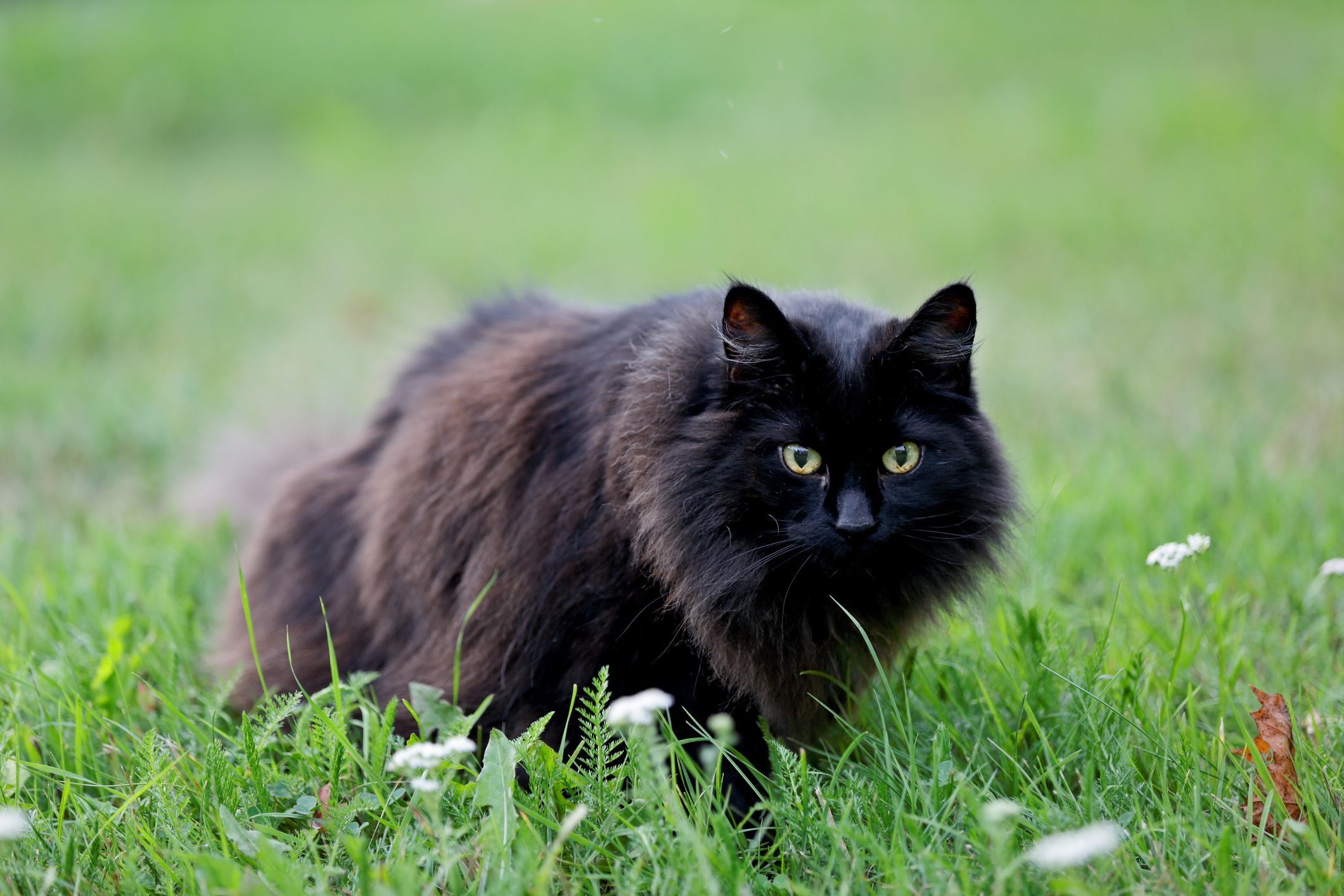
Many people think of black cats as unlucky or associate them with witches & Halloween — images less rooted in fact than superstition & cultural bias. Black cats, despite their association with bad luck in some cultures, are actually considered lucky in certain parts of the world. You may already be aware that the ancient Egyptians revered cats of all colors, including black ones, as sacred animals with mystical powers. Indeed, their status ascended to that of symbols of the divine, offering protection, & companionship even beyond this earthly existence & into the next life.

Black cats continue to fascinate & bedevil (in the best ways) us to this day. For example, did you know that their fur has a unique ability related to light absorption & reflection due to excess melanin? These felines have many fascinating characteristics, some of which go beyond fur-deep, that might surprise you. Curious to learn more? Here are some surprising facts about black cats you probably didn't know.

1. Only one cat breed is always black

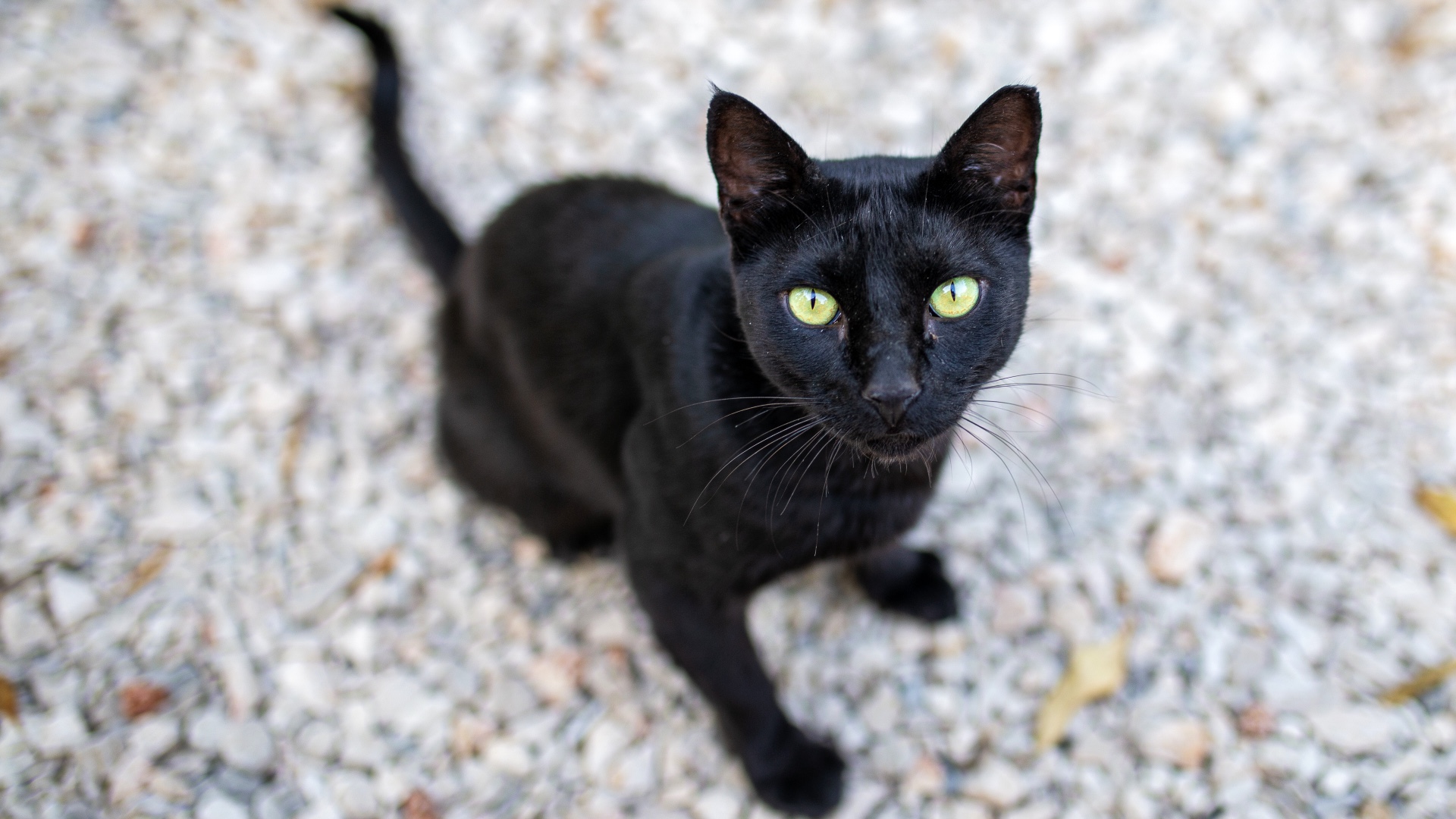
While there are 22 recognized cat breeds that can have solid black coats, the Bombay stands out as the only breed that is always black. This unique characteristic sets the Bombay apart from other black-coated felines & makes it distinctive & beloved.

The origins of the Bombay can be traced back to the 1950s. It was created through a carefully planned breeding program by Nikki Horner, a Kentucky-based cat breeder. Horner aimed to combine the sleek, muscular body of the American shorthair with the striking black coat of the sable Burmese. The first successful crossbreed of the Bombay occurred in 1966, & the Cat Fanciers' Association officially recognized the breed in 1970.

The Bombay's appearance is reminiscent of a miniature black panther. It has a sleek, compact body with well-developed muscles & a rounded head. Its most distinctive feature is its glossy & dense jet-black coat. The breed's coat is so dark that it appears to absorb light, giving it an almost mystical aura. In addition to its striking appearance, the Bombay breed is known for its unique characteristics, including its affectionate & outgoing personality. These cats are incredibly social & crave human interaction. They are often described as "Velcro cats" due to their love of being held & cuddled. Bombays are also highly intelligent & curious, making them excellent companion animals for people of all ages.

2. Their coats can change color

It might come as a surprise, but a black cat's fur can change color from sitting in the sun. This happens because the sun's UV rays break down the pigment, eumelanin, which gives the fur its black color. As the eumelanin degrades, the fur loses its ability to absorb light efficiently, causing it to lighten into a reddish-brown hue. The extent of this rusting effect varies depending on the cat's genetics, health, & the duration of sun exposure. In some cases, the fading occurs gradually; in others, it can happen more quickly, especially if the cat spends long periods in direct sunlight.

Beyond sun exposure, another reason for a black cat's fur changing color is a deficiency in tyrosine, an amino acid needed to produce eumelanin. If a black cat's diet lacks enough tyrosine, its fur can fade. Adjusting the cat's diet or providing tyrosine supplements can help restore the dark color.

While these factors are the most common causes of fur fading, significant changes in coat color can sometimes signal underlying health problems, such as liver or thyroid issues. If your cat's fur changes dramatically, it's wise to consult a veterinarian. It's also important for cat owners to be mindful of sun exposure since overexposure to UV rays can pose health risks, including skin cancer. Providing shaded areas & limiting time in direct sunlight, especially during peak hours, is key to keeping cats safe & healthy.

3. Not all black cats have yellow eyes

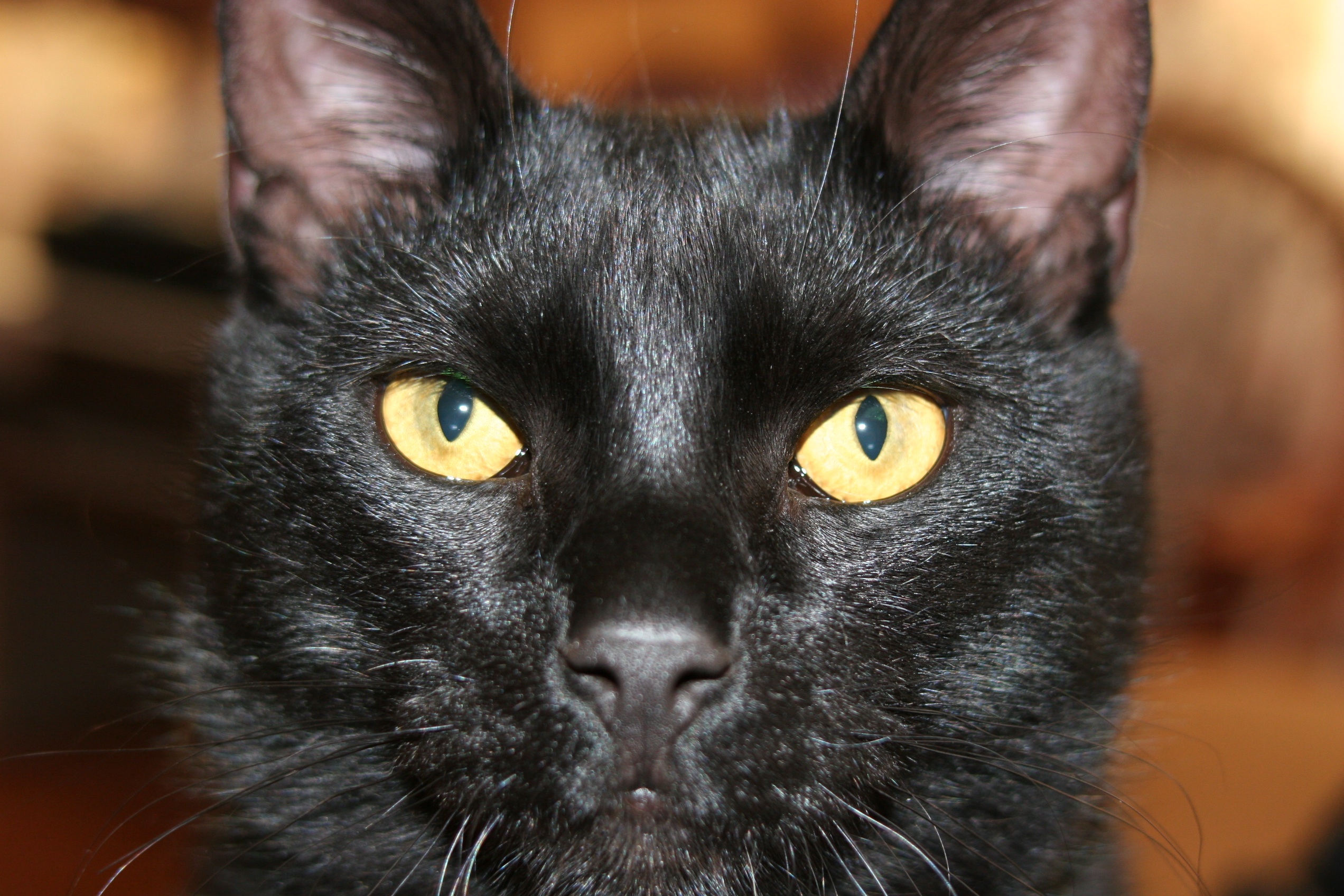
There is a common misconception that all black cats sport yellow peepers. However, the same pigment responsible for their black fur, eumelanin, also influences their eye color. As such, black cats can have a range of eye colors, including yellow, gold, orange, copper, or green.

High levels of eumelanin in black cats typically result in both black fur & warm-toned eyes like yellow or orange. The gene responsible for black fur is dominant, so if a cat inherits it, the black coat is likely to be paired with these eye colors. While rare, some black cats can have blue eyes, a trait seen in the breed ojos azules (Spanish for "blue eyes").

4. Black cats are not evil or unlucky

Throughout history & across cultures, black cats have been seen as both lucky & unlucky, with negative perceptions largely based on fear rather than fact. In medieval Europe, they became linked to witchcraft. Black cats were thought to be witches' familiars or even witches in disguise, leading to their persecution. Some theorize this contributed to the spread of the bubonic plague, as killing cats reduced rodent control.

In contrast, black cats were seen positively in other contexts. British sailors believed black cats brought good luck on ships, helping ensure safe voyages by keeping rodents in check. Fishermen's wives also kept black house cats, believing they would protect their husbands at sea. In Japan, black cats are considered lucky, especially in love, as they are thought to attract suitors to single women. Similarly, Scottish folklore views a black cat on the doorstep as a sign of prosperity, while in France, black cats are called "money cats" & are associated with financial fortune.

5. Black cats are less likely to be adopted

Black cats, long shrouded in superstition & myth, continue to be associated with bad luck, witchcraft, & misfortune. Sadly, spurious alignment has had a profound impact on their adoption rates in shelters, according to a 2020 study. Compared to cats of other colors, black cats tend to linger in shelters, waiting longer for their forever homes. Unfortunately, the stigma against black cats is real & persistent. This unfair bias makes it harder for black cats to find their human families, despite the fact that their fur color has no bearing on their personalities or behavior.

Animal welfare organizations, such as the American Society for the Prevention of Cruelty to Animals, are working to combat these negative stereotypes through education & awareness campaigns that promote the adoption of black cats. By challenging these myths, they aim to give black cats an equal chance at being adopted & loved. 

One place actively changing this perception is Nekobiyaka Cat Cafe in Himeji, Japan, the world's first & only cafe dedicated exclusively to black cats. Since opening in 2013, Nekobiyaka has helped black cats find forever homes, offering them a second chance & helping to break the stigma. Even during the struggles of the COVID-19 pandemic, the cafe continued its mission with the help of donations. Inside the cafe, each black cat wears a colorful bandana, allowing guests to tell them apart while watching them explore their thoughtfully designed environment.

6. Some black cats have hidden 'ghost markings' that come to light

Many black cats conceal subtle tabby patterns beneath their dark coats, a phenomenon known as "ghost markings." These faint stripes or spots become visible under certain lighting conditions, such as bright sunlight. This occurs because the gene responsible for black fur doesn't always completely suppress the tabby pattern gene, allowing these hidden patterns to emerge.

Understanding these markings provides insight into feline genetics & the complex interplay between coat color & pattern expression. Genetically, all cats carry the tabby pattern, but in black cats, the expression of this pattern is often subdued or completely masked. These markings come in 4 main varieties: ticked, mackerel, blotched, & spotted. They are typically more noticeable in kittens & may fade as the cat matures, though some adult black cats retain them throughout their lives.

7. The gene that makes cats black may also make them more resistant to infections

Black cats possess genetic traits that could offer valuable insights into disease resistance, particularly through the lens of CCR5, a gene crucial to immune responses. The melanism gene, responsible for their striking black fur, has been linked to enhanced immunity. Studies suggest that this gene provides resistance to diseases, such as feline immunodeficiency virus (FIV), echoing evolutionary patterns of pathogen resistance observed in other species.

Further research underscores CCR5's pivotal role in regulating immune responses. This gene facilitates macrophage recruitment, a key process in fighting infections & maintaining immune balance. CCR5 also influences the migration of memory CD8+ T cells, which are essential for long-term immune defense. These functions illustrate CCR5's importance in protecting against diseases, not just in humans but potentially in other species, including black cats.

The therapeutic potential of CCR5 further enhances its possible scientific significance. Advances in gene editing, particularly CRISPR/Cas9 technologies, have demonstrated CCR5's value in treating diseases such as HIV. These developments pave the way for exploring how similar interventions could be applied to felines, further illuminating novel interventions in humans & offering possibilities for cross-species studies into immunity & disease resistance.

8. A fairy creature takes the form of a black cat in Celtic mythology

In Celtic mythology black cats are often linked to the enigmatic figure of the Cat Sìth (or Cait Sidhe in Irish). This supernatural creature is typically depicted as a large black feline with a white spot on its chest. Legends describe the Cat Sìth as a fairy or, in some versions, a witch who could transform into a cat 9 times — possibly giving rise to the popular belief that cats have 9 lives.

The Cat Sìth is central to many superstitions, blending protective & ominous qualities. In Scottish folklore, it was feared as a soul-stealer, capable of claiming a person's soul by passing over their corpse before burial. To guard against this, communities would hold the Fèill Fhadalach, or "late wake," a vigil kept around the clock to ensure the Cat Sìth would not approach the deceased.

On a more benevolent note, the Cat Sìth played a role in Samhain traditions, a Celtic festival marking the precursor to Halloween. It was believed that the Cat Sìth would bless households that left out a saucer of milk, which in turn ensured that the family's cows continued to produce. However, those who failed to offer this gesture risked being cursed, with their livestock's milk drying up.

9. Black cats have long served as literary & political symbols

Black cats are a source of fascination in literature, representing themes of mystery, magic, & rebellion. In Edgar Allan Poe's "The Black Cat," Pluto serves as both victim & avenger, embodying guilt & karmic justice in a tale of psychological unraveling. Eiko Kadono's "Kiki's Delivery Service" features Jiji, a witty, talking black cat whose role as Kiki's confidant highlights the balance between independence & companionship in a magical coming-of-age story. Similarly, T.S. Eliot's "Old Possum's Book of Practical Cats" introduces Demeter, an elegant & clever black-&-gold feline who unmasks the notorious Macavity, reflecting the charm & mischief often associated with black cats.

One of literature's most memorable black cats is Behemoth from Mikhail Bulgakov's "The Master & Margarita." A demonic feline with a taste for chaos & gatling guns, Behemoth walks on 2 legs, speaks, & transforms into a human. His love for mischief, vodka, & satire makes him both a humorous & fearsome figure, embodying unpredictability & mayhem. His layered identity, referencing both the Biblical monster Behemoth & the Russian word "begemot" (hippopotamus), underscores the complex cultural resonance of black cats in literature.

Beyond fiction, black cats carry political symbolism, particularly in anarcho-syndicalism, a branch of anarchism focused on labor organizing. In the early 20th century, the black cat became an emblem of rebellion & resilience, tying the feline's independence & resourcefulness to collective struggles for justice. This political association adds depth to the mystique of black cats, linking them to themes of defiance & solidarity.

10. Black cats are particularly hard to photograph

Photographing black cats can be challenging due to their dark fur, which absorbs light & obscures fine details. This often confuses a camera's auto-exposure settings, leading to underexposed or washed-out images. Despite these challenges, employing the right techniques can reveal the unique beauty & personality of black cats.

Lighting is a key factor in achieving compelling photographs. Soft, diffuse light, such as natural daylight or illumination from a lamp, minimizes harsh shadows & stark contrasts. Shooting during the golden hour, just before sunset, provides ideal lighting conditions for photographing black cats. Adjusting camera settings can also enhance your results; underexposing the shot slightly helps maintain the richness of black fur. Additionally, avoiding flash is important to prevent unnatural reflections or the dreaded "green eye" effect, which can detract from the natural appearance of your furry subject.

Careful attention to composition ups the quality of black cat photography. Clean, clutter-free backgrounds help the cat remain the focal point, while mid-toned settings, such as grass or curtains, provide effective contrast. Alternatively, black-on-black compositions can create striking artistic effects, emphasizing the fur's texture. To highlight the cat's facial features, especially the eyes, positioning them to face a natural light source is essential. Rim lighting, created by placing a light source behind & slightly to the side of the subject, can add depth by outlining the fur's edges. Finally, subtle photo editing adjustments to highlights, shadows, & contrast can enhance the overall image without overwriting that authentic, fur-some look.

Read More: https://www.cuteness.com/1683979/facts-black-cats-probably-didnt-know/

Scary Critter Pics:


Weekly Chuckle:

Slava Ukraine!!! 


Wednesday, October 15, 2025

Oct. 15/2025


Presumed Extinct: World’s Smallest Otter Found in Busy Nepal River After 186 Years without a Sighting

By Andy Corbley 

3/31/2025

Though officially classified as vulnerable, no credible sighting of the Asian short-clawed otter, the smallest species of its kind, has been made in almost 200 years.

So when forestry officials in Nepal found an injured, juvenile otter at the confluence of 2 major rivers last November, they never imagined that their actions might determine the fate of the world’s smallest otter.

Fortunately, they sent images to the scientific community in the region, who realized that the animal had reappeared, having not been seen since 1839.

“The sighting of an Asian small-clawed otter after 185 years is a remarkable discovery for conservation in Nepal, ending concerns that the species may have been extinct in the country,” said a note from the IUCN’s Otter Specialist Group.

“The sighting highlights the need for detailed study of the status of this species in Nepal & urgent implementation of conservation initiatives.”

This small member of the Lutrinae subfamily measures 28.6 to 37.6 inches long & weighs in at a maximum of 7.7 lbs. Its claws, as the name suggests, are short & don’t grow past the pad on its webbed feet.

Occasionally reported living in Makalu Barun National Park, Nepal, the juvenile was found along the junction of the Rangun Khola river & its feeder stream, the Puntara Khola, in the far west of the country. The river was tranquil after the monsoon rains, & plenty of space along the banks was occupied by sand & gravel miners, bathers, clothes-washers, & fishermen.

“As it was found in a fragile & injured state, the forest officers decided to feed & nurse it, but they didn’t know which species it belonged to,” Mohan Bikram Shrestha, lead author of the note, told Mongabay.

The forest officers, led by Rajeev Chaudhary, shared the images of the creature with the Shrestha & the specialist group, which helped them identify it.

“Otters are resilient to highly modified anthropogenic landscapes, flexible in habitat selection, and able to recover from low numbers,” the conclusion on the note added. “Nevertheless… a timely conservation effort for this exceptionally rare species, a keystone aquatic mesocarnivore, is now urgently needed in Nepal.”


Cute Critter Pics:


Weekly Chuckle:

Slava Ukraine!


Thursday, October 9, 2025

Oct. 8/2025


A Low-Maintenance Gecko Breed Known For Its Coloration Can Live Up To 20 Years

By Adam Symchuk   

4/8/2025 

Jumping into the world of reptiles can be challenging, as everything from their day-to-day needs to their environment & food drastically differs from those of more popular pets. Yet, welcoming a reptile like a gecko into a home can create a unique bonding experience & the chance to observe how it grows & adapts to its environment. For new reptile owners, choosing a more low-maintenance option is often recommended, & one of the most popular choices is the leopard gecko, which gets its name from the leopard species of cats thanks to their shared color patterns.

The leopard gecko's reputation for being low-maintenance comes from various reasons, starting with its cool, gentle, & calm demeanor. It also grows to be manageable for most new owners, around 7 to 10 inches. Feeding a gecko is also minimal; their diet consists of live insects, & they only need to be fed a few times a week. Additionally, managing an enclosure can often be done with spot-cleaning every day days & a thorough cleaning once a month.

With proper care, the leopard gecko can also be a long-term companion. In captivity, a leopard gecko lives between 10 & 20 years. While determining the age of a gecko after reaching full maturity can be challenging, the oldest living leopard gecko on record is Gertrude from Germany, who is said to be over 40 years old & still kicking at the time of writing. With its potential longevity & low maintenance, the leopard gecko can be a perfect longtime companion & provide the first steps toward an owner becoming a gecko enthusiast.

The importance of health & care in a leopard gecko's longevity

Geckos might be low-maintenance, but they still require proper care. For instance, geckos need ample space despite their small size. For an adult, a 20-gallon aquarium with a range of temperatures to suit their needs is recommended. Flooring should consist of materials that are easy to clean & not typically ingested by geckos, such as paper towels, newspapers, or reptile carpet. Moreover, proper hiding places & clean spaces will help create a positive environment. Then, when it comes to food, which is typically insects, it needs to be purchased instead of found in the wild to avoid any potential toxicity.

In addition to conditions that geckos can be predisposed to, such as anorexia, bacterial infections, & Metabolic bone disease, trauma can have long-term effects. Trauma can include a gecko being attacked by other pets, losing its tail after being held by its owner (never hold it by its tail), or falling from heights.  Proper handling & staying aware of potential health concerns will allow lizard parents to recognize when medical follow-up is needed. This can include decreased appetite with weight loss, lesions or swelling on the skin, lethargy, difficulties breathing, or diarrhea. If in doubt because of unfamiliarity with a lizard companion, contact a veterinarian to see if an appointment is necessary.

Catering to a leopard gecko's needs will help ensure longevity & good health, not to mention plenty of time to snap photos to share with other reptile pet lovers online. Ultimately, preparation & research remain essential in building that happy home for your new adorable reptile companion that may be a decades-long friendship.

Read More: https://www.cuteness.com/1825911/how-long-do-leopard-geckos-live-low-maintenance-pets/

Cute Critter Pics:


Weekly Chuckle:

Rest in Eternal Peace

Slava Ukraine!


Wednesday, October 1, 2025

Oct. 1/2025


Can Cats Understand Words? How Many Words Can Cats Understand?

By Katrina Eresman. Reviewed by Hannah Hart, DVM

Updated 11/ 11/ 2024


Your feline friend might not give you attention when you call their name, but that doesn’t necessarily mean your cat doesn’t recognize some significance in what you’re saying. But can cats understand words?

There is evidence that cats are aware of their pet parents’ communications (even if they choose to ignore you). And while cats will never fully grasp human language, you might be able to use pieces of language to communicate with your cat.

Below, experts weigh in on cats’ relationship to language & whether it’s worthwhile to train your cat to understand what you’re saying.

Can Cats Understand Words?

Experts have concluded that cats recognize their own name, & research from 2022 suggests cats also know the names of their fellow cat companions. But can they understand other words as well?

“I think that if cats can recognize the names of other cats, there is no reason they wouldn’t be able to recognize other words,” says Laura Cassiday, CCBC, owner of Pawsitive Vibes Cat Behavior & Training in Baltimore. “I know my cats definitely know what ‘treat’ means!”

But this doesn’t mean cats actually grasp human language, says Kristiina Wilson, MA, CCBC, owner of Cattitude Adjustment, a cat behavior service. Instead, cats learn to understand words through something called associative concept training.

By using positive reinforcement such as treats, you can teach your cat to associate the sound of certain words with a specific activity. And by recording words onto pet buttons & associating the activity with a specific button, you can also teach your pet to “talk” to you.

For instance, you might be able to teach your cat to associate the word “food” with getting fed. And through button training, you could teach your cat to press a button that triggers the word “food.”  

“There’s no way to directly understand what they think it means,” Wilson says. However, by teaching your cat to attach meaning to cue words, you develop a way to communicate with your kitty—& you get to spend quality time with them in the process.

“Giving them a choice & giving them the ability to control their surroundings & ask for what they need is super helpful,” Wilson says.

How Many Words Can Cats Understand?

If it’s possible to teach cats to recognize words, you may have questions about the potential of associative concept training. Is it easy to teach? Which words work best? And how many words can cats understand? 

Unlike with dogs, there’s no conclusive research to indicate the maximum number of words a cat could learn to recognize. Cassiday notes she’s had cats who knew between 10 & 15 cue words.

Ultimately, the number of words you can teach your cat depends on how many cues you wish to use in daily life.

Common Words Cats Can Learn

Because cats learn words by associating a sound with an experience rather than by definition, there are really no rules about which words cats can & can’t learn. As long as you’re consistent with your training, you can teach your cat a word for almost any activity.

“They are very aware of cues that predict things happening,” Cassiday says. “So if you happen to say a word frequently before doing something they care about, like feeding them or giving them their medication, they’re going to learn it.”

Some common words that might be useful to teach your cat include:

Play

Catnip

Treat

Water

Walk

Off

Cassiday suggests avoiding negative cues like “no” or “stop,” which might be too complex for a cat to understand. “A better idea would be teaching the cue ‘off’ or ‘down’ if you don’t want them on the table,” she says.

Your body language & how you say each word matters too. “It's more about your tone & inflection rather than the exact right word,” Wilson says. 

How To Teach Your Cat New Words

Teaching a cat a new word takes time, but how much time depends on the cat & your training techniques. Cassiday says sometimes just saying the word each time you do the action is enough to create the association in your cat’s mind.

If you want to teach your cat to communicate with you using talk buttons, Wilson suggests modeling training, in which you demonstrate what you’d like your cat to do:

1. Pick a motivator to start with, like playing.

2. Push the corresponding button before you perform the behavior. Make sure your cat sees you do this.

3. In most cases, cats will begin to approach & push the button themselves. When they do, Wilson suggests using high-value reinforcers, like treats, to reward your cat for their behavior. 

“If they’re interested in doing this, they will make that association between the button push & the activity,” Wilson says. 

Clicker training can also help to teach your cat new words, but Wilson suggests starting with button training first, as it’s less of a learning curve.

She also says that not all cats want to train, & not all cats will make it obvious they understand you. Patience is key when working with a cat on a new skill.

Ultimately, your cat will appreciate any time you spend engaging with them, & doing so will strengthen your bond with your feline fur baby.

Can Cats Understand Words? How Many Words Can Cats Understand? | PetMD

Cute Critter Pics:


Weekly Chuckle:

Slava Ukraine!