Expert Tips To Help Your Dog Live Longer
By Lisa Maloney
4/ 6/ 2025

Let's set the stage: A 2023 study published in Frontiers in Veterinary Science showed that the average life expectancy for dogs is just over 12.5 years, although that span can vary widely based on a number of factors, including breed, size, & body weight. No matter what lifespan fate serves to your pup, any dog owner will tell you that it's nowhere near enough time with your furry best friend.
When the moment of parting does come, the most-precious gift you can give your dog is to be present with it & ensure it doesn't suffer. But with a little forethought, you can give yourself a gift, too: the certainty that you've done everything you could to extend your dog's life & good health. Although you can't turn back the hands of time, you can get an early start on some or all of the following 13 science- & expert-backed tips that have the potential to expand your pet's lifespan — sometimes by years.
Brush your dog's teeth every day
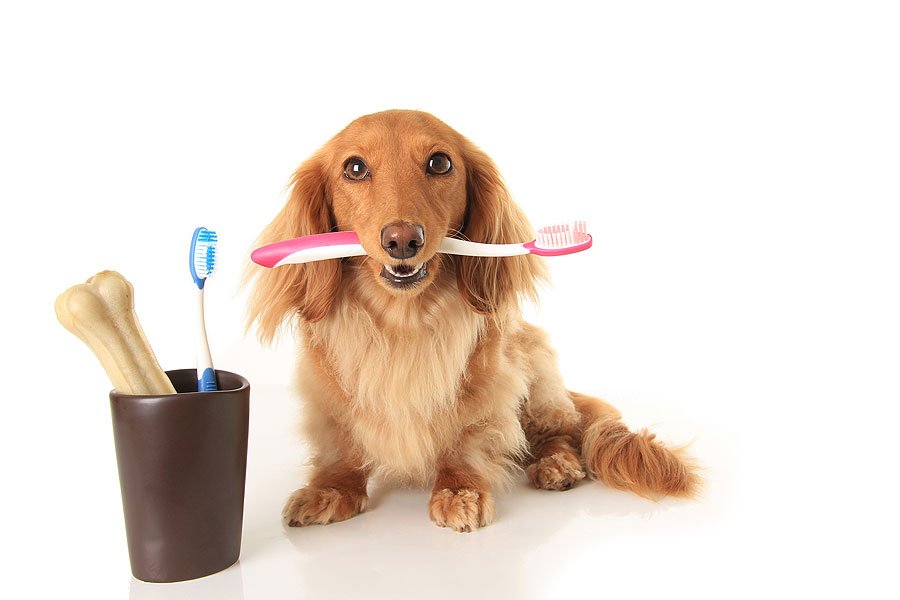
Given the way that dental & oral disease can impact a human's quality of life, it's no surprise that it can have the same effect on dogs. And although brushing your pup's teeth probably isn't the first thing that comes to mind when you imagine living with a dog, it may be one of the most-impactful things you can to do preserve its health & extend its lifespan.
"Brushing a dog's teeth can increase a dog's lifespan by about 20 %," veterinarian Jody Berquist explained to Rocky Kanaka. Dental chews can help maintain your dog's oral health, but they aren't a substitute for regular brushing, which can even reduce your dog's risk of heart disease & complications from other health conditions it may have.
"I like to combine brushing with a positive reinforcement," Barry L. Rathfon, DVM, told Fetch by WebMD. Dr. Rathfon suggests brushing your dog's teeth "just before a meal," in which case the meal itself serves as the positive reinforcement. If you're dealing with a dog who has to eat on a strict schedule, you could substitute some playtime or affection for the food. As always, the key is to meet your dog where it's at & provide the sort of reward that really helps it build a positive association with the tooth-brushing experience.
Exercise your dog regularly to help it maintain a healthy weight
Another hugely impactful lifestyle choice you can make for your pooch is ensuring it gets regular exercise. This looks different for every dog: Maybe you have a turbo-powered border collie whose sole desire in life is to herd sheep — yes, recreational sheep-herding is a thing — or a mutt of indiscriminate origin who really needs a daily walk to be on its best behavior, a retriever who lives to play fetch for hours, or a small lap dog who's content with occasional games of tug.
No matter how you slice it, keeping your dog active enough to maintain a healthy weight can add years to its lifespan — up to 2 & a half, according to a 2018 study published in the Journal of Veterinary Internal Medicine. The really great news is that, per a 2024 study published in the Journal of the American Veterinary Medical Association, learning about the potential effects of obesity in dogs was the number-one factor that spurred pet owners to take action.
"Find an activity you & your dog both enjoy & work it into your daily routine," veterinarian Dr. Kim Smyth explained in discussion with PetMD. The options are myriad, from regular walks, hikes, or runs to playing fetch or even taking up canine-specific sports like flyball or scentwork. Or, just take your dog along for your favorite outdoor activities; you might be surprised by how much activity it will get, & it'll love spending time with you.
Take it easy with short-nosed breeds
Although exercise is good for all dogs to a degree, it's easy to unintentionally overdo it with brachycephalic (short-nosed) dogs, whose short nasal passages can cause problems with their breathing. This anatomically-induced respiratory distress so common that it has a name — brachycephalic respiratory syndrome — & can be exacerbated by exercise or in hot conditions, where your dog's shorter nasal passages make it harder for it to cool off.
"Brachycephalic dogs are at greater risk for heat-related illness, presumably due to the structure of their respiratory tract," explained Michael Davis, DVM, in a chat with Purina Pro Club. That shortened respiratory tract also comes into play when traveling with your pet, whether internationally or not & even if it has a valid passport, posing enough heightened risk that some airlines have banned brachycephalic breeds entirely.
If you know you have air travel in your future, you might want to take that into account before adopting a short-nosed breed, as cute as it may be. Or, if your travel suddenly arises, put as much advance planning as you can into how to accommodate your brachycephalic pet. Sometimes, you can arrange to travel by land or even sea instead or find an airline that will allow your dog in the cabin if it's small enough.
Take your dog to the vet regularly
:strip_icc()/portrait-of-veterinary-nurse-with-dog-on-table-in-veterinary-surgery-159615213-406f17f065c3494289dbde74a26eaba1.jpg)
Just as with humans, catching a dog's chronic, hereditary, or age-related health conditions early gives you the most options for treating it & maintaining a good quality of life, so it's important to maintain a regular schedule of preventative care visits, even if nothing seems to be wrong in the moment. It can be tempting to put those visits off if you're living on a tight budget, pressed for time, or have a dog that simply doesn't like going to the vet, but your dog ages much faster than you do, so significant health conditions can crop up in a matter of 3 to 6 months. Your dog also doesn't have the ability to tell you when something feels off, so regular exams from an astute veterinarian is one of the best possible tools for catching issues early.
"A lot of times we'll get age-related diseases that can be managed & the sooner you catch them, the better managed they are & the longer [your dog] can live," veterinarian Nicole Savageau told USA Today. Veterinarians recommend that dogs get preventative health screenings at least once a year, with twice a year being even better if you can swing it.
Microchip your dog, & make sure the microchip is registered

Few scenarios will make your heart drop into your stomach faster than realizing that your dog has gone missing. Maybe it slipped out of a door when you weren't watching, got away from a pet sitter, or managed to dig under or leap over the fence. This is especially an issue with breeds like the husky, which are famous for their escape-artist agility & intense desire to roam. There's a lot you can do to keep dogs like huskies safe in the backyard, but slip-ups & clever escapes do happen. In that scenario, the number-one thing you can do to help is to have previously gotten your dog microchipped.
"Even the best dog collars & ID tags aren't permanent forms of identification—they can be lost or altered. That's why microchips for dogs are so important," Sarah Wooten, DVM, wrote for PetMD. And they really do work: A 2009 study published in the Journal of the American Veterinary Medical Association showed that microchipping resulted in significantly improved rates of owner recovery for dogs that ended up in a shelter. Just make sure your microchip registration is updated with your current phone number.
Adopting a smallish mutt may give you more time with your dog

If you're looking to adopt a dog, consider adopting a mutt that descends from a mixture of multiple breeds. Numerous studies have found that smaller dogs generally live longer than large ones, & many studies have also found that mixed-breed dogs live longer than purebreds, perhaps because they benefit from hybrid vigor. There have been some mixed findings in regard to the health of mixed-breed dogs vs. purebreds, but that theory correlated with the findings of a massive cohort study of more than 2.3 million dogs, published in a 2019 issue of the Journal of the American Animal Hospital Association. In that study, researchers found that mutts live longer than purebreds, although the difference in lifespan narrowed as dog size increased.
"Sometimes [mixed-breed dogs] actually do a lot better because some of those recessive genes are bred out of them," veterinarian Nicole Savageau told USA Today. Dr. Savageau also pointed out that the inverse can happen: Sometimes, an unlucky dog might end up with many or all of the health conditions associated with its various purebred ancestors. Overall, there's no telling what health conditions might arise, but if you boil it down to a numbers game, smallish mixed-breed dogs often have better odds of staying healthier longer.
Spay or neuter your dog to give it its best chance at a longer life

Nobody loves the idea of having some of their pet's innards gratuitously snipped out, but when you take a hard look at the numbers, having your dog spayed or neutered is far from gratuitous. If the heartbreaking facts about animal overpopulation — with about 2.7 million being euthanized in shelters every year — don't grab your attention, consider that in the aforementioned 2019 study published in the Journal of the American Animal Hospital Association, there was a clear correlation between unaltered dogs & a higher likelihood of death.
To put it another way, spayed & neutered dogs are likely to live about 20% longer than their un-fixed peers. That makes fixing your dog early the best choice, although if you're considering spaying or neutering an older dog, there are a few additional considerations in play. Either way, your vet is an ally who can help you make the best choice for your dog's health & potentially increase its lifespan in the act. Bob Barker would be proud.
Follow your veterinarian's recommendations for preventative care

Speaking of veterinarians as allies in the battle to preserve your dog's health, it's worth listening to their advice about preventative care like vaccinations, heartworm medications, & flea or tick treatments. After all, few things are as heartbreaking as losing a pet to something like rabies or parvovirus that could have been easily prevented.
Parasites, in particular, can be far more prevalent in everyday life than we realize. Consider a 2020 study published in Parasites & Vectors that took "fresh defecations" from dog parks & found at least one intestinal parasite in more than 85% of the parks. The dogs who were on parasite preventative treatments had significantly fewer intestinal parasites than dogs not on preventative treatments. When it comes to external parasites like fleas & ticks, regular grooming can help you spot them & even increase your bond with your dog in the process.
Interact with your dog regularly to ensure good mental & emotional health
Bonding with your dog is about more than fuzzy feel-good time, although it certainly counts as that. Our dogs need mental stimulation like we do, & regular playtime & exercise can help your dog avoid dementia & cognitive decline — both of which can shorten their life & degrade the quality of the time they do have with you.
"Find an activity you & your dog both enjoy & work it into your daily routine," Dr. Kim Smyth suggested to PetMD. While we've already established the physical benefits of that increased activity, it's likely to come with mental benefits for your pup as well. It's alright if you can't be the champion pet parent always holding things down at the dog park or walking Olympian-length distances with your dog. Dr. Smyth recommends mixing up the activities with your dog, from throwing a ball to playing hide-&-seek in the house. You can also buy or make puzzle games for your dog to stimulate its problem-solving faculties & — bonus! — keep it occupied.
Feed your dog high-quality food
:strip_icc()/GettyImages-1215536561-8cd3b21533da4a199e48b1ab8560eaee.jpg)
Your dog's keen nose can probably tell it what's in its kibble or food — at least generally. To your less-sensitive sniffer, the contents of your pet's food are more of a mystery, but what you feed your dog can have a real impact on its lifespan. Let's start with the "good stuff" — table scraps that might seem like a delicious treat your pup will surely perish without. At least, that's what it'll try to convince you of once it realizes it can con you into feeding it bits of leftover human food.
However, the opposite is true. "In addition to adding extra (& unnecessary!) calories to your dog's diet, pet parents risk inducing pancreatitis by feeding their dog fatty table scraps," explained Dr. Kim Smyth to PetMD. Giving dog-specific treats too much can be an issue, too; as useful as they are for training, reinforcement, or simply making both you & your dog happy, too much of a tasty thing can lead to other problems, like obesity. "I tell owners to treat each treat like a candy bar. Would you give your child 8 candy bars a day? I'm guessing not," Dr. Sheri Brown added to PetMD.
But what about the contents of that mysterious kibble or the never-ending debate about wet food vs. dry food vs. grain-free food vs. raw food? Your veterinarian is a key ally in unraveling all of the seeming contradictions between expert advice on those subjects, but rest assured that, as long as the label on your dog's food states that the product meets nutritional levels established by the Association of American Feed Control Officials or AAFCO, your dog is eating a nutritionally balanced diet.
Putting down the cigarettes can help your dog live longer
.jpeg?trim=0,0,0,0&crop=&width=640&quality=65&enable=upscale)
Exposure to secondhand & thirdhand smoke can significantly shorten your dog's life. This is such a well-established fact that a study of almost 500 cases on this subject, some dating back into the 1980s, was published in the American Journal of Epidemiology in 1998. The study found that, unsurprisingly, dogs exposed to tobacco smoke were much more likely to develop nasal or lung cancer.
Smoking doesn't only boost the risk of respiratory cancer in dogs; there may be links to other cancers, too. For example, a 2024 study published in The Veterinary Journal found a clear link between exposure to cigarette smoke & bladder cancer in a cohort of 120 Scottish terriers.
Although there's much less scientific evidence of the effects of marijuana smoke on dogs, a number of dangerous chemicals found in cigarette smoke are also present in marijuana smoke. So, the safest choice is to simply not light up at home since your pets don't have the same options to escape smoke exposure that you do.
Socialize your dog to help it live a longer, fuller life
Keeping your dog in tip-top health is a purely physical endeavor, right? Not necessarily. Dogs are social & emotional creatures, too, & if they haven't been properly socialized, they may be destined for a stressful life. "[Poorly socialized dogs] often develop anxiety & fear-related issues, even dermatologic issues, & they don't enjoy walks in the same way," Dr. Werber explained to PetMD.
The important takeaway here is that if you've adopted a puppy or young dog, you should take it to obedience classes or arrange meet-ups with other dogs & puppies as soon as your veterinarian clears it to do so. For its safety & that of everybody else, your puppy should be fully vaccinated before going into those group environments.
If you've suddenly found yourself with a mature or older dog, that does not mean socialization is a lost cause — in fact, it's still vitally important. However, at this age, you'll need to focus on gradual introductions & forging positive connections to new stimuli, & you might want to consider choosing a qualified dog trainer or canine behaviorist to help you.
Choose a dog whose needs you can meet

A 21-year study of dogs & cats relinquished to a Danish shelter, published in the journal Animals in 2020, found that pets are most often relinquished due to owner-related concerns, such as an owner's failing health or challenges with housing, with dog owners giving "time pressure" as another reason. The most-frequent pet-related reason for relinquishment was behavior issues. In the United States, financial instability is a common reason for pet surrender, too. All of these reasons can leave an owner with an enduring question: "Could I have done better?"
There's one huge choice we can make to help avoid ever being in that situation: choosing a dog whose needs you can comfortably meet. The classic example of what not to do is selecting a working breed, like a Belgian Malinois, because you think they look cool. Those intensely engaging dogs come with a slate of equally intense needs, & if you're not able to meet them, chaos can ensue.
Although Malinois are one of the most extreme examples, the well-intentioned owner-dog mismatch is a common scenario that plays out over & over. Whether you're a first-time dog owner doing deep-dive research or a seasoned dog owner getting ready to welcome a new addition to the family, you can avoid that mismatch by following expert recommendations on choosing the right dog for you. If you're able to take a step back & objectively consider lifestyle factors like how much space you have, how much time you have for the dog, how much exercise you can provide it, & whether it'll be integrating into a household with other pets or kids, you'll steeply boost your & your new dog's odds of enjoying a long, happy life together.
Read More: https://www.cuteness.com/1826694/expert-tips-increase-dogs-lifespan/
Cute Critter Pics:

.jpeg)
.jpeg)