Cat Breeds That Live The Longest
By Adam Symchuk
1/6/2025
When it comes to chronicling the life expectancy of our purry friends, the numbers are not nearly as well-researched as when it comes to the life expectancy of their barky counterparts. Studies are limited & only cover a small portion of the 71 breeds recognized by the International Cat Association. At the same time, some sites have conflicting information. For example, some listings claim the Burmese can live anywhere between 10 to 26 years, while others show different ranges.
Recording information on cat life expectancy has been challenging, with both later-in-life care & death in the wild not as widely reported. However, there are some generally accepted facts about the feline lifespan. Notably, female cats live longer than males, with one study showing a differential of 12.51 years versus 11.18, respectively, as the recorded average. Additionally, cats that live indoors benefit from longer, healthier lives, with some sources stating that an outdoor kitty's life expectancy ranges only between 2 & 5 years due to outside hazards & diseases.
Pet parents can tell you that each cat is different, with some leaving long before expected & others brightening their lives for decades. Combining this with conflicting information & offering an accurate life expectancy of a potential or current furry friend can be difficult. However, based on one of the few studies on feline life expectancy & looking at one of the largest breed information databases on Cat Time, we have determined the cat breeds that live the longest.
Burmese
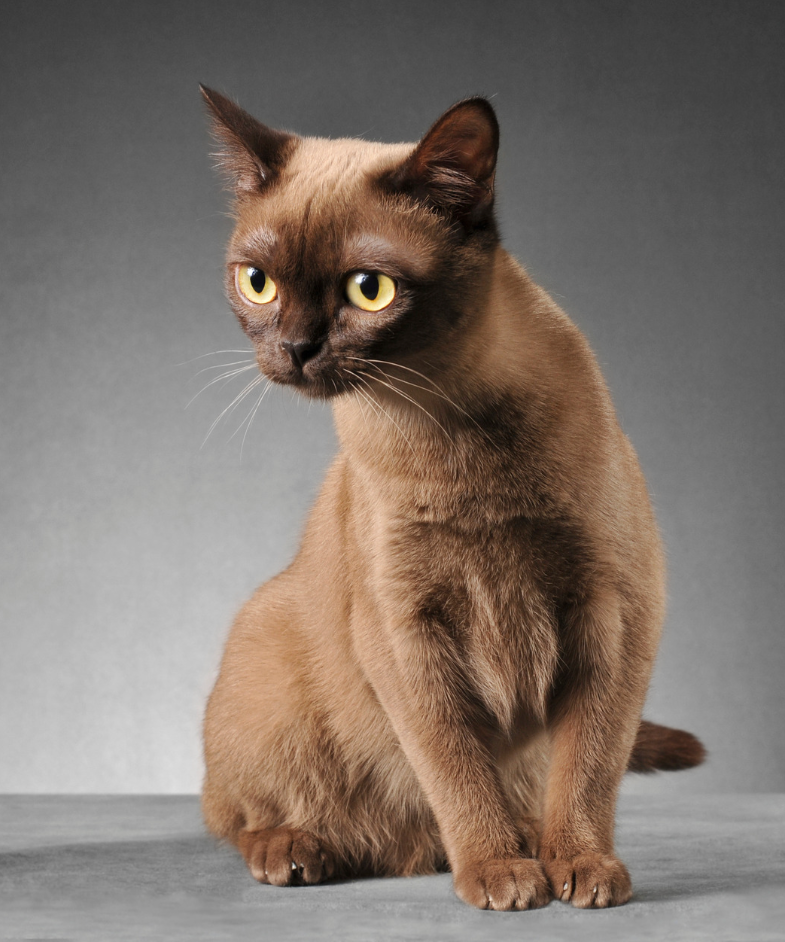
The Burmese strikes quite a pretty portrait, thanks to its beautiful brown coat & piercing yellow eyes. Getting its name from its country of origin, Burma (now Myanmar), the Burmese is a very playful & friendly feline that will fit in perfectly with a family. With low shedding & ease of grooming, the copper cutie has become a favorite of many cat parents.
While the Burmese are known for having one of the longest feline life expectancies, the breed is prone to various medical issues. Research shows they are more likely than other domestic breeds to develop diabetes, which, while treatable, may shorten life expectancy. The breed is also prone to feline orofacial pain syndrome, characterized by mouth pain that makes it difficult to eat, & hypokalemic poly myopathy, a muscle weakness attributed specifically to Burmese kittens.
Despite its health issues, the Burmese still dominates as the longest-living domestic breed. These stunning felines are reported to have an average age range of 14 years, with some reporting Burmese living into their 20s. If you are looking for a long-term companion, this kitty is more likely to live a long, full life.
Birman
The Birman is one of those kitties you can't help but want to pick up & cuddle. The long hair breed is super soft to the touch, with beautiful blue eyes that are so charming. These felines also originally came from Burma, but temperament-wise, they are slightly different from their Burmese cousins. While playful & affectionate, these cats love to lounge & take in the scenery. These fluffy cats are constantly present & often vocal about their various cat plans.
Per the U.K. study, this breed has an average lifespan of 14.3 years. This average is slightly higher than the reported range of 9 to 13 years on Cat Time. Other sources have reported a Birman lifespan between 9 to 15 years.
While the Birman is a generally healthy breed, it is predisposed to a few conditions that can cause concern. Hypertrophic cardiomyopathy, better known as heart disease, is not testable & cannot be cured. Spotting this condition early can ensure proper treatment. These charming cats are also susceptible to polycystic kidney disease, which has multiple side effects, but a reputable breeder can test for this condition.
Siamese
The Siamese may be one of the few cats with a bad rap, with the Disney feline duo Si & Am from "Lady & the Tramp" being one of the earliest introductions to the breed for many. This breed, which gets its name from its home country, Siam (now Thailand), can undoubtedly be a handful with its vocal nature & need for mental stimulation due to its high intelligence. Yet, when given plenty of attention, these regal-looking kitties can be the ideal companion with how affectionate they are—as long as you don't mind the noise.
These inquisitive cuties are prone to unique health issues with their tendency to eat non-food items (known as Pica). Likely to gobble up strings & other random bits & ends, it is essential to keep an eye on your Siamese & give them plenty of solo-play cat toys to keep them occupied & avoid unwanted trips to the vet. Other health issues a Siamese can be prone to are asthma, amyloidosis (a deposition of proteins that can cause kidney & liver issues), & a potential genetic degeneration of the retina.
Cat Time lists the Siamese's lifespan between 8 & 15 years. The UK study paints a slightly better portrait of the intelligent feline's life expectancy at 14.2 years. Other sources list the Siamese's lifespan between 15 & 20 years. The oldest living Siamese cat is Scooter, who lived to the age of 30.
Persian
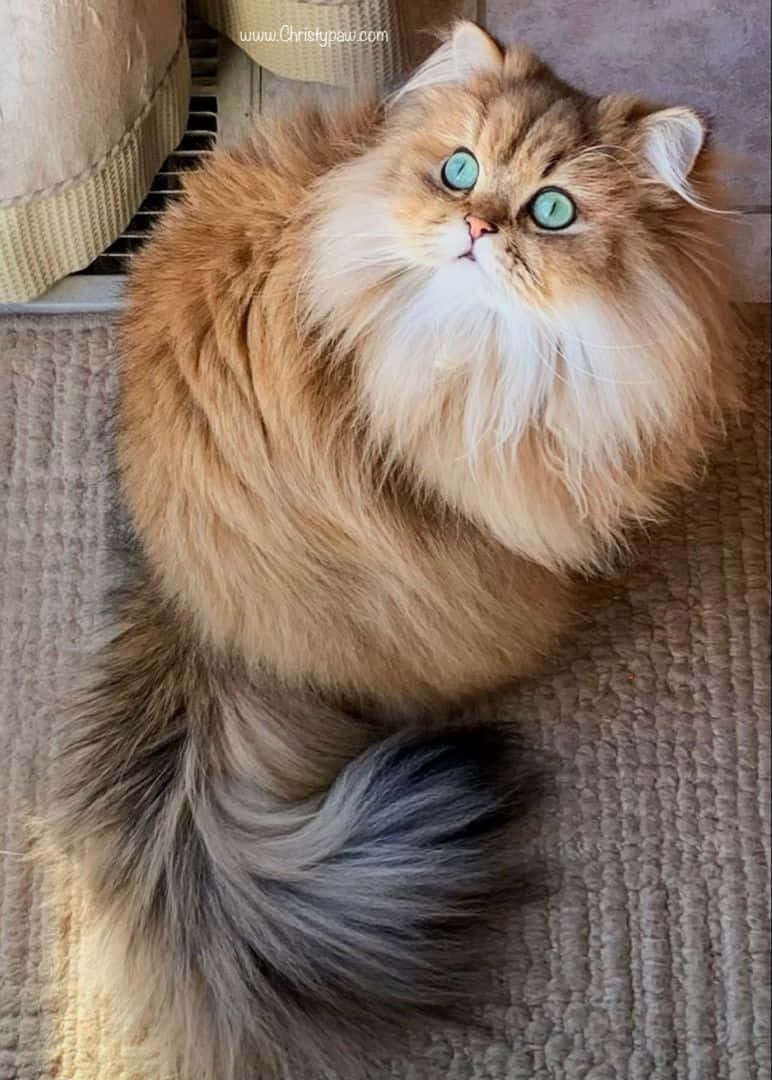
How can you not love that adorable flat face backed by a mane of long, luxurious hair? The Persian is the kind of kitty that lives to be adored by its owner. It is considered one of the oldest breeds, dating back to the 1600s. The Persian is very affectionate but very casual. A high-maintenance cat, these fluffy cats enjoy being pat on the head & receiving their owner's undivided attention. They may have a bit of attitude toward others, but when they pick their tribe of people, they become an ideal cuddle buddy.
While the proud Persian's flat face is undeniably captivating, this also comes with unique health issues. Potential problems include brachycephalic airway syndrome, which can cause them to struggle with breathing. For kittens, the shape of the head, in extreme cases, can cause hydrocephalus, a build-up of fluid that can be fatal or require surgery. Grooming these luxurious creatures is also vital, as their long coats make them more prone to skin conditions & infections.
Despite their health issues, the U.K. study of cat life expectancy rated this breed high, with an average lifespan of 14.1 years. Otherwise, Cat Time reports an expected lifespan is between 12 to 15 years, while PetMD estimates a wider range of 10 to 15 years. The oldest Persian recorded is Minky from Korea, who lived to 27.
Crossbreed
Whether a moggy or a tabby, cats with a diverse family tree are the most common companions among pet parents. Pedigree cats only account for around 16-18% of the pet population. The reason for this remains simple: There are plenty of kitties in need of a good home. As reported in Forbes, recent statistics showed that of the 6.3 million animals that enter shelters annually, 3.2 million are felines. Of those, 2.1 million were adopted. Knowing the number of cats needing a home, some pet parents may choose to adopt from a shelter over a breeder.
One of the pros of crossbreed cats is that they generally have better health than purebred cats. Yet, many still favor purebreds as they get a better idea of the type of personality to expect from their feline friend. Your little mixed-breed cutie will not be completely free of any medical concerns, but they are less likely to have breed-specific issues that purebreds suffer from.
The U.K. study where the crossbreed made up the largest sample size showed that they have an average lifespan of 14 years. Yet other sites, like Catster state that these mixed charmers can live up to 18. The Guinness World record holder for the oldest cat belongs to a tabby from Texas named Creme Puff. He was born on August 3, 1967, & lived until August 6, 2005, making him 38 years and 3-days-old at the time of his passing.
British shorthair
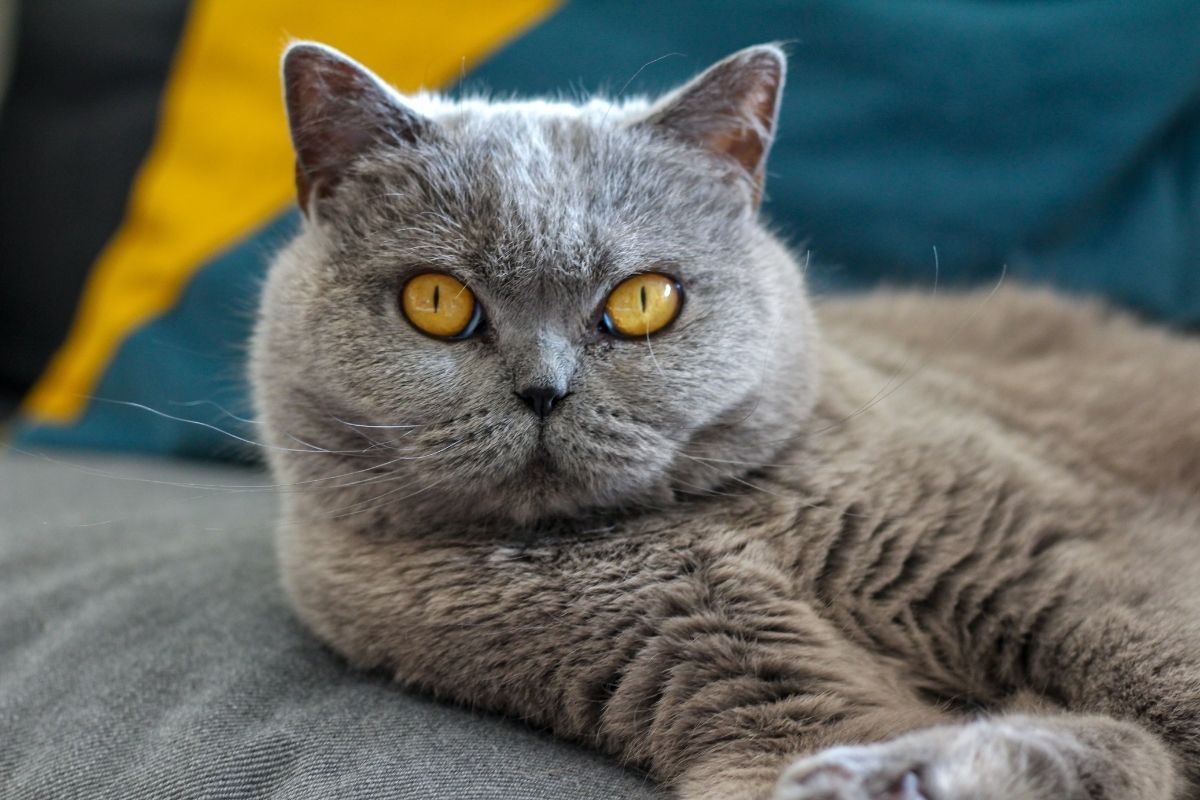
With its short, plush coat, & rounded, expressive face, the British shorthair is a kitty you can't help but want to scratch to get them purring. The British shorthair is also a minor celebrity in its own right, as the likely model for the Cheshire Cat from "Alice in Wonderland," sharing that signature infectious smile. As a family member, the British shorthair is an entertaining mix of cool, calm, & playful.
The British shorthair does have its share of potential medical issues. These include problems with their heart & kidneys & blood clots that can lead to paralysis, though none of these issues are unique to the stout little one, & the breed is considered generally healthy. One thing to watch out for with their moderate exercise need is obesity, especially as they age, & it is important to plan your cat's diet through all its life stages.
Research in the U.K. shows that one can expect, on average, British shorthair to live 11.8 years. Comparatively, Cat Time claims these smiley cats have life expectancies between 12 & 16 years. British longhair cats, meanwhile, a cross between British Shorthair & Persian breeds, are listed with the same life expectancy on Cat Time but were not part of the U.K. study.
Maine coon
With its long mane & wizened face, one can easily picture a Maine coon overseeing its owner like a servant. This is one of the handsomest & largest cat breeds you can find. They are known as the second-biggest domestic cat breed, only beaten out by the Norwegian forest cat.
Due to its rich, luxurious coat, the Maine coon needs minor maintenance to deal with mats. You will still want to groom & possibly bathe this big kitty to help prevent common skin diseases. Like many breeds, the Maine coon can be prone to kidney & heart issues. Otherwise, it is considered a generally healthy breed.
One remarkable Maine coon from the U.K., Rosie, lived to the age of 33. Otherwise, research shows that the average lifespan of the Maine Coon is 11.0 years. Cat Time lists this large, cuddly cat as having a 12 to 15 years lifespan, while other sites list it as 10 to 13.
Ragdoll
A calm fluffball, the ragdoll is the perfect pet to unwind with after a long day. Their temperament may be why Taylor Swift chose one, Benjamin Button, among her pampered kitties. Predominantly white, with striking blue eyes, the ragdoll's affectionate nature makes it a happy lap cat.
The ragdoll tends to be a healthy breed, but they are prone to common health conditions involving the kidney & heart that affect most other breeds. The big floof has some unique issues, including a higher chance of allergies, bladder stones, & joint problems, given their being on the larger side; male ragdolls can weigh up to 20 pounds. Because of their size & more casual nature, you also need to be mindful of their weight as they are prone to obesity.
The U.K. study has the ragdoll's average lifespan at 10.1 years, though most sites list it as much higher. Cat Time has the breed's lifespan between 15 & 20 years, with other sources indicating 13 to 18. The title of the oldest ragdoll goes to Flossie from England, who is still alive & making biscuits at the age of 27.
Abyssinian
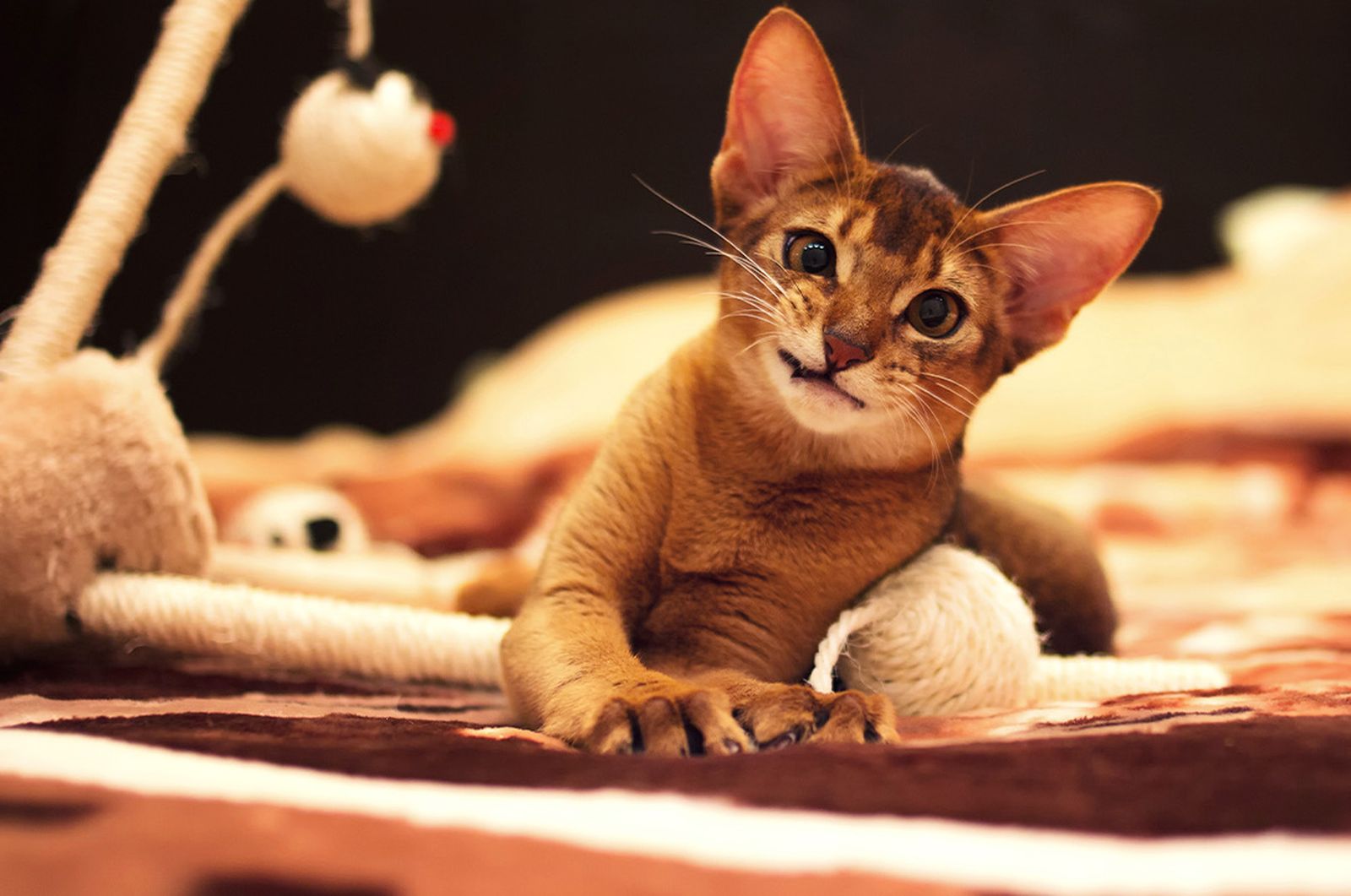
With its long, slender figure & collected personality, the Abyssinian is a certified charmer. The puss is on the slimmer side, ranging between 6 to 10 pounds, but what they lack in weight, they make up in personality. A brilliant breed that loves to play, a pet parent can look forward to plenty of funny photos of the inquisitive feline.
Abyssinians can certainly live a long, healthy life, but this breed is more prone to health issues than others. While generally uncommon, the Abyssinian can suffer from amyloidosis, which is an abnormal disposition of proteins in the body that can lead to severe issues like liver failure or kidney disease. A pyruvate kinase (P.K.) deficiency affects the metabolism of red blood cells & can lead to other problems. It is recommended that an Abyssinian be obtained from a reputable breeder who tests for P.K. deficiency in kittens before buying.
Research conducted in the U.K. estimates the average lifespan of Abyssinian to be10 years. Other sites have reported their life expectancy ranging between 9 & 15 years. If these high-activity & intelligent cats' needs are taken care of and free of predisposed conditions, they can live to be over 15.
Bengal
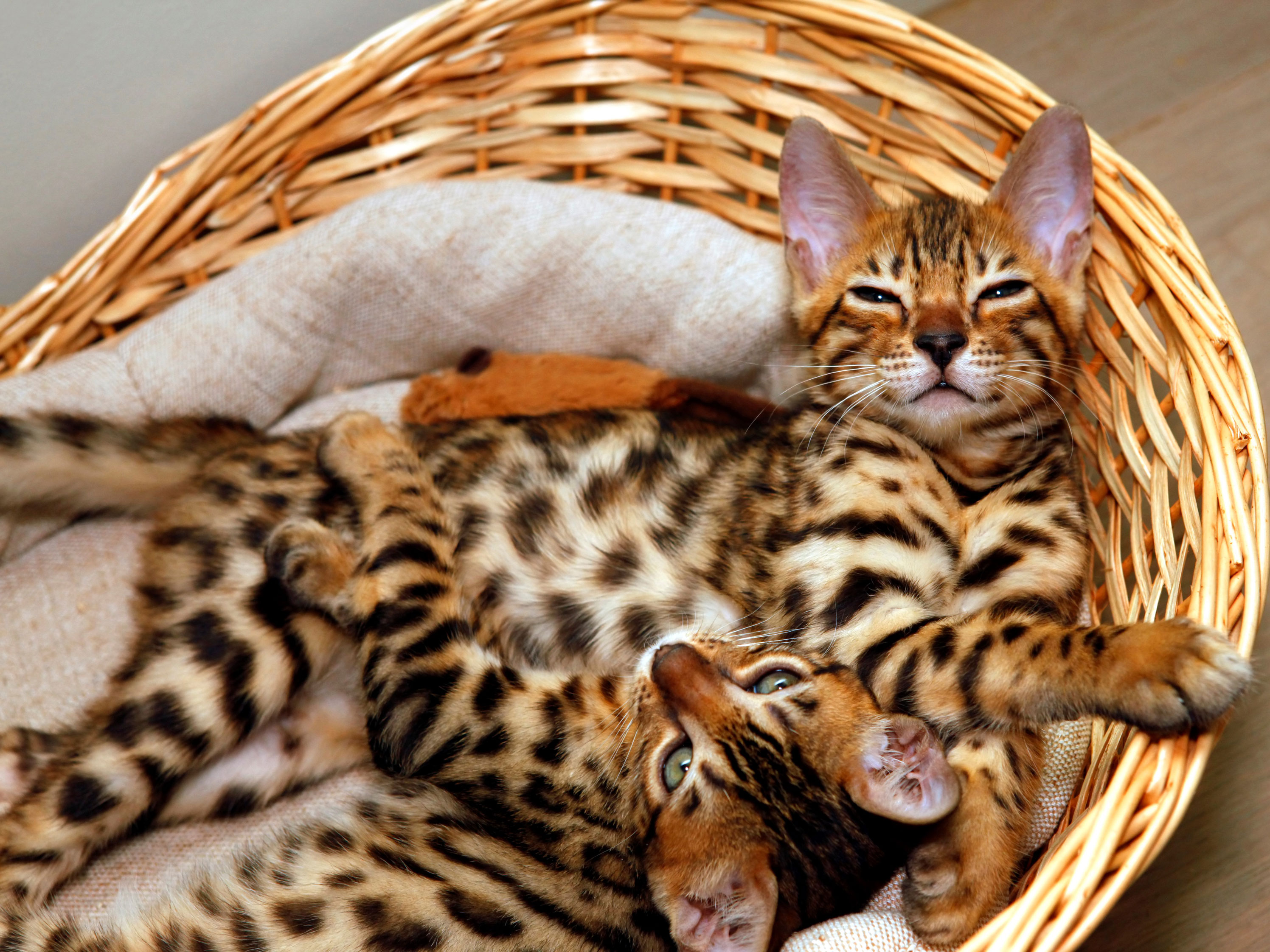
This kitty comes from crossing a domestic cat with an Asian leopard cat, making it a newer breed (first introduced in the 1950s). The Bengal is categorized into 'f' types, indicating how far removed they are from their leopard counterpart, with F1 being the first-generation hybrid cat. Their f-type can affect their personality, but most later-generation Bengals still carry that high energy & need for stimulation. Their domestic side still makes them affectionate, but their overly playful personas may be a handful for an inexperienced owner.
Out of the 15 Bengals included in the U.K. study, the breed had the lowest average life expectancy of around 7.3 years. However, factors that may have affected the kitty's poor showings in the survey, such as Bengals' genetics & lifestyle, which play a pivotal role in their health. An outdoor Bengal cat will have a lower life expectancy, & getting from a reputable breeder is essential. Cat Time has a Bengal's life expectancy, ranging from 10 to 16 years.
Given that this is a newer breed, it is crucial to ensure that a breeder is screening for certain health conditions. The Bengal's main problems include the not uncommon P.K. deficiency & hypertrophic cardiomyopathy, which affects the heart. Bengals can also be prone to progressive retinal atrophy, which causes the cat to go blind around 2 years of age. As the Bengal is a popular & expensive breed, scams are not uncommon, so research is essential to ensure good health & longevity.
Balinese
Fanciers will use terms like elegance, grace, & charm to describe the regal Balinese. This breed is similar to the Javanese, with some associations classifying the cats as a singular type; they are also closely related to the Siamese. Named after the exotic dancers of Bali, this is an intriguing namesake for a cat that tends to be on the quiet side. The Balinese are well-rounded as family pets but are known for their overly affectionate nature & constant need to follow their favorite caretaker around the house.
Like other oriental breeds, the Balinese are prone to amyloidosis, as well as common conditions that affect all domestic cats, such as progressive retinal atrophy. These kitties can sometimes go cross-eyed as a result of convergent strabismus & nystagmus conditions. However, this is natural & won't affect their longevity; for the most part, these are generally healthy cats. No studies have been completed to determine the average lifespan of the Balinese. Still, sites have been favorable in framing their life expectancy, with Cat Time listing their lifespan between 12 & 20 years.
American shorthair
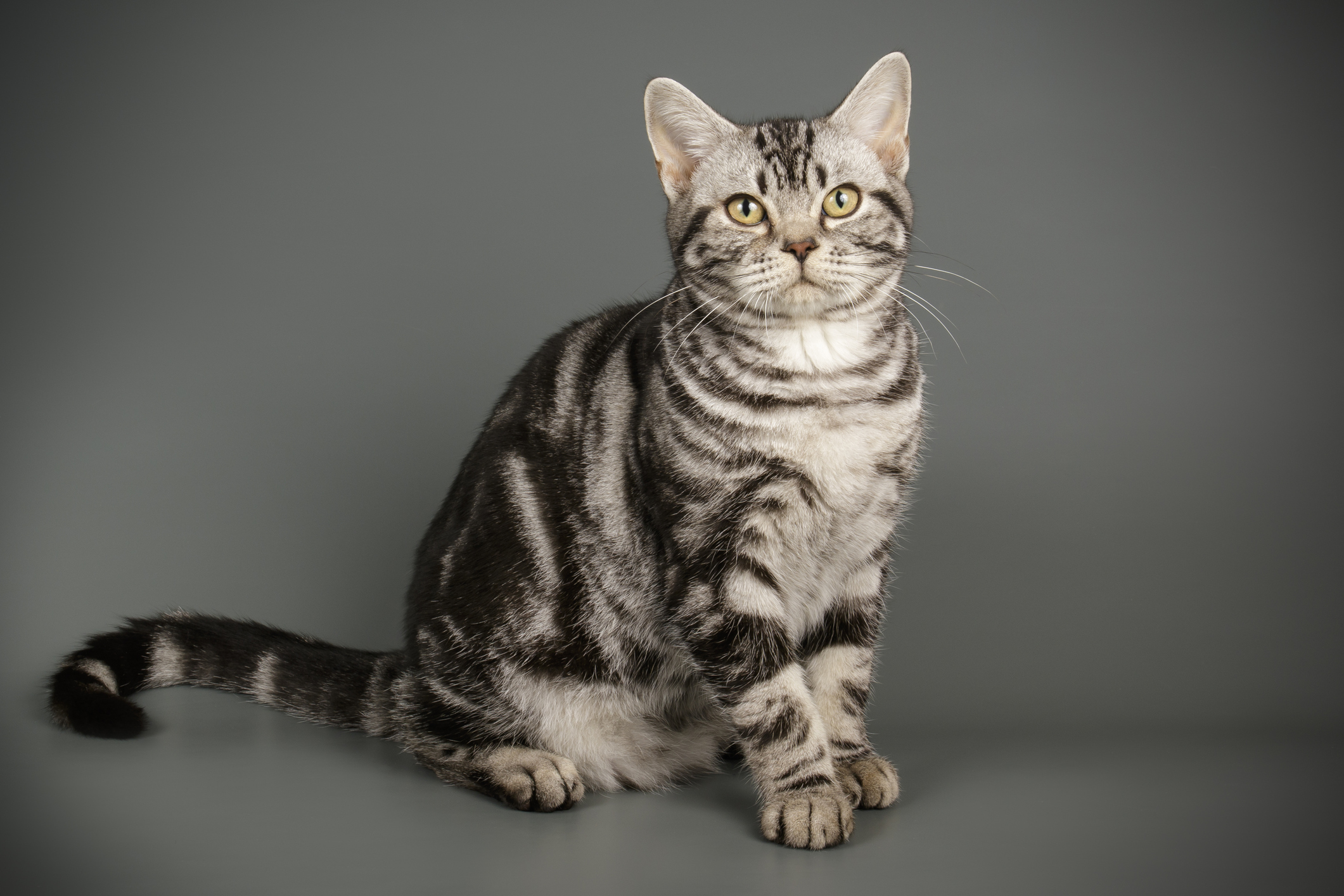
The American shorthair is a popular breed that evolved from its European ancestors when brought over by early settlers. Coming in a vast array of colors, these are highly personable playmates known for their easy-going nature. While the American shorthair can be calm & collected, they are still likely to indulge in silly antics. They are an endearing companion & an ideal family pet.
This rich lineage & years of establishment as a working-class feline has made this a relatively robust & healthy breed. The proudly American cat can suffer from hypertrophic cardiomyopathy (heart disease) but is prone to few other conditions, include dental problems. While this applies to all breeds, getting into the habit of brushing this cat's teeth will also help them live a longer, healthier life.
While there are no studies specific to studying the expectancy of American shorthair, Cat Time claims the cat boasts an impressive lifespan of 15 to 20 years. This puts it above other American breeds, with the American Wirehair coming closest in life span between 14 & 18 years. The American bobtail has the lowest life expectancy at 11 to 15 years.
Read More: https://www.cuteness.com/1724924/cat-breeds-that-will-live-longest/
Cute Critter Pics:
Weekly Chuckle:
Slava Ukraine!








:max_bytes(150000):strip_icc()/GettyImages-117905012-a2c9c5a2fc6944e6bca97d2fb0b4beec.jpg)
:max_bytes(150000):strip_icc()/siamese-cat-couch_525025708-2000-e914b62ff65f4df39a7f55b87bf49213.jpg)


:max_bytes(150000):strip_icc()/balinese-sitting-in-a-tree-718322914-2000-1a81750ec04d4b5886327fbbd5c42ca3.jpg)