Halloween Animals List: Scary Animals Pictures & Facts Part 1
by Active Wild Admin
10/ 23/ 2023
To celebrate Halloween we’ve made a list of some of the world’s scariest animals. Continue reading… if you dare!
Aye-Aye

Type of animal: Mammal
Conservation status: Endangered
The aye-aye is a lemur found on the African island of Madagascar. Local people believe that the aye-aye brings bad luck, especially if it points at you with its skeletal finger (the species uses its elongated middle fingers to prize grubs out of nooks & crannies).
There are around 100 species of lemur. Lemurs are only found on Madagascar, where they evolved independently of other primates such as monkeys & apes. The aye-aye lives in the rainforests on the eastern side of the island.
The aye-aye is the world’s largest nocturnal primate. This endangered animal hunts using echolocation. By tapping on trees, it is able to tell from the sound if food is present under the bark.
Bald Uakari

Type of animal: Mammal
Conservation status: Vulnerable
The hairless red head of the bald uakari gives this small monkey an almost human-like appearance. This bizarre-looking primate is found in the western reaches of the Amazon Rainforest in South America.
Sadly, hunting & habitat loss mean that the bald uakari now has a conservation status of ‘Vulnerable’.
Bears
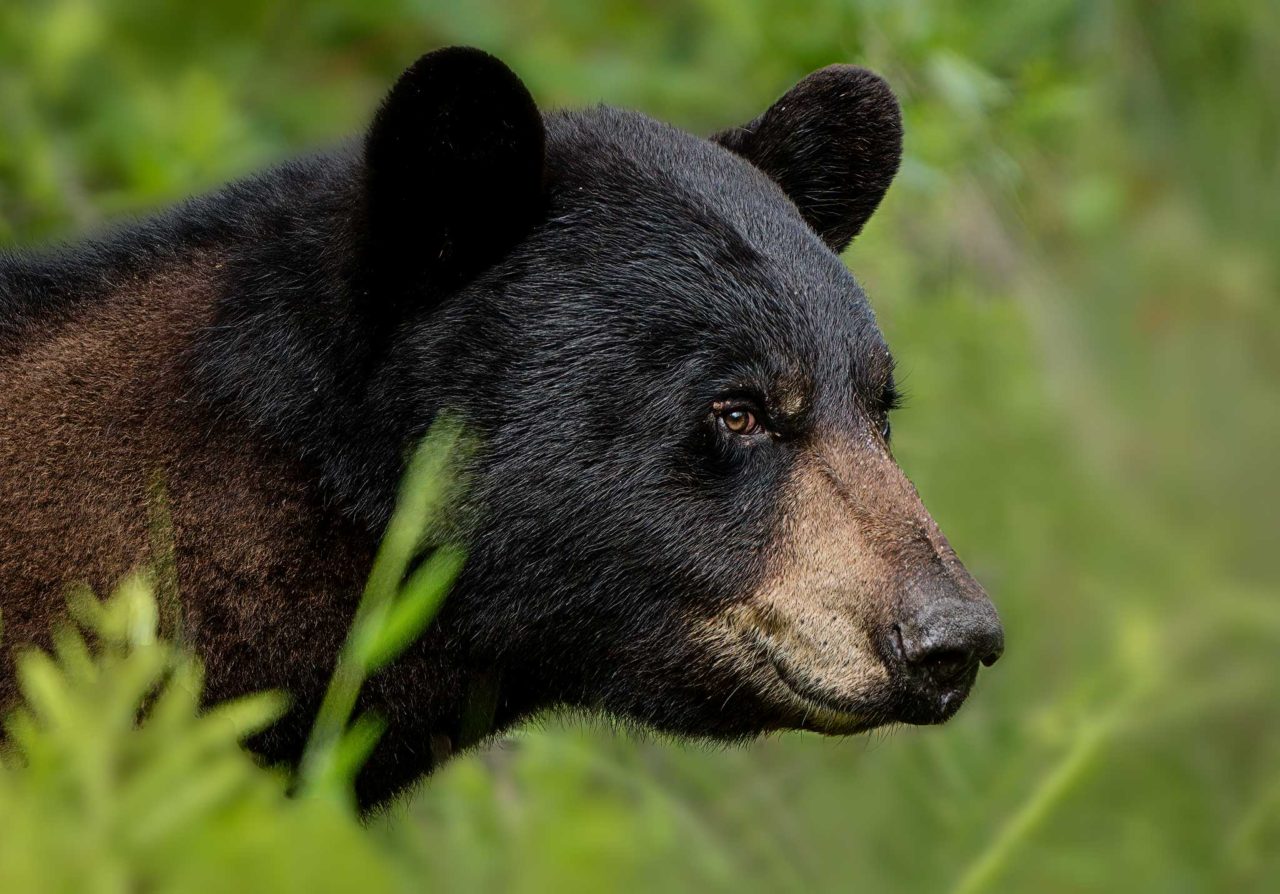
Animal Family: Ursidae
There are only 8 living species of bear: polar bear, brown bear, American black bear, spectacled bear, sloth bear, sun bear, Asian black bear, & giant panda.
Together these 8 species make up the family Ursidae.
Most bears are omnivores, although some, such as the giant panda & spectacled bear, mainly eat plants. The sloth bear is a specialist insect eater.
The polar bear is the most carnivorous of all bears, & on average the largest, although the Kodiak bear (which is a subspecies of brown bear) can be even larger.
They may be cute as cubs, but as adults bears are big, powerful, & well-armed. They’re likely to attack if they think you’re a threat–or, in the case of brown bears & polar bears–if they’re hungry!
The insect-eating sloth bear is surprisingly aggressive given its diet & even the giant panda has been known to attack humans!
Bears make many appearances in myths & legends. 2 constellations–Ursa Major (the great bear) & Ursa minor (lesser bear)–are named after bears.
Camel Spider
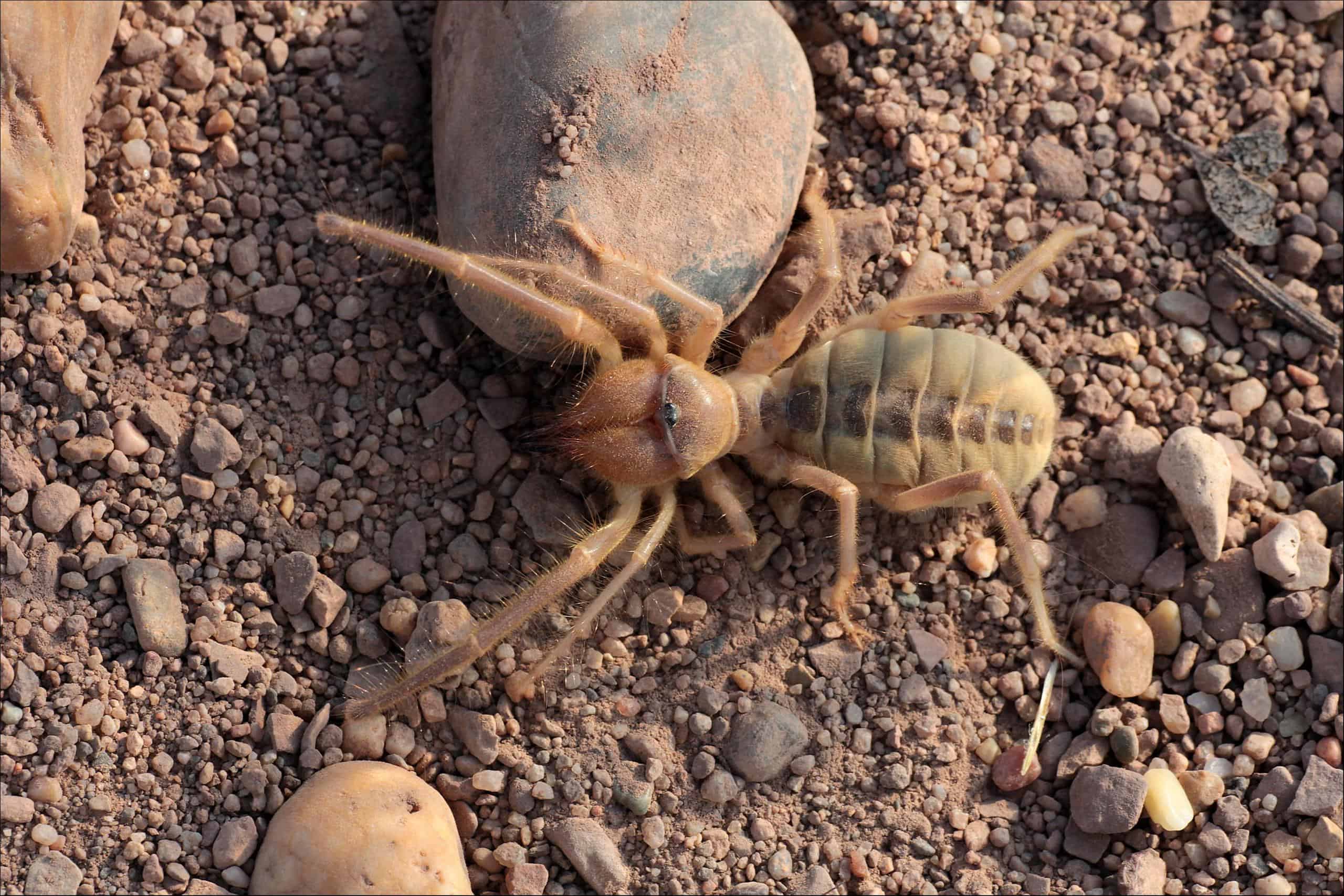
Type of animal: Arachnid
Camel spiders are a group of arachnids that are mostly found in deserts & other arid habitats.
Being arachnids, camel spiders have 8 legs, along with 2 additional pairs of appendages on their heads.
In camel spiders, these additional appendages take the form of long, leg-like feelers, & freakishly large, fearsome-looking mouthparts.
Cockroaches
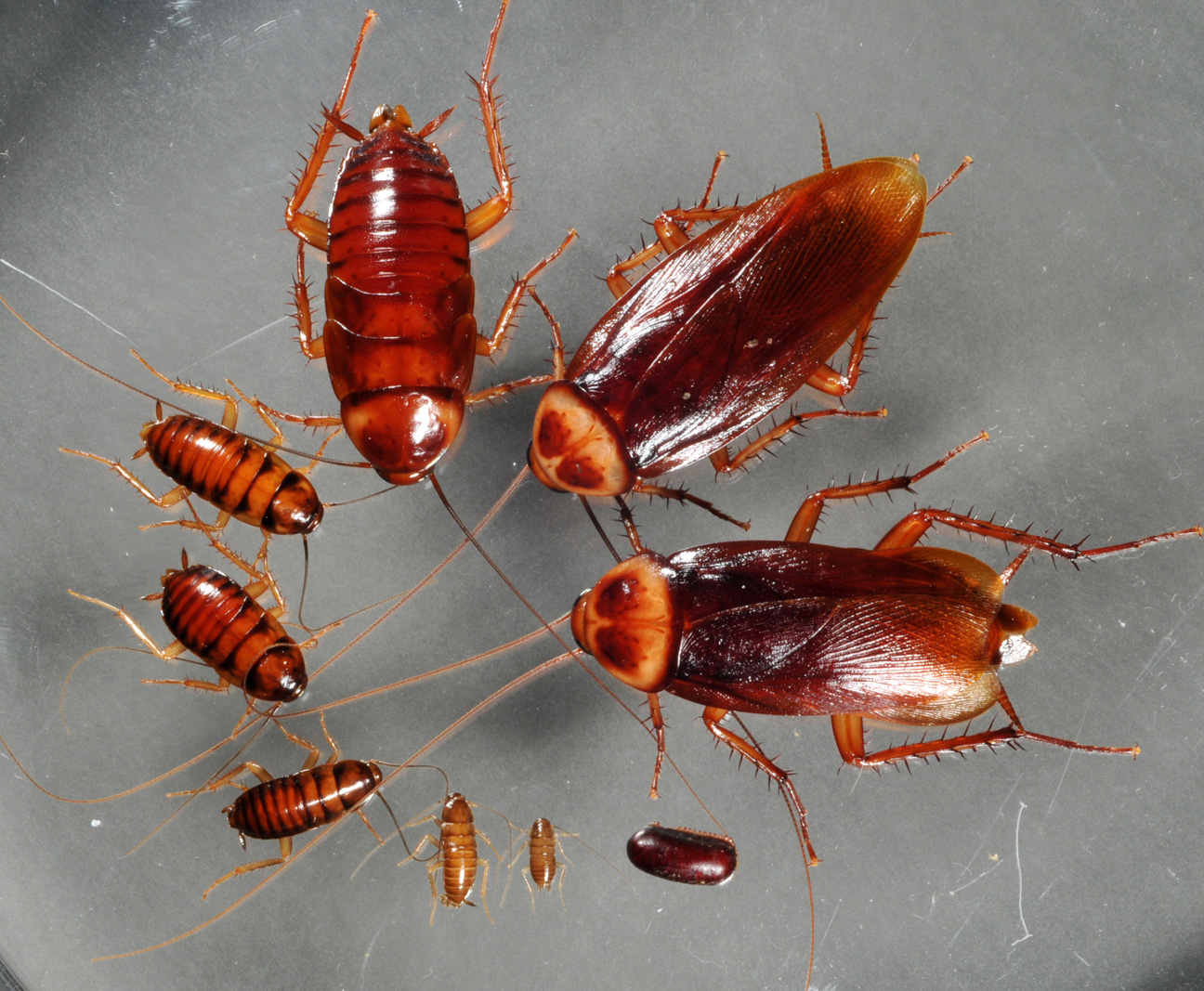
Insects aren’t particularly well-liked animals at the best of times, but cockroaches have a particularly bad reputation.
More “gross animals” than “scary animals”, cockroaches are associated with dirty, unhygienic surroundings. They’re known to transmit disease, & can cause an unpleasant odor in buildings in which they are present.
The German cockroach Blattella germanica is the most commonly-encountered cockroach in the United States. It is one of around 4,600 cockroach species, all of which are members of the order Blattodea.
Cockroaches are closely related to termites, which are also members of Blattodea.
The German cockroach is a survival expert. This hardy insect is found on all continents except Antarctica, & can reproduce faster than any other “pest” cockroach. Some people think that, in the event of a nuclear war, cockroaches would be the only species to survive!
Dracula Parrot
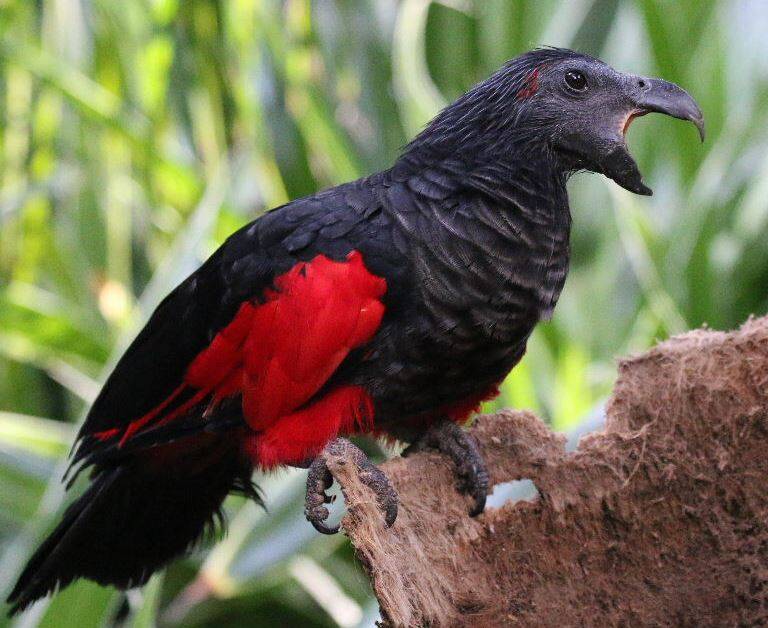
Type of animal: Bird
Conservation status: Vulnerable
Pesquet's parrot has been given the alternative name of "Dracula Parrot" due to its black & red plumage (which resembles the cloak worn by the fictional vampire), large size, featherless face, & long bill.
The distinctive parrot's bill & bald face give it a vulture-like appearance, & because of this the species is also known as the vulturine parrot.
The Dracula parrot is found in the mountain forests of New Guinea. Despite its fearsome looks, the species is a frugivore (fruit-eater). Instead of drinking blood, it uses its large, powerful beak to open hard nuts & fruits; its favorite food being figs.
Due to habitat destruction & hunting (for its feathers, which are used in ceremonial dress by indigenous peoples), Pesquet's parrot is rated "Vulnerable" by the IUCN.
Gila Monster
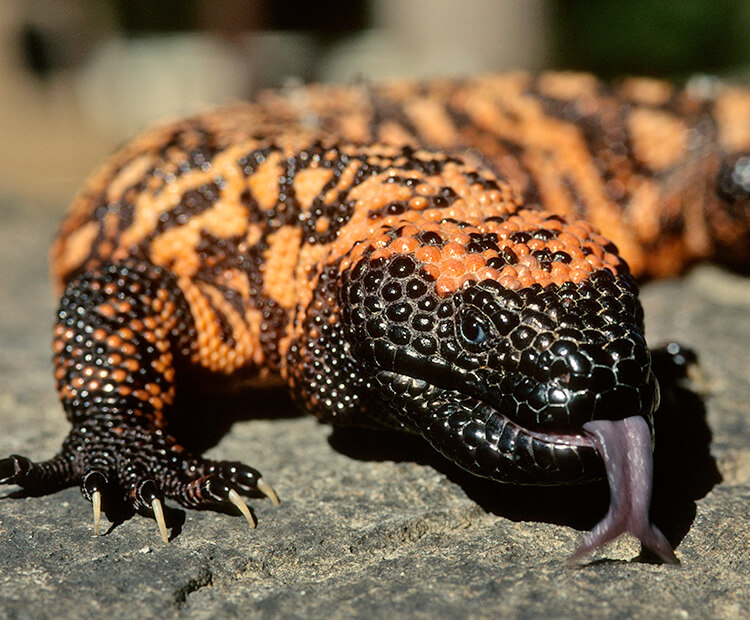
Type of animal: Reptile
Conservation status: Near Threatened
The Gila monster is one of only 2 venomous lizards found in North America (the other being the closely-related Mexican beaded lizard). Although the species feeds mainly on eggs, its venom helps it to subdue live prey such as small birds, mammals, & reptiles.
The Gila monster's venomous bite, together with its warning coloration, help protect it from predators.
This large, black / orange lizard grows to a maximum length of around 56 cm (22 in). It is found in deserts & scrubland in the southwestern United States & Mexico.
Although the Gila monster had a fearsome reputation among early settlers, its bite, although extremely painful, is rarely fatal.
Hellbender

Type of animal: Amphibian
Conservation status: Vulnerable
A true ‘river monster’, the hellbender is one of the largest amphibians in the world, & the largest found in the Americas. The species reaches a maximum length of around 74 cm (29 in).
The hellbender lives in fast-flowing rivers & streams. Unlike most other amphibians, it lives in the water even after having reached maturity. The species is entirely carnivorous, preying on crayfish, mollusks, & fish.
Although the hellbender has lungs, it also obtains oxygen from the water via its slimy, wrinkled skin.
Horned Lizards

Horned lizards are reptiles in the genus Phrynosoma. With armored plates, rows of spines running along their sides & backs, & horn-like spines on their heads, horned lizards resemble miniature dinosaurs.
Due to their squat, rounded appearance horned lizards are also known as horny toads.
Horned lizards don't tend to move very fast & rely on their excellent camouflage to keep out of the way of predators.
Why are horned lizards included in this list of Halloween animals? It's not their dinosaur-like appearance, but something even more terrifying; when threatened, these little reptiles squirt a stream of blood from their eyes & mouth!
The blood also contains foul-tasting chemicals, so if the sight of the blood itself wasn’t enough, its taste may make a potential predator think twice about eating the lizard.
Found in the southern United States & Mexico, the Texas horned lizard is the most widespread horned lizard. It grows to around 10 cm / 4 in. in length.
Iberian Ribbed Newt

Type of animal: Amphibian
Conservation status: Near Threatened
The Iberian ribbed newt is the largest newt found in Europe, but that’s not why it’s on this list of scary animals. We’ve included this terrifying amphibian because of the unique way in which it defends itself from predators.
When threatened, the Iberian ribbed newt is able to puncture its own skin with its sharp ribs. While doing so it also secretes poison from its skin, meaning that an animal picking up the newt in its mouth would get a mouthful of sharp, poisonous spines.
You may think that piercing its own skin with its bones would cause the Iberian ribbed newt serious harm, but in fact the skin quickly grows back, leaving the amphibian seemingly unaffected.
Komodo Dragon

Type of animal: Reptile
Conservation status: Endangered
Growing to 3 meters (10 ft.) in length, the Komodo dragon is the world’s largest lizard. This Asian species is found on the Indonesian island of Komodo, from which it gets its name, & 2 other neighboring islands.
With its lumbering gait, the fearsome Southeast Asian lizard would at first glance seem unable to catch nimble-footed prey. Don’t be fooled; the Komodo dragon is capable of a surprising burst of speed. The species is also thought to produce venom that makes its bite even more potent.
Owls

Owls are birds in the order Strigiformes (an “order” is a group of related animals).
Nearly all owls are nocturnal; their large eyes are an adaptation for seeing at night.
Owls also have excellent hearing; the stiff feathers that surround their round faces help to direct sound towards their ears. In addition, special feathers help owls to fly silently.
Because owls are active at night they are often associated with the supernatural. You’ve probably seen a film or TV show that uses an owl’s cry to set the atmosphere for a spooky nighttime scene.
Instead of a pleasant ‘twit-twoo!’, a barn owl emits a bloodcurdling range of screeches & hisses. In some areas it is known as a ‘screech owl’ on behalf of its terrifying call.
In addition, the silent, ghostly form of a barn owl flying through the night has led to superstitious people giving it names such as ‘demon owl’, ’death owl’ & ’ghost owl’.
Cute Critter Pics:



:max_bytes(150000):strip_icc()/GettyImages-904215104-a4adafbc911549a4b5d5f01f97070490.jpg)








/SilkyTerrier-GettyImages-494831928-b8d669bab3e54b44b53147441ee705ec.jpg)






/Papillon-GettyImages-713839323-6985913363dd4791852de6f246e6c15d.jpg)